
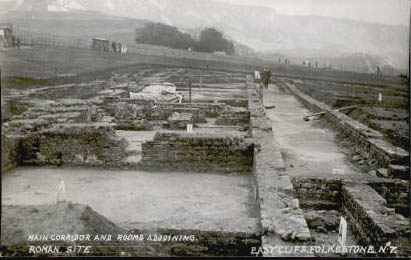
The main corridor and rooms adjoining
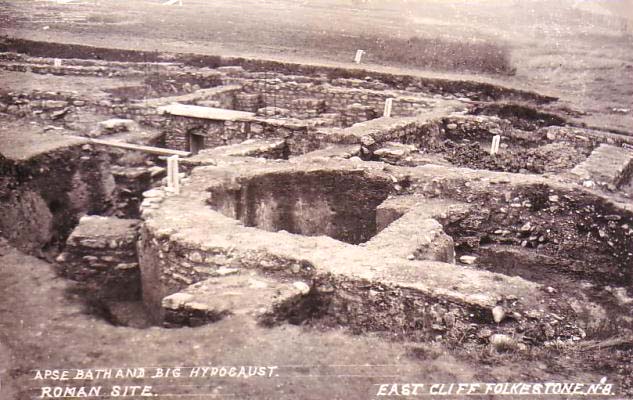
The Apse Bath and big hypocaust
The Martello Tower in the distance will give you a better idea of exactly where the Roman site is situated
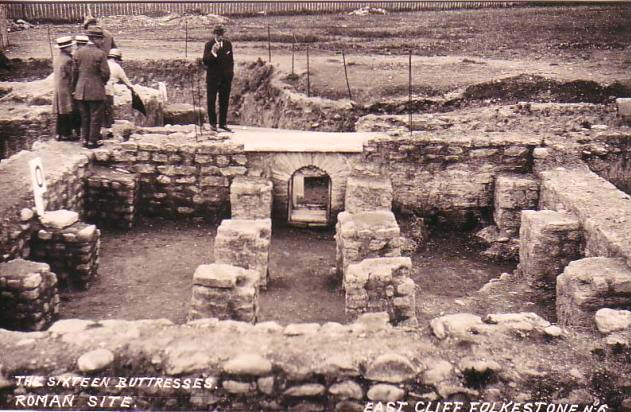
Here are the sixteen buttresses that were uncovered
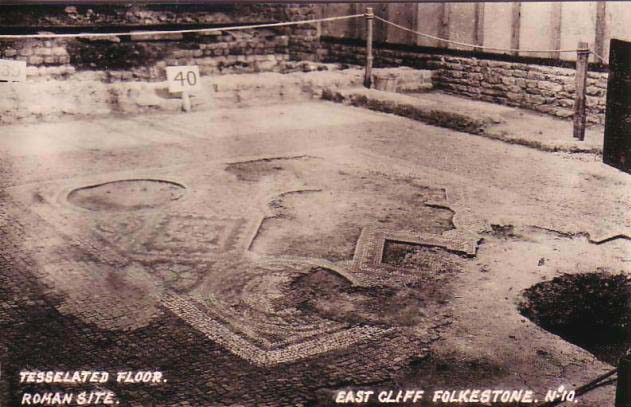
I am sure when this floor was first laid, it was in vivid colours. I wonder if it still was when they uncovered it?
P.S. I did use Wikipedia in 2026 to find out the difference between Tesselate and Mosaic, this is the answer:
Tesselate: - Referring to the arrangement of tiles or paving stones in a way that creates a continuous pattern.
Mosaic: - Referring to a picture or design created using small, colorful pieces of material.
Conclusion - Pretty much the same thing.
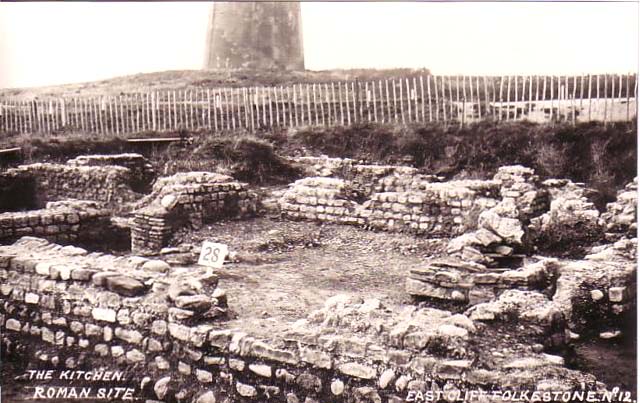
This was a Roman kitchen. I wonder what they made in those days? Pizza and pasta? Probably not! Ha ha. Note how close it was to the Martello Tower.

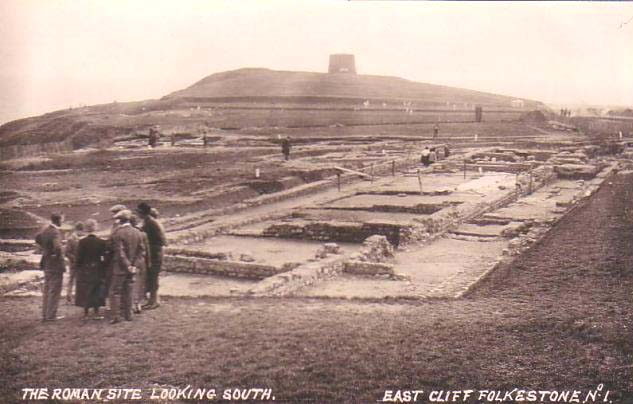
If you have your own memories of Folkestone, be sure to share them with us by jotting them down in the book below.
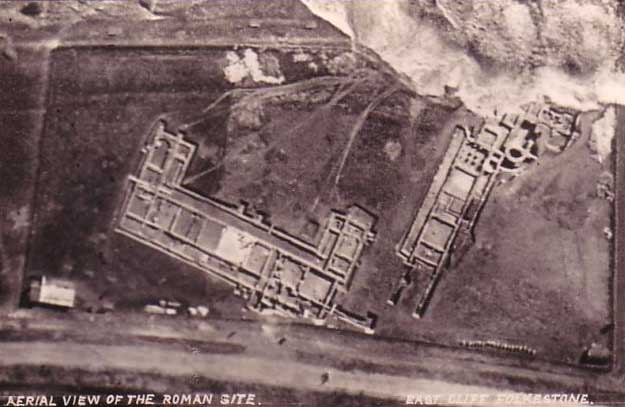
Folkestone had an exciting discovery in 1923. A landslip on the East Cliff caused a drain to be exposed, which contained a Roman tile. According to the Ward Lock Red Guide for 1933 - 34, a Mr. S. E. Winbolt took charge, and along with twenty men they uncovered the remains of a large Roman villa and an annexe separated by a yard and a court. They also revealed that the site was occupied by the Britons prior to the Roman invasion in A.D.43 and that before the end of the century it was inhabited by the Romans, who continued to reside there until the last quarter of the fourth century.
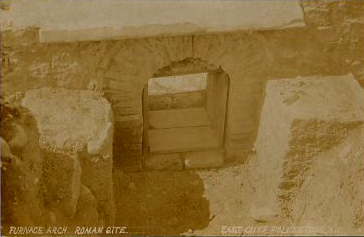
Portions of tesselated floor were laid bare, and the underground heating system exposed. Visitors of the day could look at the cold plunge bath, and see what was the warm bath room. There are still coins, tiles and pottery on display at the Folkestone Museum in Guildhall Street, but the remains of the buildings were covered over in 1957.
In 1933 however, you could visit the site which was open daily during the season, including Sundays, from 9 to 1 and 2:30 to 7 p.m. for the bargain price of 3d for adults and 1d for children.
The furnace arch in 1924
This website existed before Wikipedia, so I couldn't look up the information on the Roman site that was uncovered in 1924, but I had found postcards for sale telling me a little of the findings, and S.E. Winbolt had written a book on the subject, a copy of which I managed to get my hands on.
However, Wikipedia is now freely available and the knowledge on there is vast, and mostly kept up to date. For instance, the Roman site was uncovered again in 1989, and yet again in 2010-2011, but to my knowledge no postcards were issued showing their findings, so I will leave the page as originally written, with the poor quality scans that I found, and you can read the rest HERE.
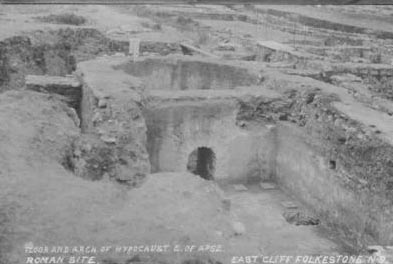
Another view of the Apse Bath showing the floor and arch of the hypocaust