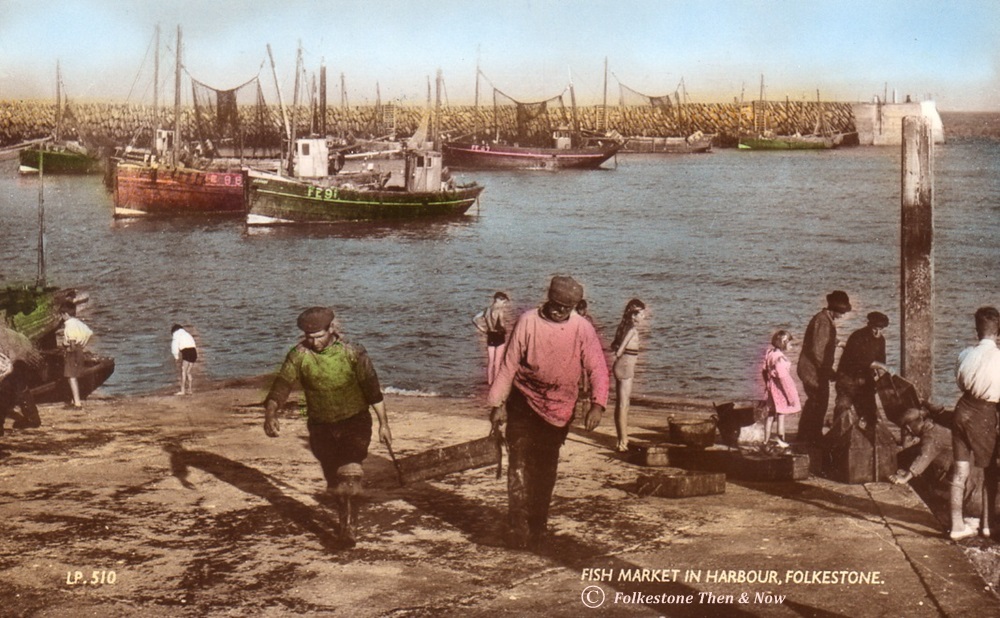
The main industry in Folkestone has always been the fishing, and it is still possible to go down to the cobbled harbour and watch the fishing boats come in, but it is definitely not what it was, and the fleet these days is a lot smaller.
It is possible to trace back generation after generation of fishing families, surnames like May, Baker, Milton, Taylor, Spearpoint, Saunders, Fagg, and forgive me for those I have left out, are names that seem to have been around the harbour forever.
It is a close knit community unto itself, and life in Folkestone wouldn't be the same without it. In the photo on the left, you can see St. Peter's church up on the cliff. This church has had a very close connection with the fishermen and their families for many many years, and prayers for their safe keeping while at sea have been uttered within those walls for generations.

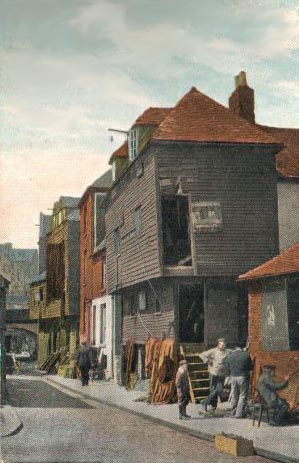
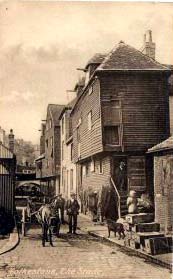
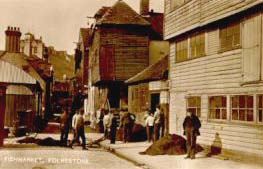
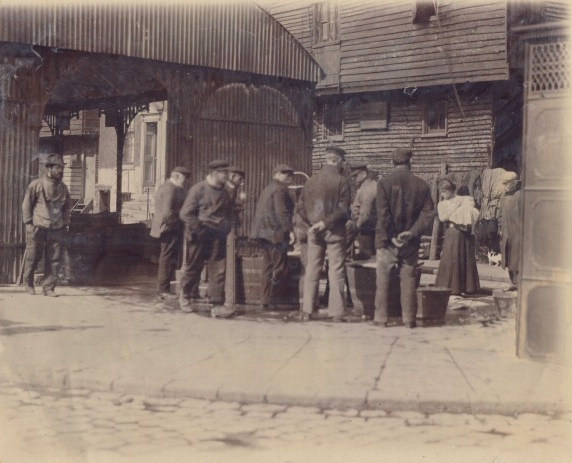
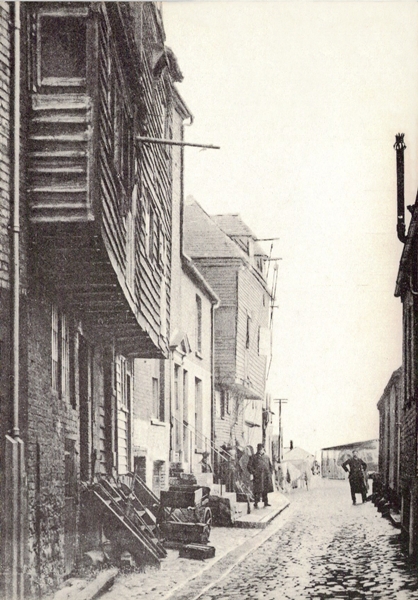
Fishermen shooting the breeze along The Stade. You can't see from this photo, but this street was, and still is cobbled.
This is also the street where a lot of the TV series 'Moon & Son' was filmed. In fact, that brown building could be where Gladys Moon, played by Millicent Martin, lived.
See the fisherman on the right of that same picture mending his nets? That was a common sight down there when I was growing up.
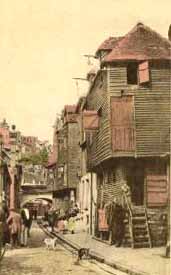
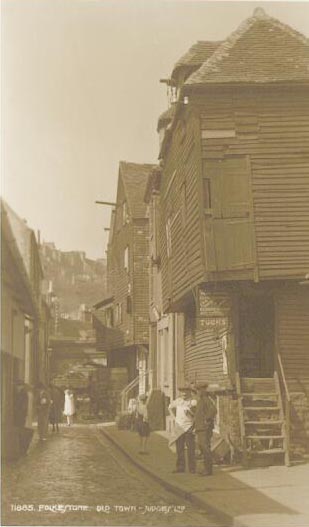
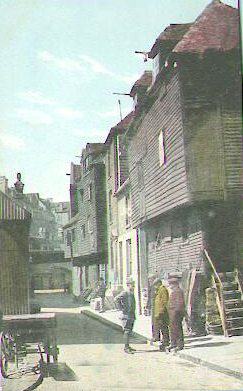
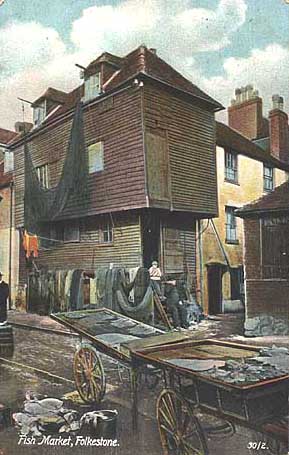
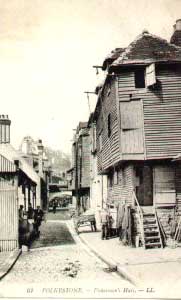
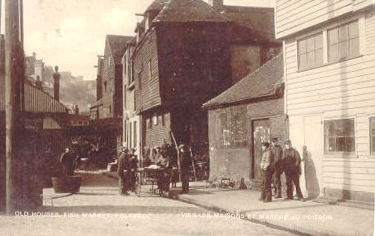
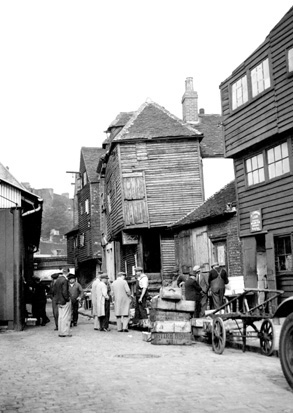
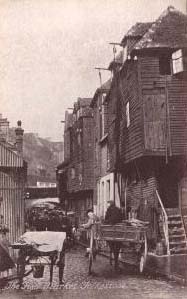
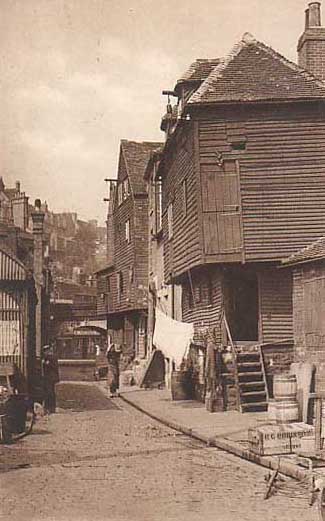
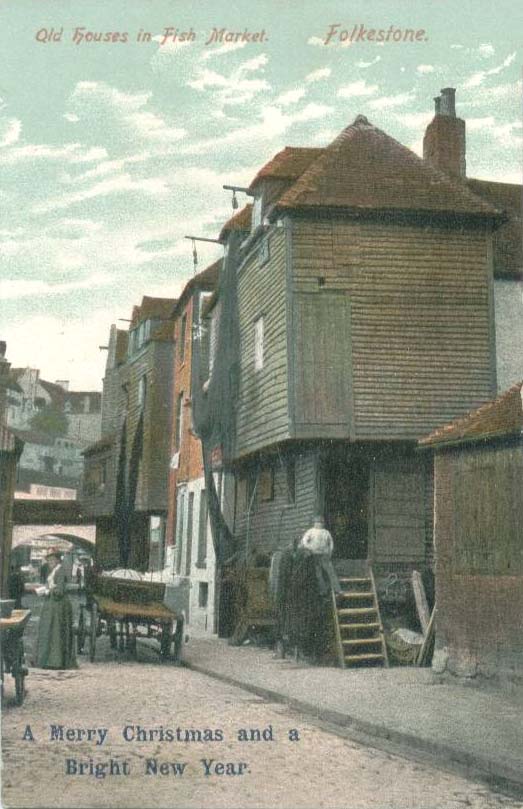
That has to be the most photographed building in Folkestone with the possible exception of the Toll House on the Lower Sandgate Road.
I have seen it referred to as a 'tanlade' but I don't know if that is its official name. I believe it has now been pulled down.
Here it is in 1900, and as you can see, the outside of the building was used for drying nets.
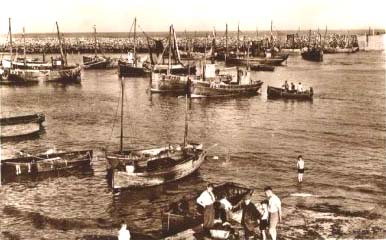
Here is a nice photo showing some interaction between some fishermen and some young lads. I see one brave little soul was attempting to go in for a dip, but would guess by the way his arms are folded across his chest, that the water is pretty cold!
Folkestone fishermen bringing in their catch. What a familiar sight this is for me, I can still smell it if I close my eyes!
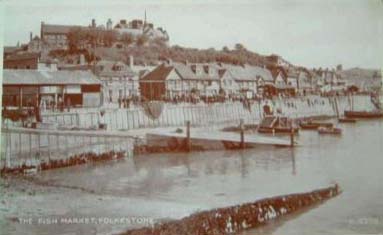
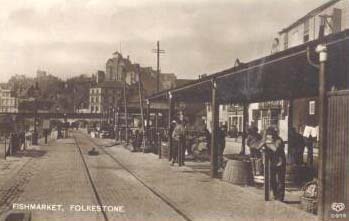
The fishmarket taken from a very different angle
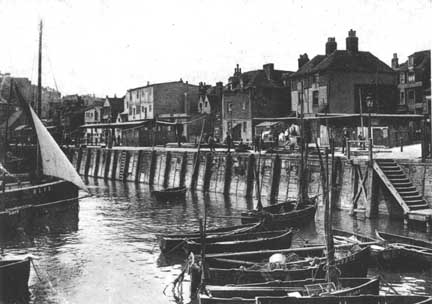
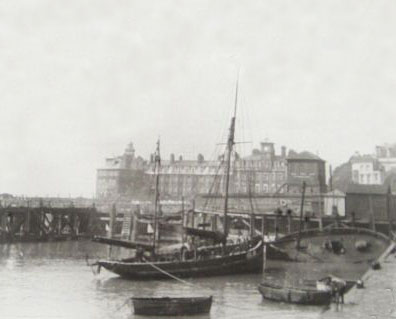
Here is a lovely picture of The Stade, taken from another unusual angle. It was dated 1880, and sent to me by an ex Folkestonian, Bruce Lloyd, who is now living in Wollongong, Australia. Thanks Bruce!!
Here we have a 1912 picture of the fish market, showing The Jubilee Inn (certainly not the last Queen's! The pub is older than this, but the landlord who took it over in 1887 was hoping to salvage the dreadful reputation of the Skylark, that it was called at the time, and as it was Victoria's Golden Jubilee, he named it thus, and had her silhouette on the sign outside. Also in the picture is the company of G. Nicholls, Sailmaker, and The Odd Fellow's Arms. They certainly didn't go short of pubs in those days did they? There are still lots of pubs in Folkestone, but getting fewer and fewer.
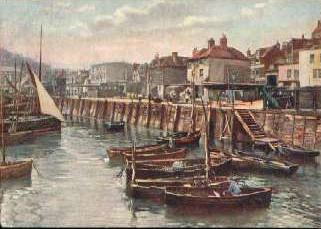
I think this is an art card, and that the artist used the photo above to copy from. The only difference is that he has added a fisherman to the boat in the foreground.
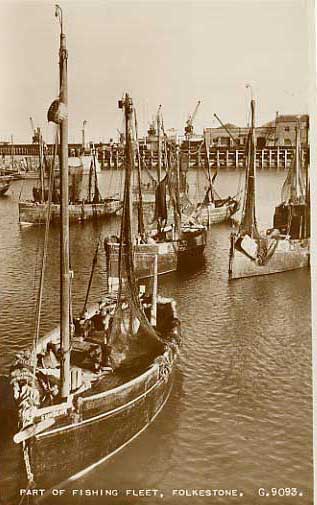
This one was described as part of the 1956 Folkestone fishing fleet.
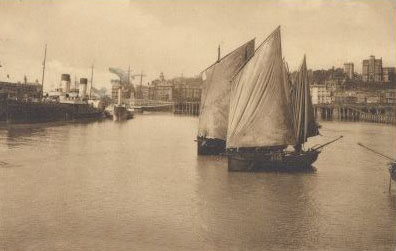
This 1907 photo of the harbour shows a ferry in the background. I was unsure about the boats in the foreground, but Folkestone historian, Alan Taylor helped me out. Here is what he said about them:
"Those sailboats are fishing luggers, the type used at Folkestone from about 1850 to the 1960's. Most of them were built in Cornwall, they had engines fitted about the first world war period."
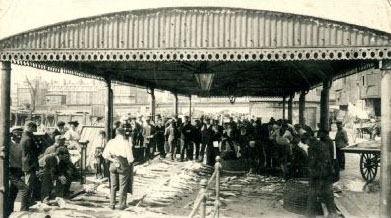
This is what the fishing industry was all about. This is where the catch was bought and sold.
This photograph was taken in 1908
|
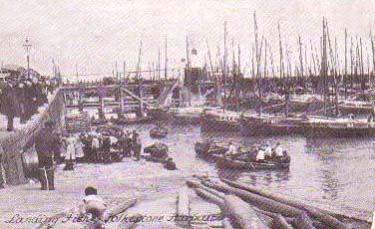
Not the best quality card, but if you were over 111 years old and had been around a bit, you wouldn't look in your prime either!
This one, entitled Landing Fish was posted in 1914.
Actually, I have since bought a clearer card than this, and it is dated 2 years earlier! You will find it further down the page.
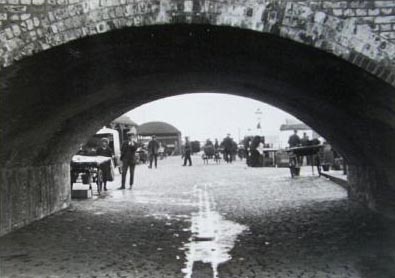
Looking through the arches at the entrance to The Stade, you can see the fishmonger's stalls set up to ply their trade in 1923.
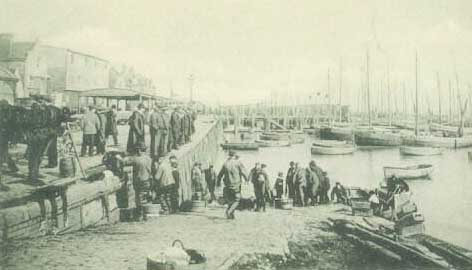
Another busy scene of fishermen bringing their catch home
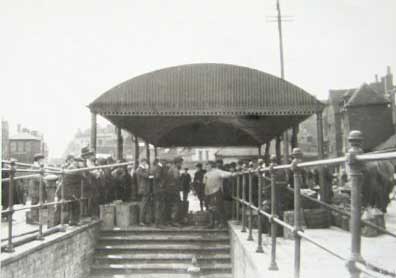
I need Alan Taylor's help on this one. I don't remember seeing these steps down at the fishmarket. Are they still there? Did they lead right down into the harbour? This photograph was taken in 1923
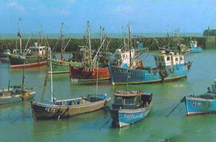
A much more modern photo of the fishing fleet. By modern, I would guess the 60's
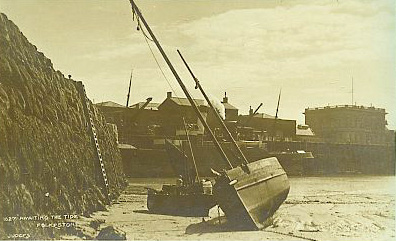
Awaiting the tide, you can see the customs house over on the pier.
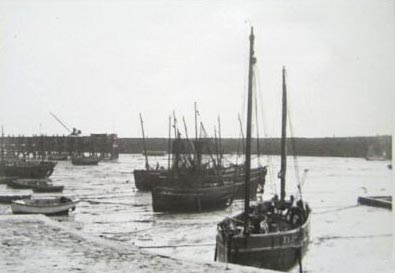
The fishing fleet in 1923
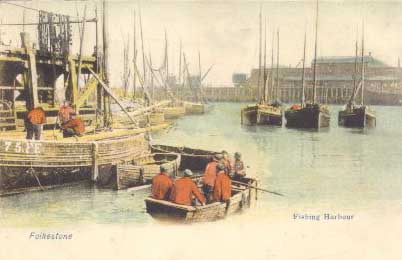
This hand tinted card from 1904 was probably tinted by someone who had never seen a Folkestone fisherman. Unless they have changed a lot over the years, I have yet to see one wear a red jumper! Navy, yes, red - NO!
Actually, I remember when we lived at the Ensign Cafe, we had an old fisherman regular customer who knitted the most beautiful fairisle jumpers, so I would have been less surprised if they had been wearing beautiful patterned ones, but even he didn't knit in red!
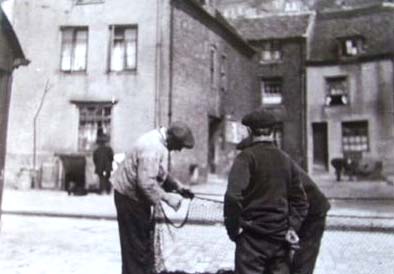
Here we have some fishermen mending their nets in 1923. I don't think those houses behind are there now, are they?
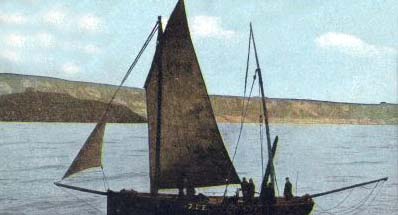
Out fishing in 1908 I wonder what they were fishing for?
herring? mackerel?
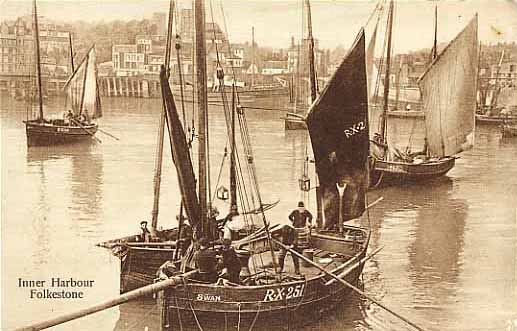
The number on the closest boat is RX 251. So that was registered in Rye.
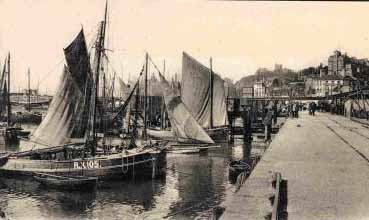
Another Rye boat, and I think this one says RX105
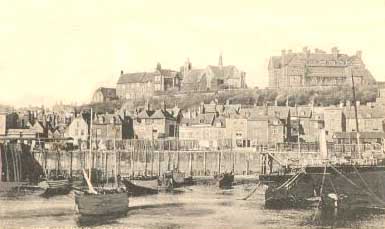
This scene was dated 1918
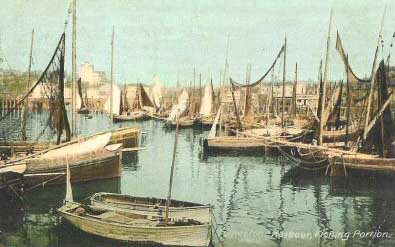
Whereas this one was 1907
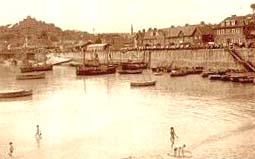
I hope the inner harbour was cleaner in the old days than it was when I was a child, because here you can see some children swimming in it. It probably was cleaner in the days before engines and oil were used.
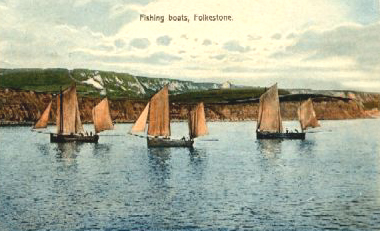
Out fishing in 1913. I bet those sails were white, not orange though
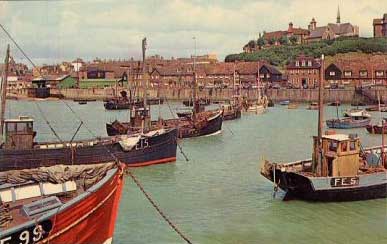
A more modern photo, showing FE5 and FE15 I think the boat at the bottom of the photo was probably FE99 (I have just learned that the FE5 has quite a history! More later...
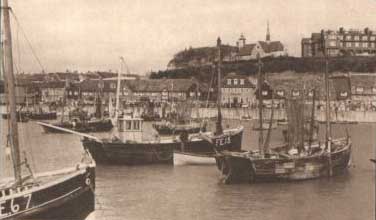
The only boat I can read this time is FE67 in the bottom left corner.
These numbers would probably tell a fisherman the year of the photo, but not me!
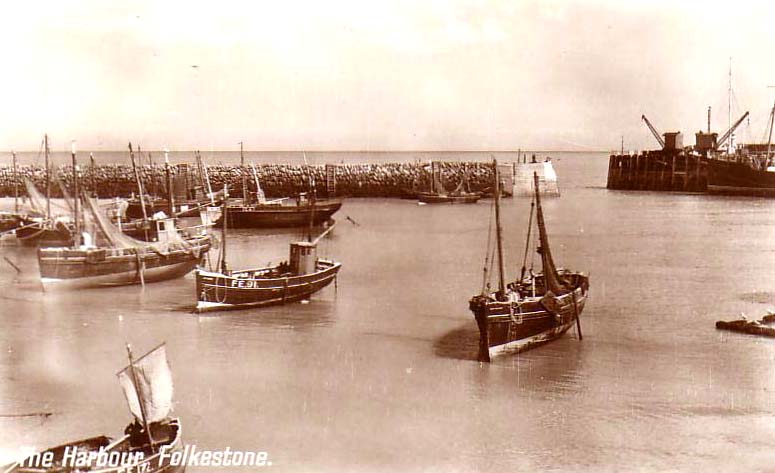
This time I could make out FE91 and FE172
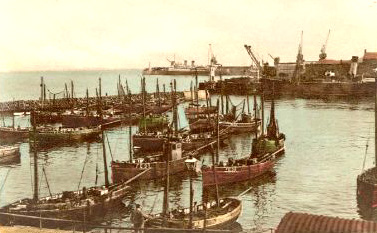
Here we have a nice picture of the fishing boats, and in the background you can see a ferry docked.
I believe I can read 285FE, FE137 & 81FE
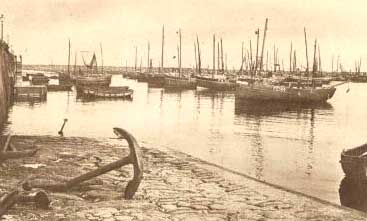
This one was posted in 1947
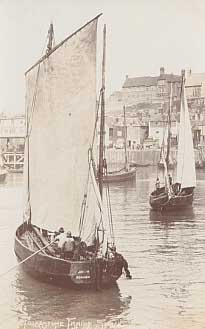
In contrast, these boats are a lot older
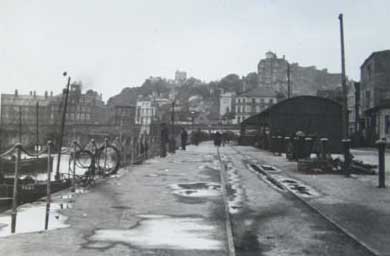
After a rain on the Stade in 1923
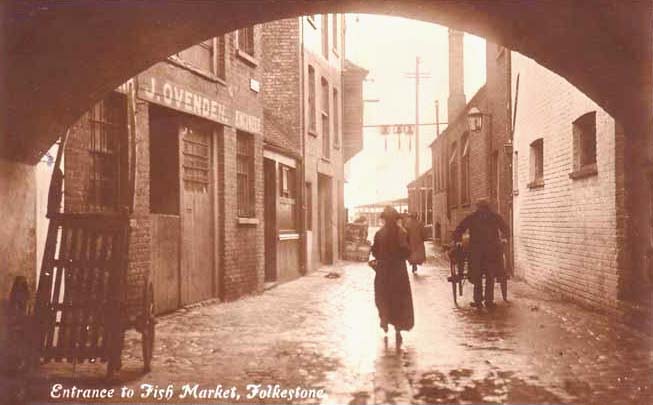
Oh here is another very familiar name in the harbour area. On the left you can see the premises occupied by J. Ovenden, an engineering company, still in business today. This photo was taken from under one of the arches leading to the fishmarket.
The lady in the picture was probably going to buy a nice bit of plaice for tea.
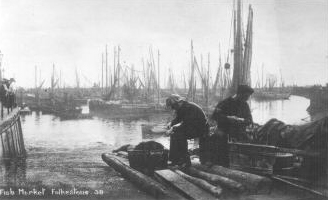
There is always lots of work to do between tides.
They don't all knit fairisle jumpers like the fisherman I remember!

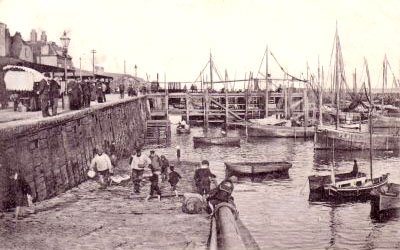
I remember there was always an audience watching the catch being brought in.
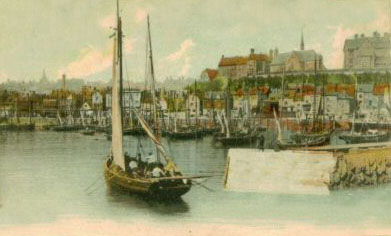
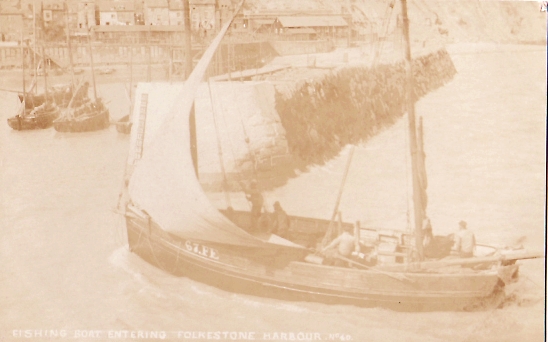
A fishing boat returning home past the East Head in 1903
Didn't the East Head look square at the end in those days?
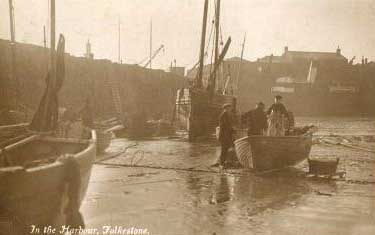
This photo was dated 1914, and shows the tide out completely.
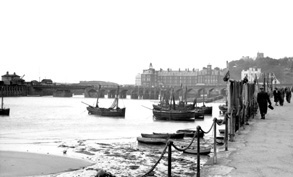
The harbour looked like this when I lived there in 1965.
How I wish I had gone inside the Royal Pavilion Hotel in the background when I had the chance.
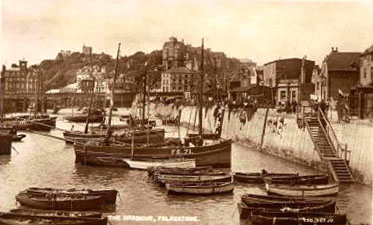
This one was a little difficult to make out, but I think we have FE71, FE97 and FE88
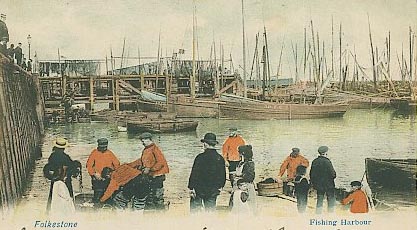
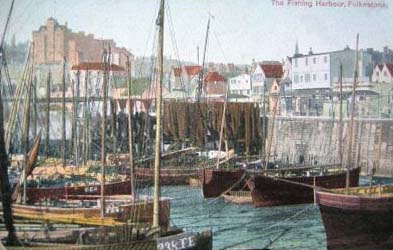
Now look at this! Dated 1903, we once again have all these fishermen dressed alike. thanks to Alan Taylor, we now know why, their unbleached linen smocks were dipped in boiling cutch to preserved them along with their nets, and came out a tan colour, possibly not quite as pink as the hand painted card looks.
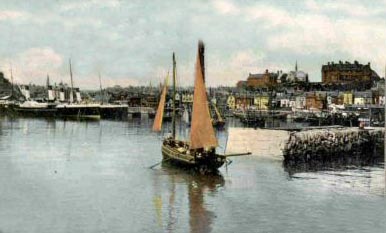
You often see photos of a fishing boat passing the East Head, but rarely do you see it with a ferry in the background! I have never seen one moored in that direction before, have you?
In fact there must have been two there, because I can see 4 funnels , and I hardly think it was the Titanic!
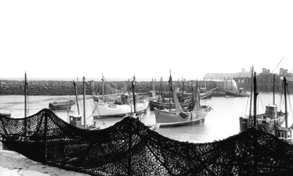
On the other hand, this was a very familiar sight, usually when you went down to the harbour there were nets strung over the chains drying.
This photo was taken in 1965, which is probably why it looks so familiar to me.
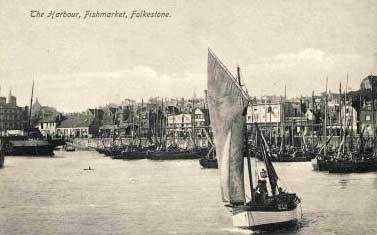
RX18, which we know is a Rye registration, on her way out. I don't know the year of this one though
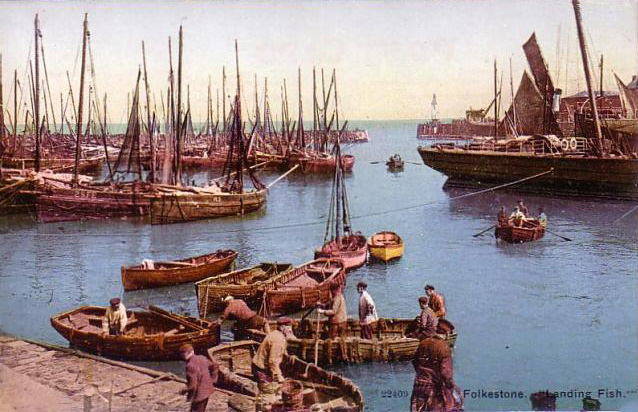
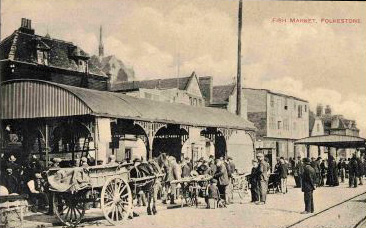
1912
|
A lovely clear photo of the catch being brought home
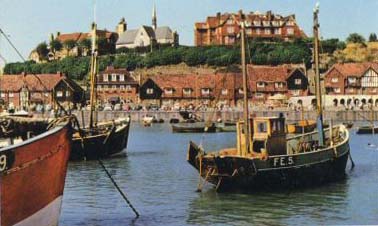
This time we can read the FE5. Please click on it to read and see the story of this little boat with a very interesting history!
Up on the cliff, you can see the St. Andrews Nursing home, although by the time this photo was taken, it might have been a guesthouse. To the left of it, you can see St. Peter's Church.
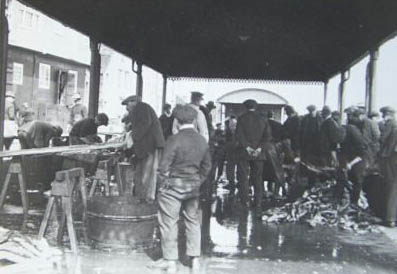
Back up on the Stade in 1923, and the fish is being auctioned off.
Have you noticed, whenever you see a photo of a crowd of men, there is always at least one standing around doing nothing with his hands in his pockets? It has been the same throughout time. You rarely see women idle like that do you?
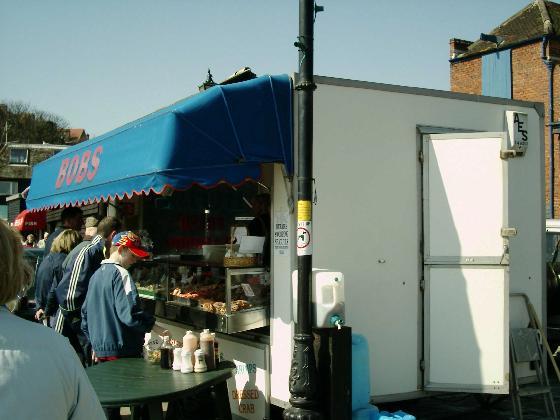
Now here are a couple of modern photos showing the end product of the fishing industry. These two were kindly loaned to me by Cliff Sherwood of the Virtual Tourist site.
The first is Bob's Seafood stall on the Stade.
Now what would you like? Maybe a plate of winkles or whelks? How about some nice shrimp, or jellied eels?
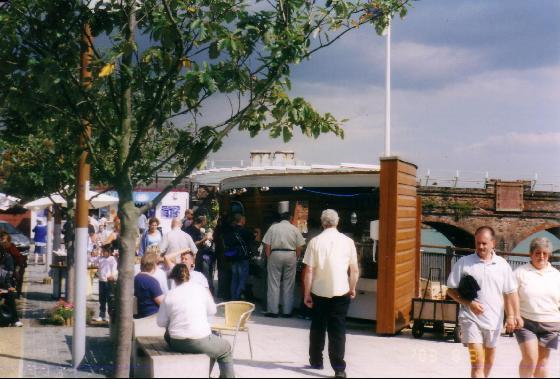
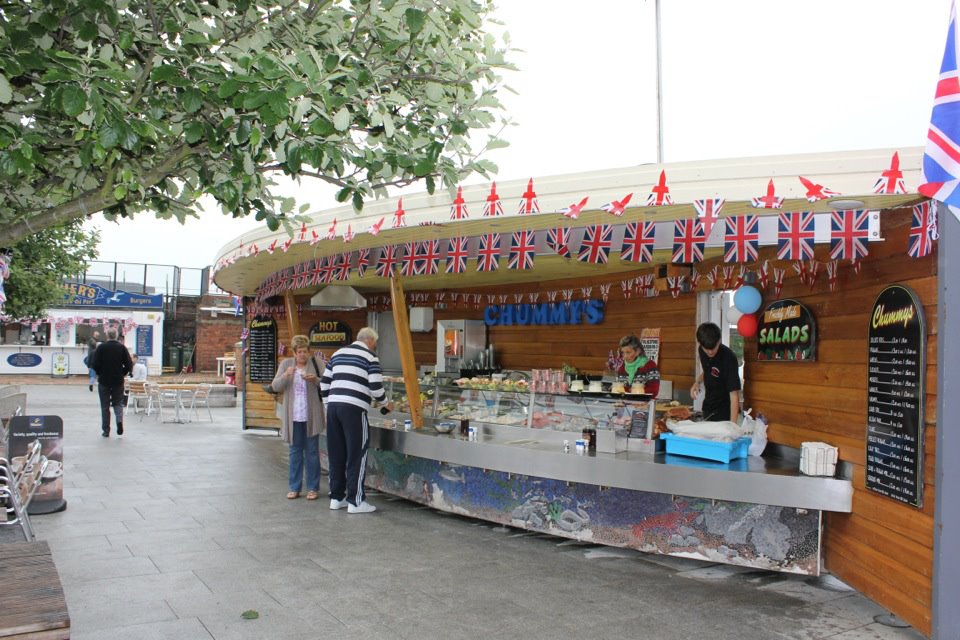
And here is Chummy's, located where the Tram Road ends, over by the inner harbour.
It's great to sit with your plate of seafood, watching the world go by.
However, keep an eye open for the seagulls, those devils will take it right off your plate given half a chance!
Thanks Cliff - these are great photos

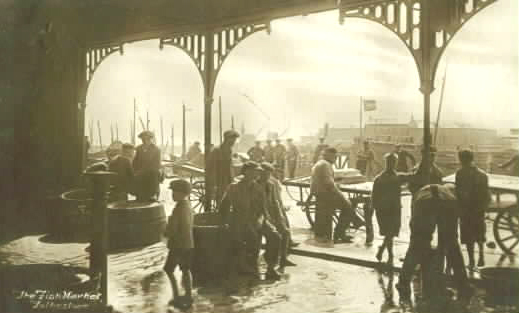
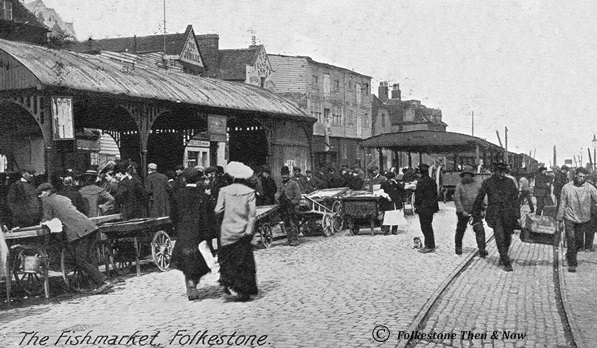
Just when I think I have enough of a subject, along comes another one that I just can't resist putting up. This wonderful photo of the fishmarket was taken in 1912. Don't you just love the little lad in the cap? His dad probably had one just like it!
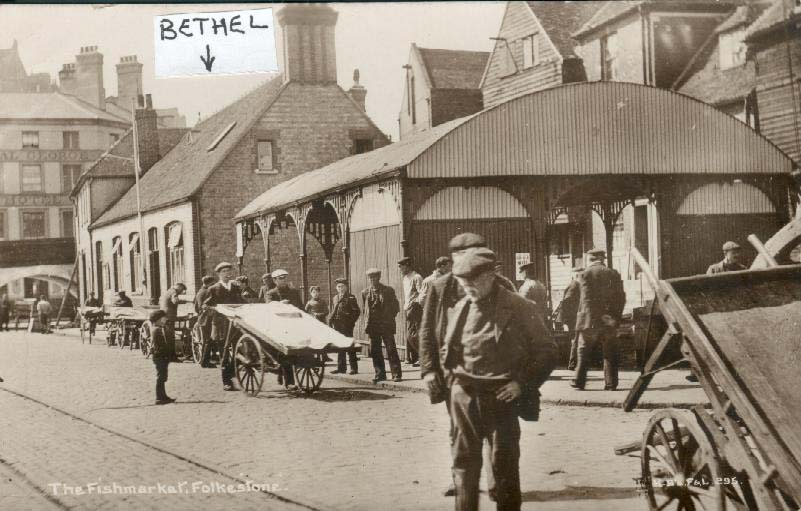
A lady wrote to me saying that she had come across references to the Fishermen's Bethel as a place of birth while researching her family tree, and wondered if I had any information on it.
I didn't, but Alan Taylor certainly did! He sent me these two photos, plus the history behind this interesting building from Folkestone's past. You can read it by clicking HERE
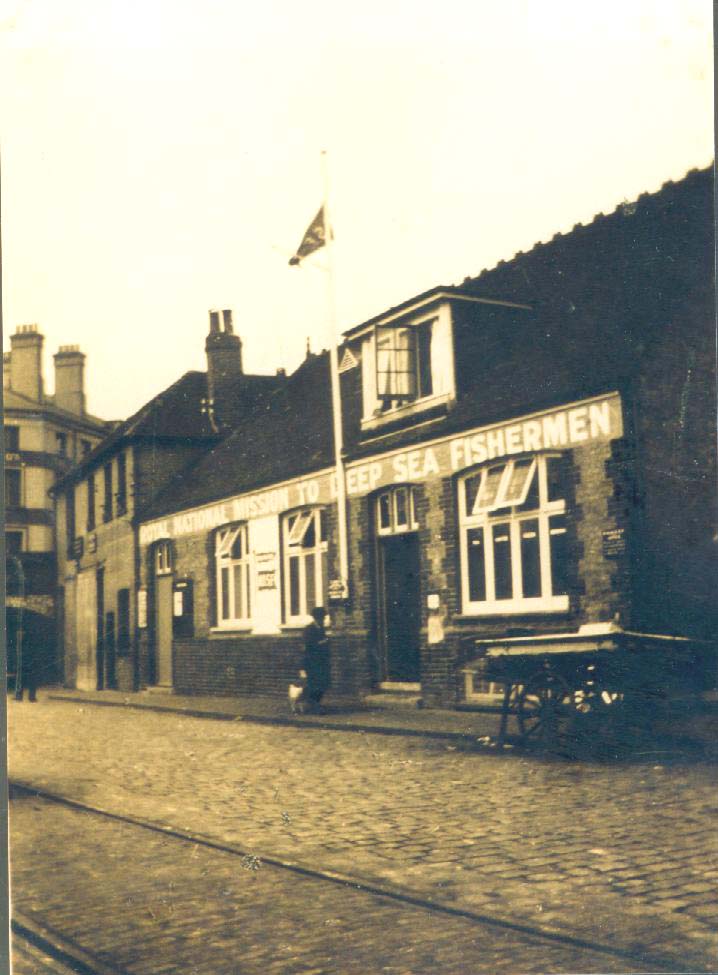
This photo shows how it looked when it was owned by the Royal National Mission to Deep-Sea Fishermen.
It was located on The Stade, and was destroyed by a Messerschmitt on Armistice Day, November 11, 1940.
Thank you Alan, I had no idea this building ever existed. These photos are fabulous.
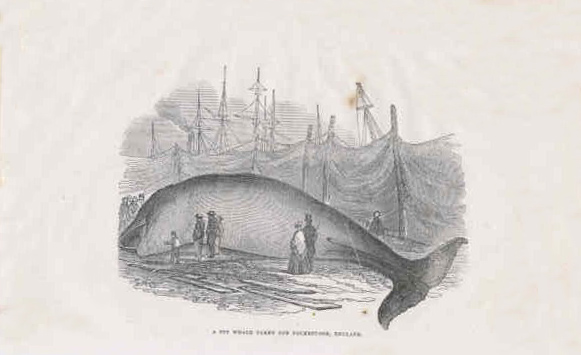
Oh they knew how to fish in Folkestone in 1848 didn't they? This is an engraving entitled 'A Fin Whale taken off Folkestone' However, I doubt you can order it from Chummy's!
Now first of all, why did they take it? For food? What did they end up doing with it all?
Why did they erect the barriers between it and the harbour? They don't look strong enough to contain a whale if it was still thrashing.
Also, what was a whale doing in those waters? It's not usual territory for fish that size.
So many questions, and nobody around who was there!
Alan: This is a photo of fish shed No.2, and these steps have now been filled in. There were two flights of steps facing one another and at the bottom they went through an arch under the Stade to a wooden landing which stuck out from the quay.
Alan: The garments these fishermen are wearing are called tanned- frocks (not jumpers). They were made from unbleached linen and dipped in boiling cutch, a liquid the fishermen used to preserve their nets with. Cutch was made from the bark of a tree, it came in block form which was broken up and dissolved in boiling water. It was a tan colour.
Oh wow! Thanks Alan, I had no idea, so they must have all been dressed alike in those days, and very colourful they must have looked too! I wonder what they use to preserve their nets these days? Maybe the nets themselves are made from a man-made fibre, and don't have to be preserved. They probably buy their jumpers from Marks & Sparks now too! :-)
Alan: No, they are not. They were demolished in 1935.
Alan: Those ferries are laid up, they are not being used at the time, that is why they are moored alongside one another in that direction
Had an e-mail from Irene Saunders to say that she recognised this picture, it is Mr Albert (Nobby) Taylor on the left and William Henry (Black'un) Fagg on the right. Mr Fagg was her grandfather.
Now I have had yet another e-mail regarding Mr. Fagg. This time it is from his great-grandson Graham Lindsey, whose mother Brenda Lindsey (nee Fagg) is his granddaughter. It turns out that Irene & Brenda are cousins! :-)
Graham was a little dismayed that his Great-grandfather was wearing a pink jumper, but there is an explanation of this further down this page Graham, and it wasn't pink, it was more of a tan colour, however, these hand painted cards had a limited palette.
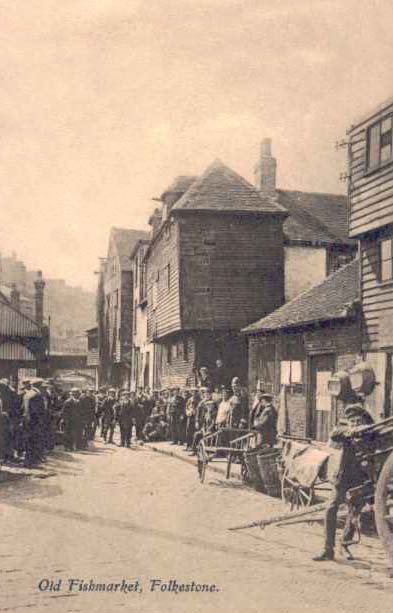
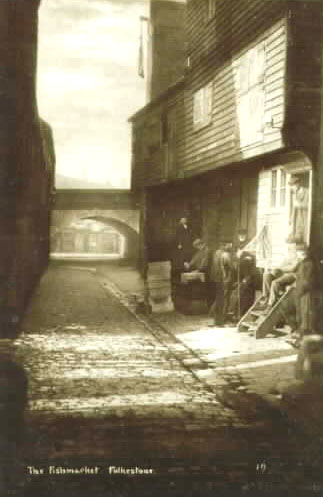
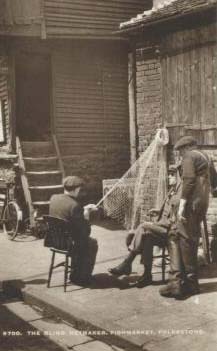
This man was making nets standing up
Was this a meeting? Or a gathering for the photographer?
And although this one was sitting down making them in 1938, he was pretty amazing, because he was blind!
I thought at first that this 1912 card showed a delivery of topsoil! But realised afterwards that it had to be a pile of nets.
This 1923 picture was entitled Rye Boat RX901, but I am not sure if it is the one you can see in front, or the one that looks as if it is going down behind it.
In this one, you can read 238 FE. In the background you can see the Shangri-la up on the hill. I wonder when that was built? Because you see it in the oldest of photos
Case in point. This one is pretty old, and it is there then too.
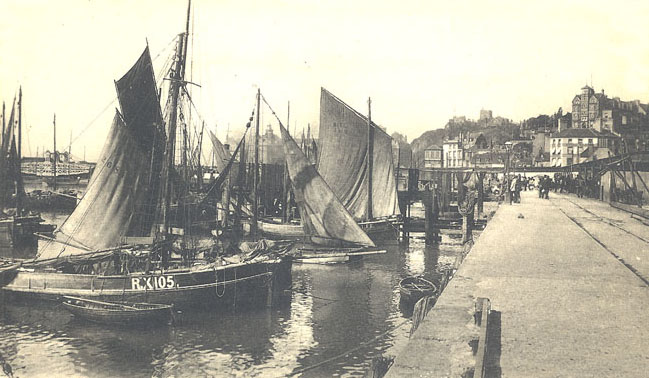
Rye Fishing boat in the foreground, RX105
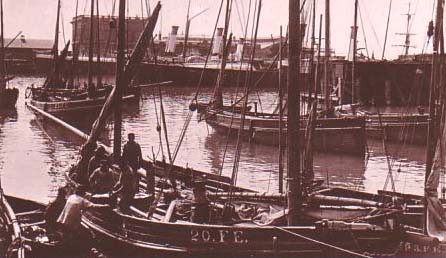
This one dates from 1909, and they are unloading the catch from 20 FE. In the background up against the pier, you can see a couple of paddle steamers.
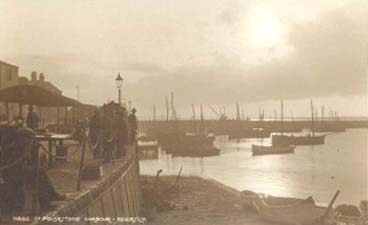
Looks as if the sun is going down, and the vendor on the quay is packing up for the day
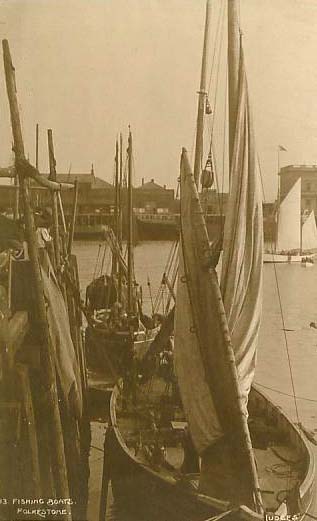
This one gives you a good idea of what a fishing boat looked like in the 1920's
Actually, someone told me after I wrote that, that they were indeed an orange/tan colour. They probably used the same dye on them as they did on their smocks
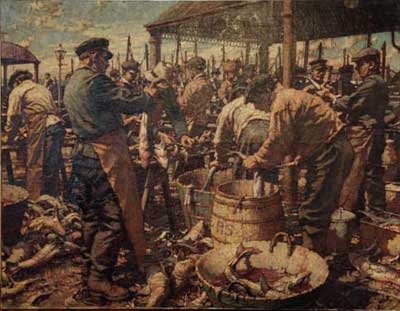
Just look at this! Christmas in the fishmarket!)

A little plate of whelks, some malt vinegar, served to you by a hunk of a bloke in a string vest! What more could a girl want? This great photo was sent to me by John Scotchmer. Thanks John, I really like the background scenery! :-)
If you have your own memories of Folkestone, be sure to share them with us by jotting them down in the book below.
|
This page updated 20 Jan 2026
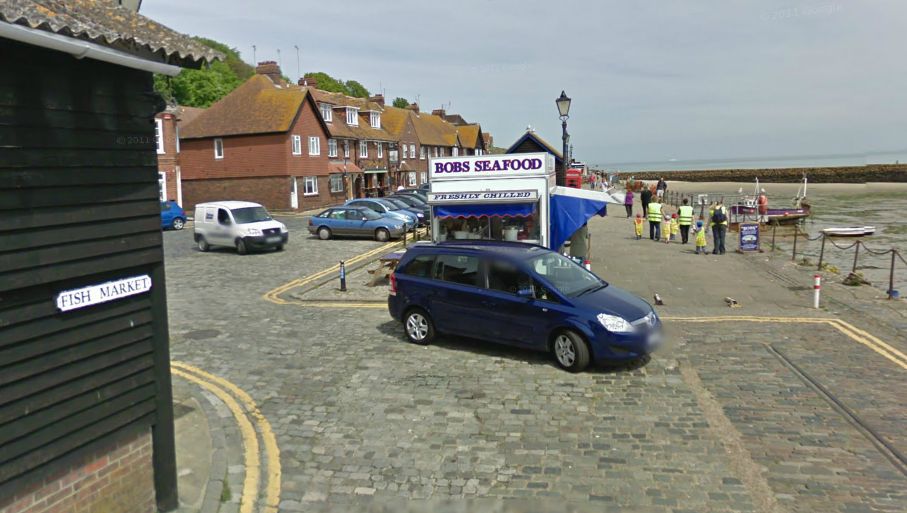
2009
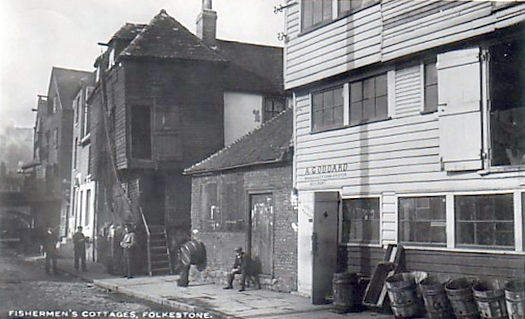
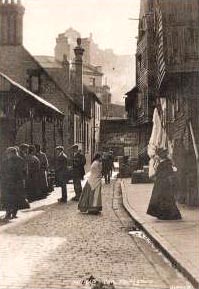
This is entitled Fishermen's Cottages, and they may be on the other side of the tanlade, but that building wasn't a cottage, and neither was A. Goddard's business.
.jpg)
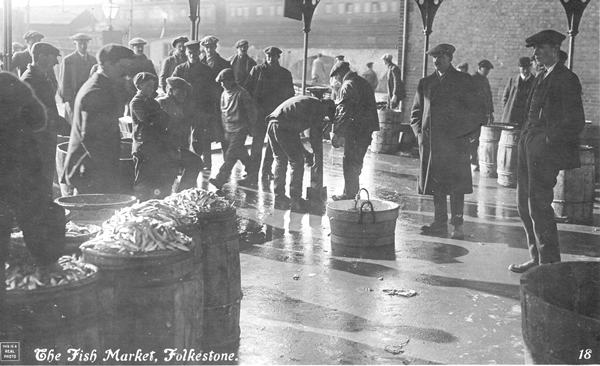
Those were the days when the fishmarket was a hive of industry - and look! There is a train going across the harbour, how nice to see that!
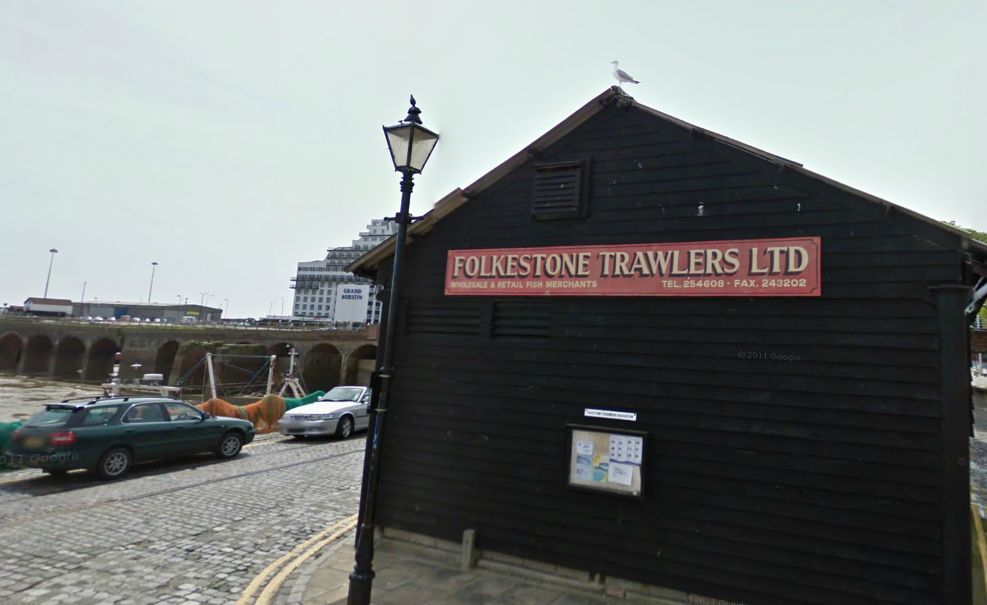
Roughly the same area in 2009 and definitely no trains!
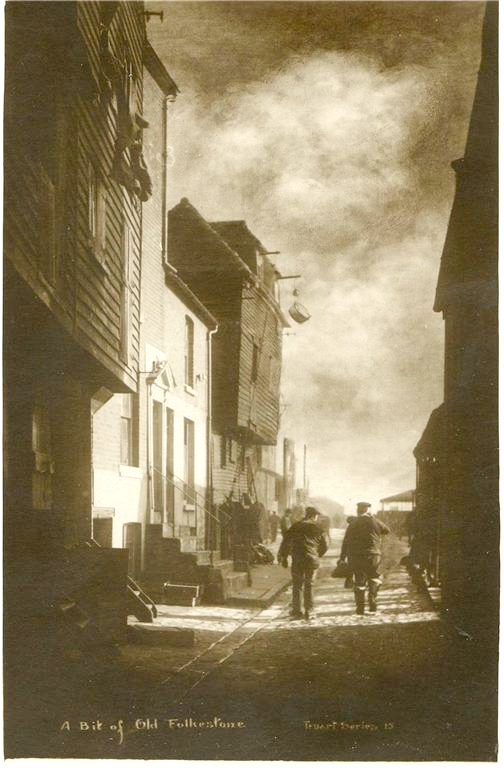
This one is called 'A Bit of Old Folkestone'
This is a very faded card, but you can still make out the number of the boat in the foreground, it is 67FE
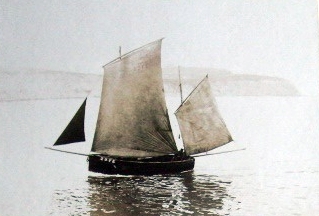
This was the 23FE fishing just off Folkestone
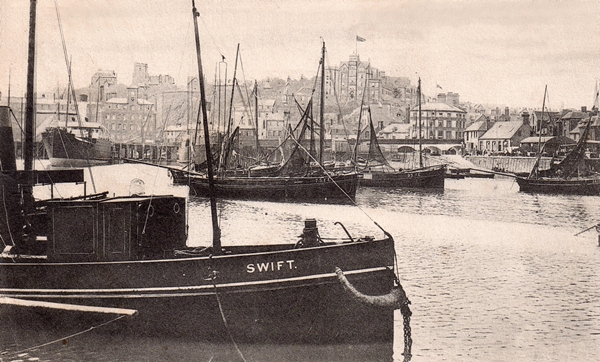
Postmarked 1905, we have a nice close up of Swift. In the background you can see a nice turbine steamer.
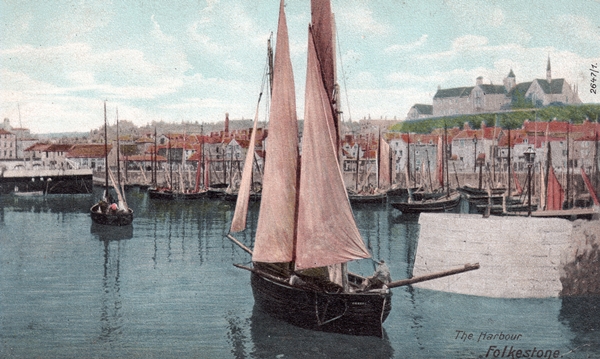
Note the paddle steamer in the background of this one
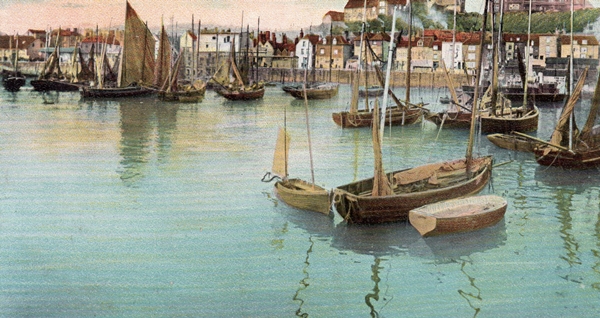
This was entitled Fishing Boats, Harbour and Old Town
In the 1932 photo above, I can't read the number on the boat in the foreground, but the one immediately behind it looks like FE15
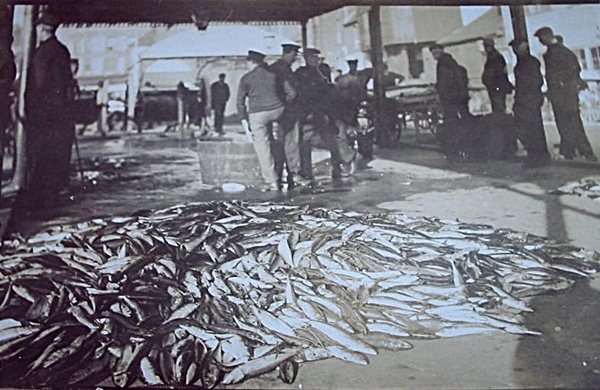
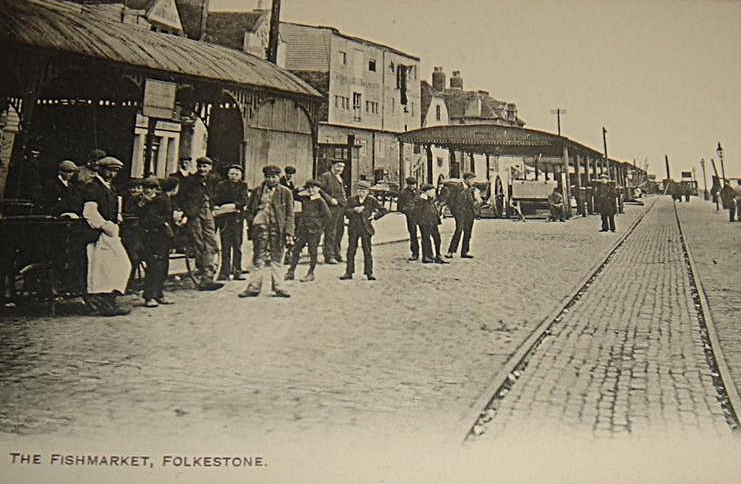
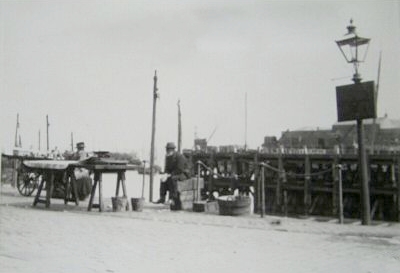
A little blurred, but we have a couple of fish hawkers at the harbour in 1923
Entitled dogfish season
circa 1900
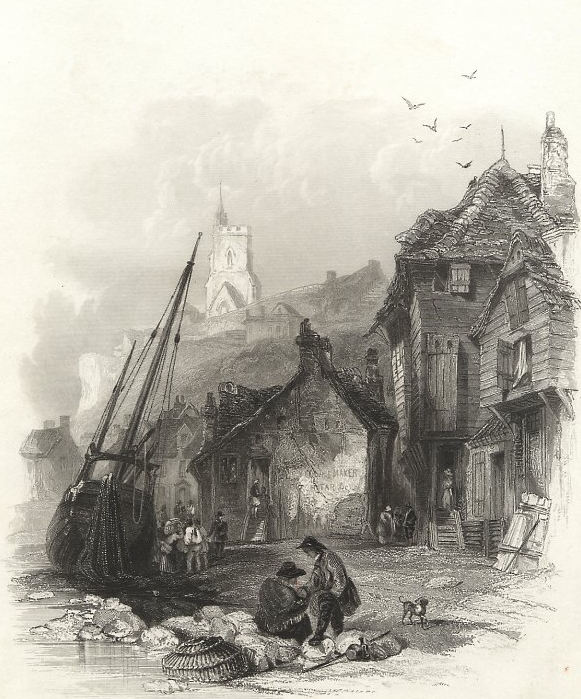
Ever wondered what Folkestone looked like before the harbour was built? This drawing gives you a good idea, you can see the old houses built right on the shore. The only thing recognisable is St. Mary & St. Eanswythe's Church up on the hill. This was drawn in 1840 by L. Boys.
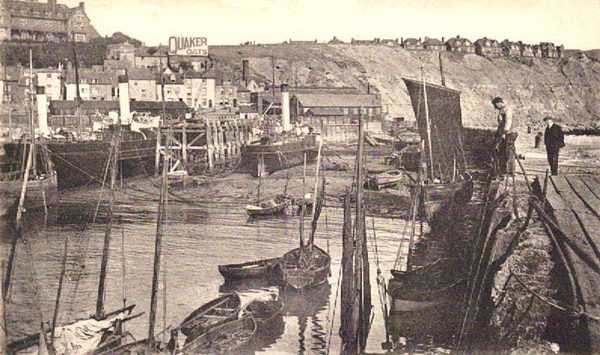
This is how things looked in 1912. The dock you see ahead with ships on either side used to run parallel to the East Head, and was used to moor them while under repairs.
Note the Quaker Oats billboard, with the St. Andrews Nursing Home to the left of it.
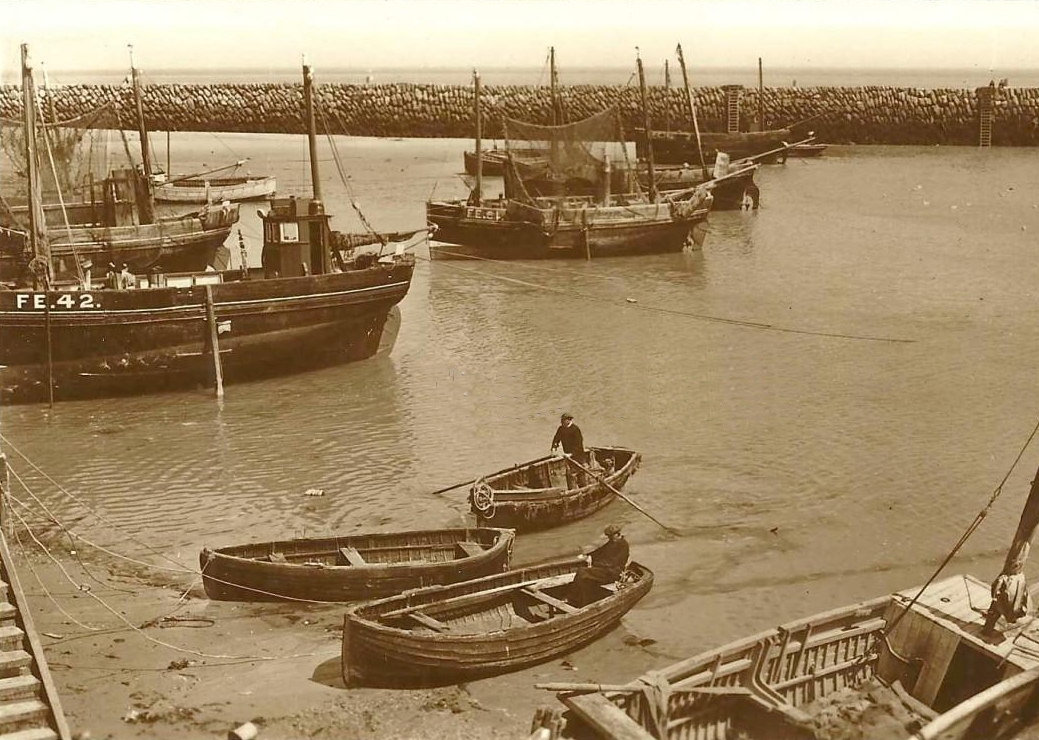
Fishing Fleet circa 1958, and we can see the FE42
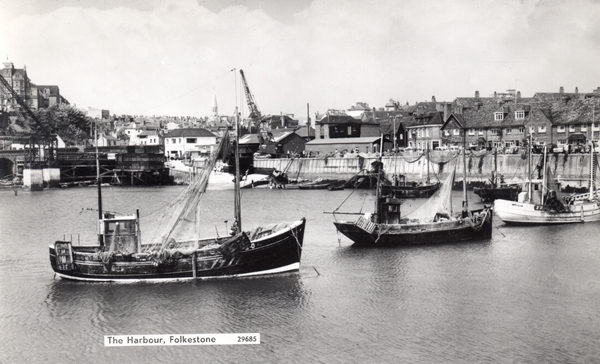
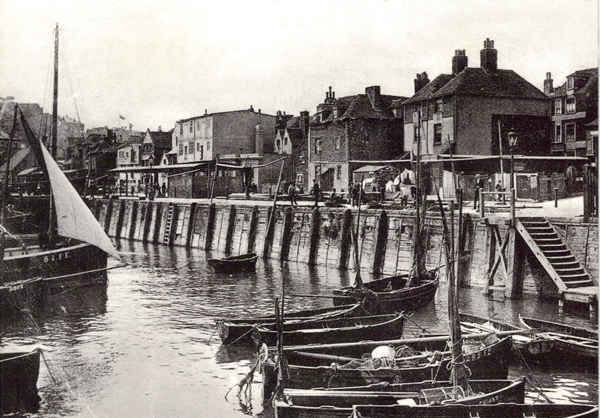
Looking at a larger version I have of this one, it appears McAlpine are doing some work in the background of the harbour. I am not absolutely sure however if it is on the railway line or one of the nearby buildings.

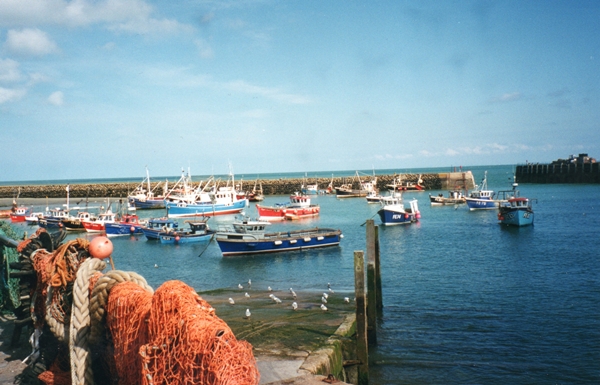
A couple of more modern photos of the fishing fleet. I see in the left one we have FE137, which was spotted in a much earlier photograph further up the page, but whether it is the same boat I have no idea, but if it is, it has obviously had a wheelhouse added to it.
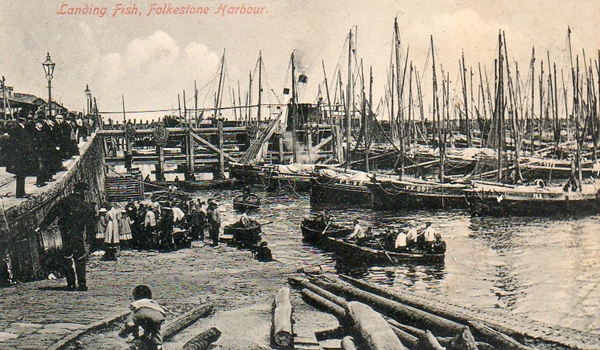
A very old card, posted in 1911 entitled Landing Fish. Just look at the size of the fishing fleet in those days!
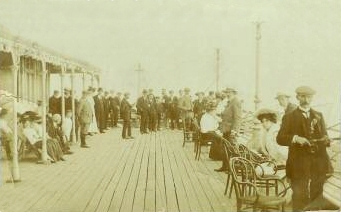
These fishermen in 1907 didn't use a boat, they just went down the Victoria Pier and cast their rods from there.
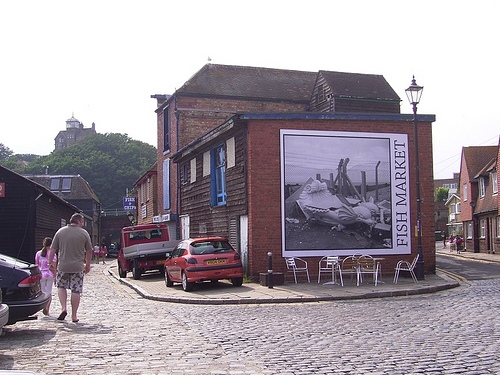
A modern photo of the Fishmarket
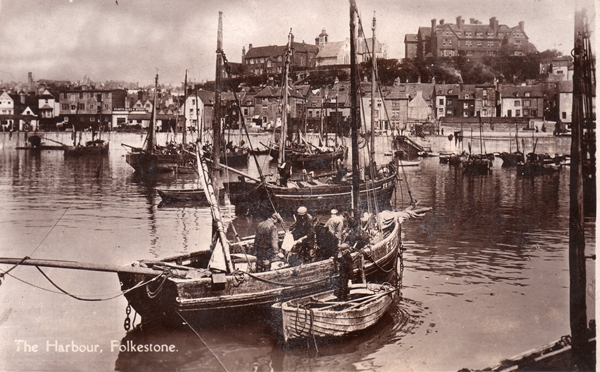
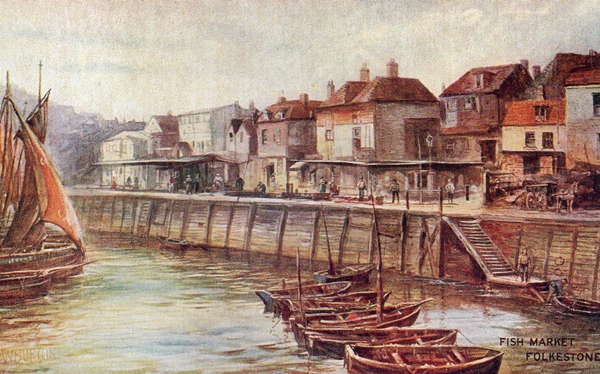
An old art card of the Fishmarket
Talking of Chummy's, now here is a company that has come a long way. As you can see, they started off with a modest seafood stall, now, more than 50 years later, they have a very large one, and have several other locations. They also have a website from which you can order your favourite dish delivered, no matter where in the UK you live! (Unfortunately they can't make it to Canada without spoiling!) But if you are in the UK and would like to relive the taste of your fabulous seaside holiday in Folkestone, you can place your order HERE (This is not a paid advertisement, it is so I can live vicariously through those who are able to order!)

This lovely photo was sent to me by Chris Long. It dates from the 1970's and shows the Burstin Hotel under construction. In the foreground, we can see fishing boat FE122 moored, and in the distance, the majestic Shangri-La.
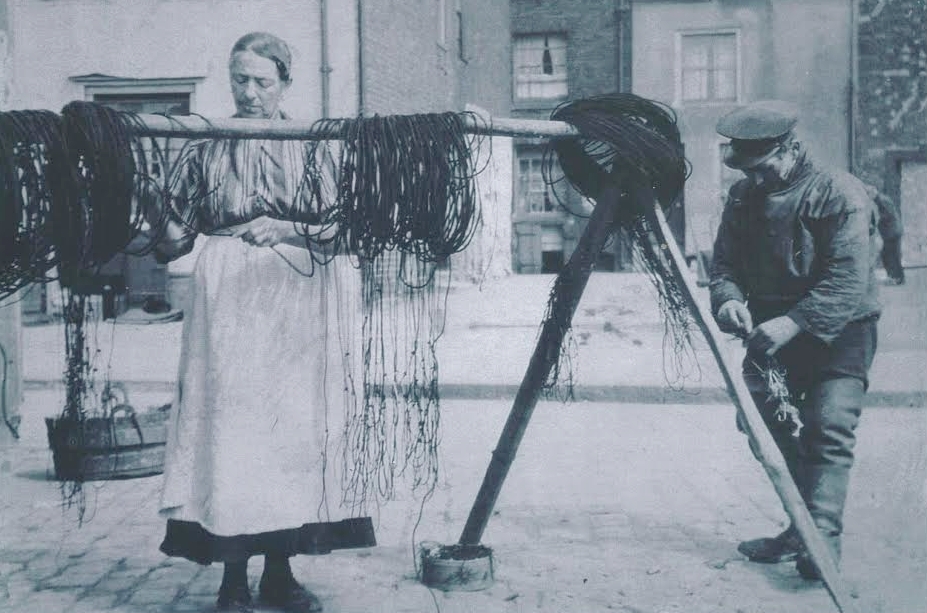
This wonderful photo was sent to me by Vicky Ryan. It's of her Grandparents, Hannah and Thomas Warman who lived in Radnor Street in one of the old houses until it was demolished, they then moved into a new one on the Stade once it was built. Thomas owned his own boat, along with a partner, and Hanna obviously helped him with his nets. This photo looks as if it was taken in the exact same spot as the one further up the page in which it is mentioned that the houses behind were demolished in 1935. I wonder if one of the men mending their nets in that one was also Thomas Warman?
Vicky says: " Apart from my Mum, who was called Gladys they had three other children. Two daughters called Helen and Jean although she was always known as Jane to us. They also had a son called Edmund. Helen died when she was 16 and Edmund when he was 33. He died from T.B. ". Vicky went on to say she didn't know the name of the man who co-owned the boat with her Grandfather, nor did she know the name or number of it, and asks if anyone else does, to please get in touch through this website.
Thank you so much Vicky, this is a perfect addition to our Fishing Industry page.
(Please stop with the theories that the Shangri-La was once a German Headquarters, that rumour was debunked years ago, and the eagle on the wall is not German at all, and nobody was shot in the garden!)

1914