

Page updated 25 March 2026
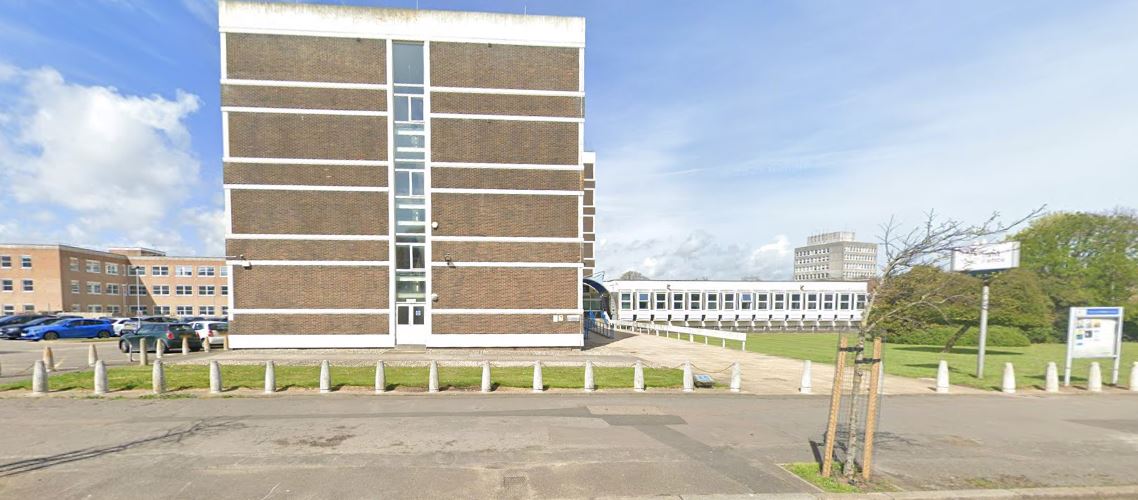
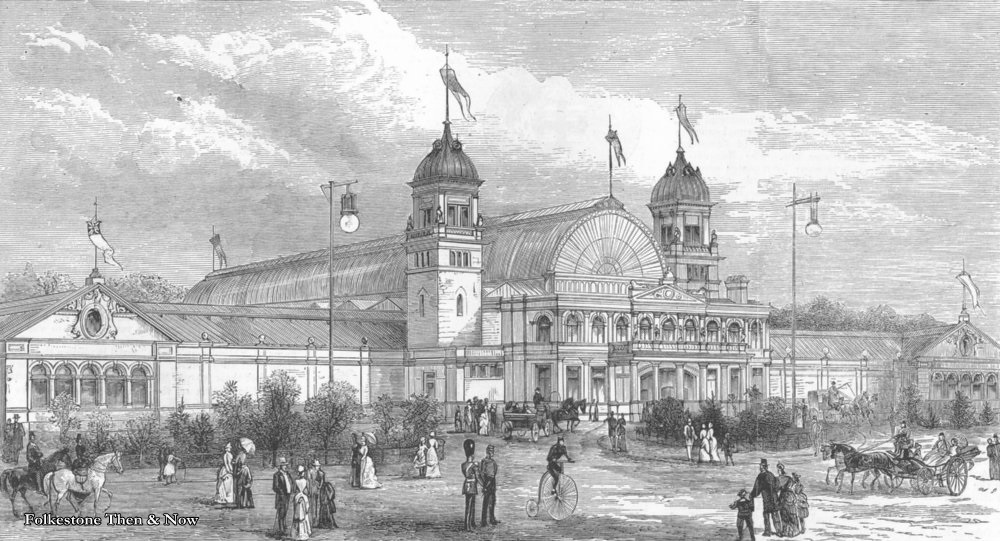
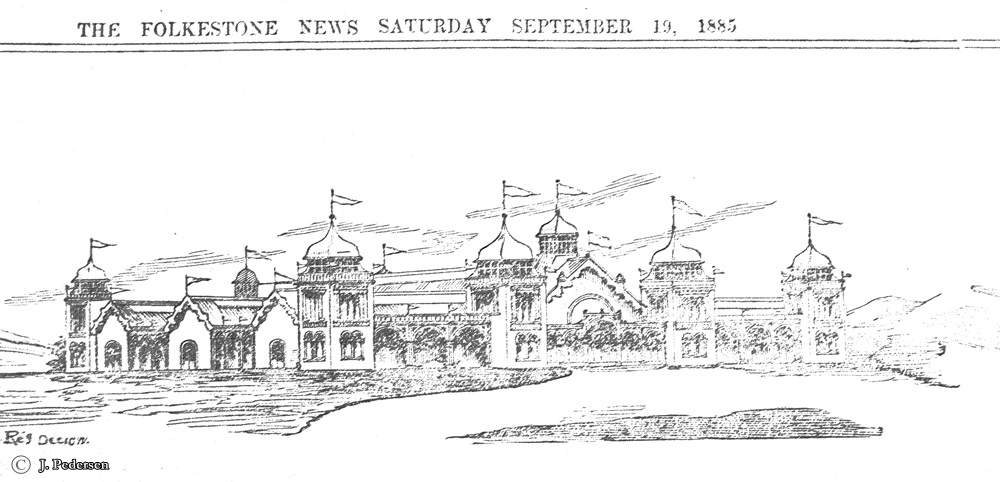
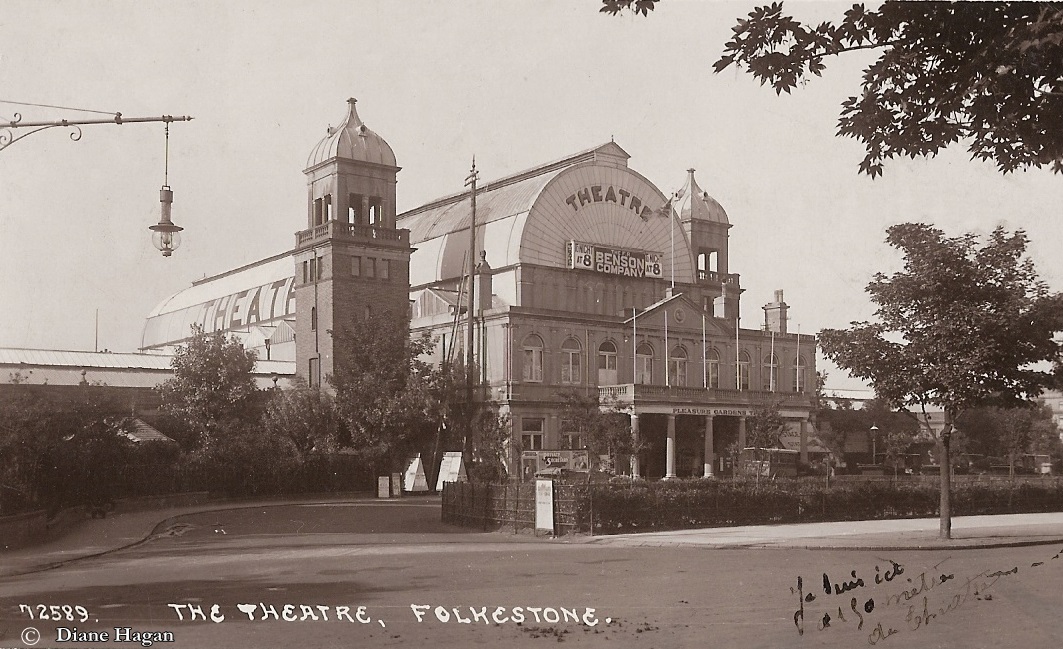
We will start with the beautiful Pleasure Gardens Theatre in Bouverie Road West. Built in 1886 for the Art Exhibition, it was an absolute masterpiece in design. The photo on the right dated 2025 houses the Kent Police Station, which now sits on that piece of land.
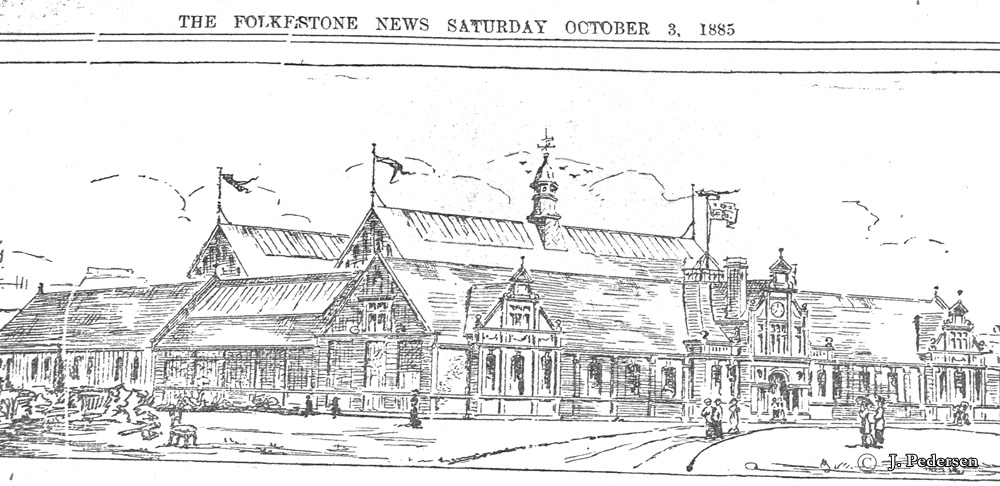
These Sketches, kindly sent to me by Jan Pedersen, are rejected design submissions for the Pleasure Gardens Exhibition building. I wonder if that much thought went into the design of the police station? Probably not, there are only so many ways you can design a plain box.
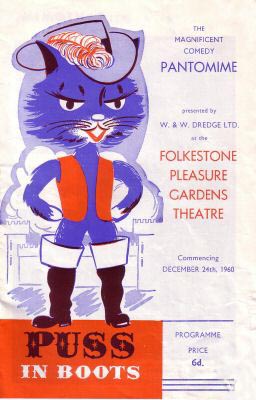
This was the winning design, and they didn't stray far from it with the finished building. Once the exhibition was over, it was used for many other purposes. In 1896 on 29th June, they showed the very first moving picture show in Kent. Unfortunately I don't know what it was called. It was also used for live theatre for many years, which included an annual Christmas Pantomime that I am sure many people today still remember. It was also used by the Folkestone Operatic Society, and in the 60's it was the home of Tofts Studio & Jazz Club, plus a dancing school.
Don't you love the penny farthing bicycle in the sketch above?
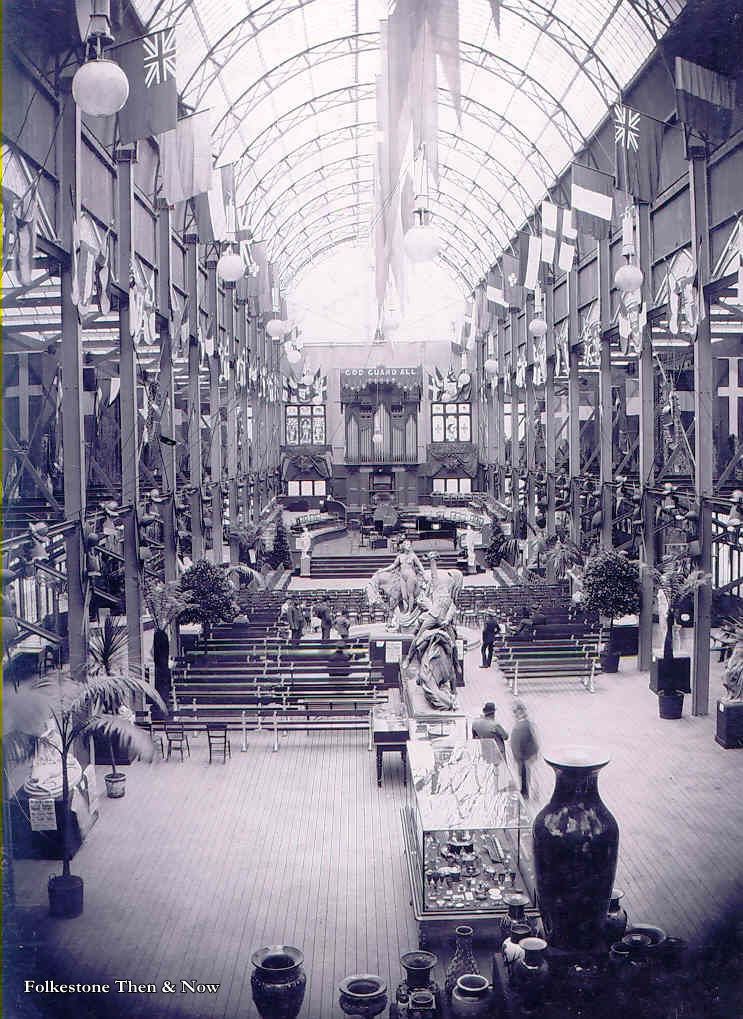
This is a really interesting photograph of the inside of the Pleasure Gardens during the exhibition. I have made this clickable to show it in better detail. As an aside, I have been told that the statue that used to stand outside the Royal Victoria Hospital originally came from the Pleasure Gardens, having been left behind when the exhibition was over. If you look at the enlarged photograph, you will see quite a few statues, which leads me to believe that it is true. Now all we have to do is solve the mystery of where it went when it was taken away from the hospital.
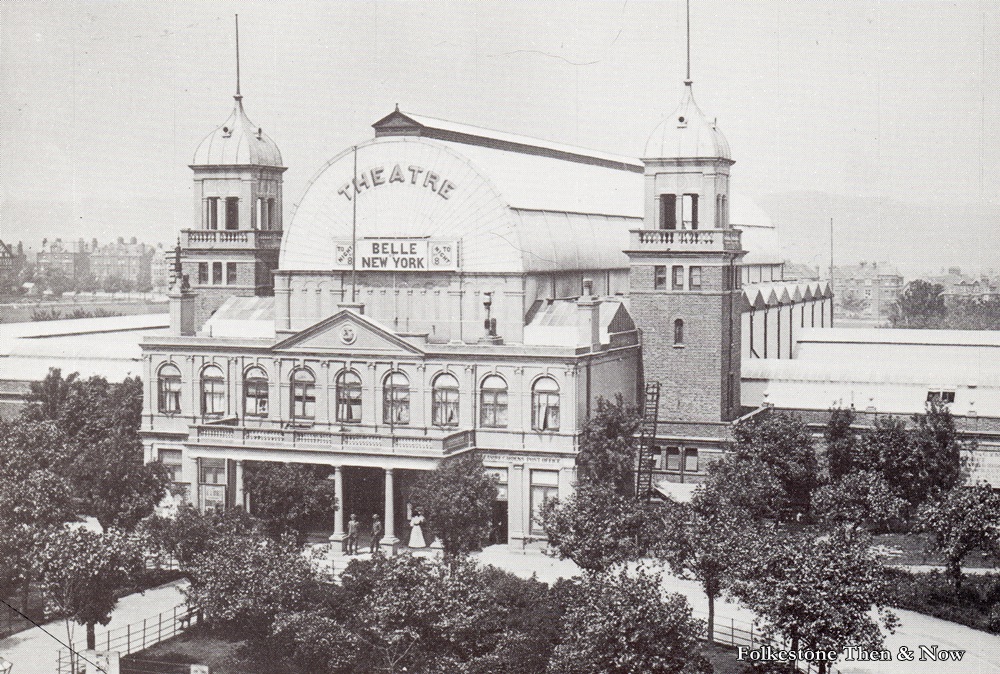
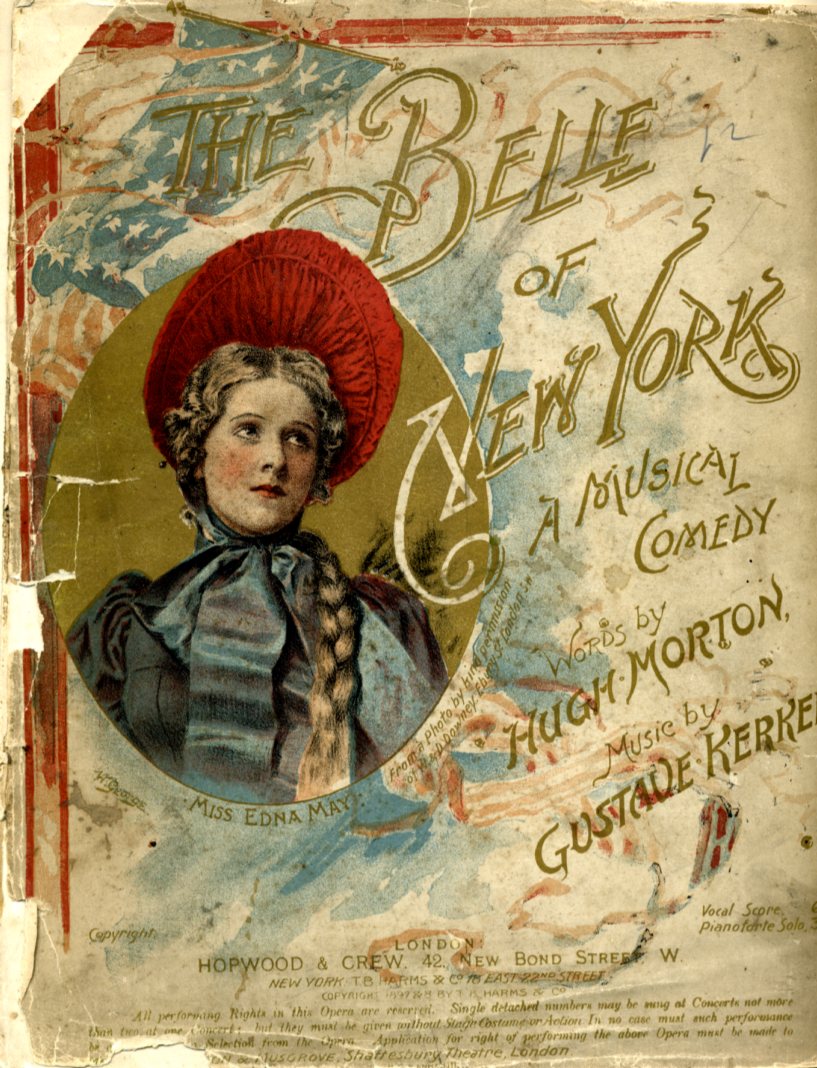
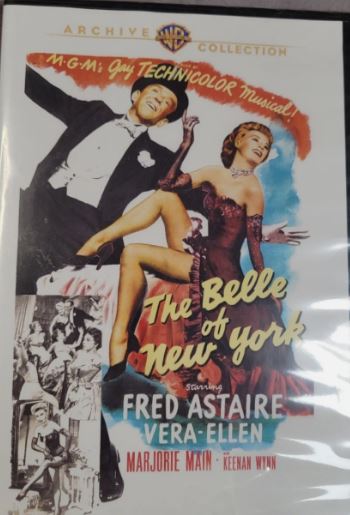
The Belle of New York was a two act musical play from 1897 when it opened on Broadway. Not too successful there, but after it came to London it was a smash hit, and later travelled all over England and France. It was produced as a movie in 1952 starring Fred Astaire, Vera-Ellen, Alice Pearce, Marjorie Main, Gale Robbins, and Keenan Wynn, which was also a huge hit. However, judging by the length of the skirt on the lady standing at the top of the stairs, I would guess a production of the play was on offer.
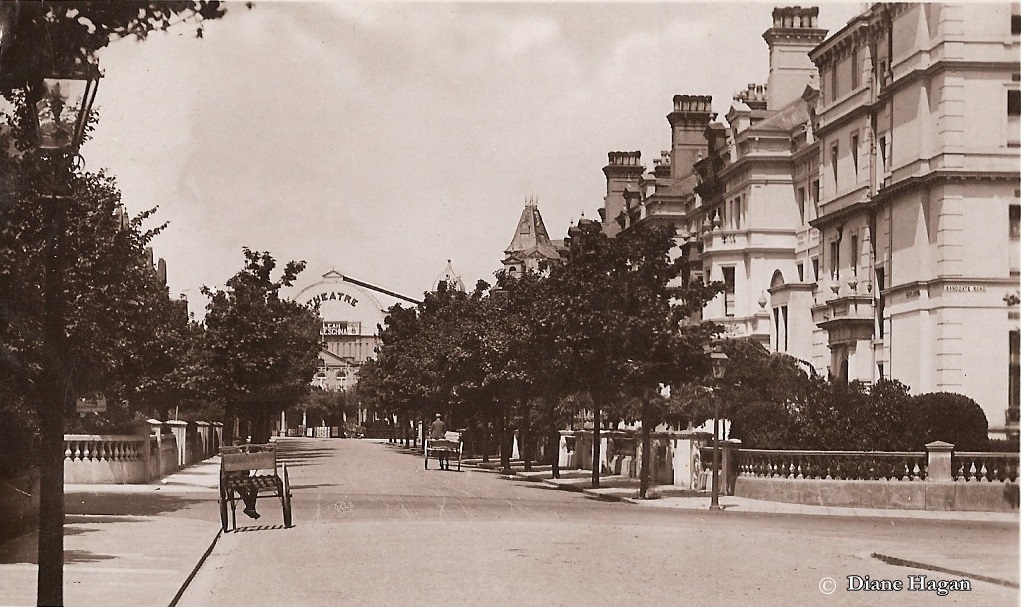
This one just shows you how you could see the theatre at the end of Augusta Gardens.

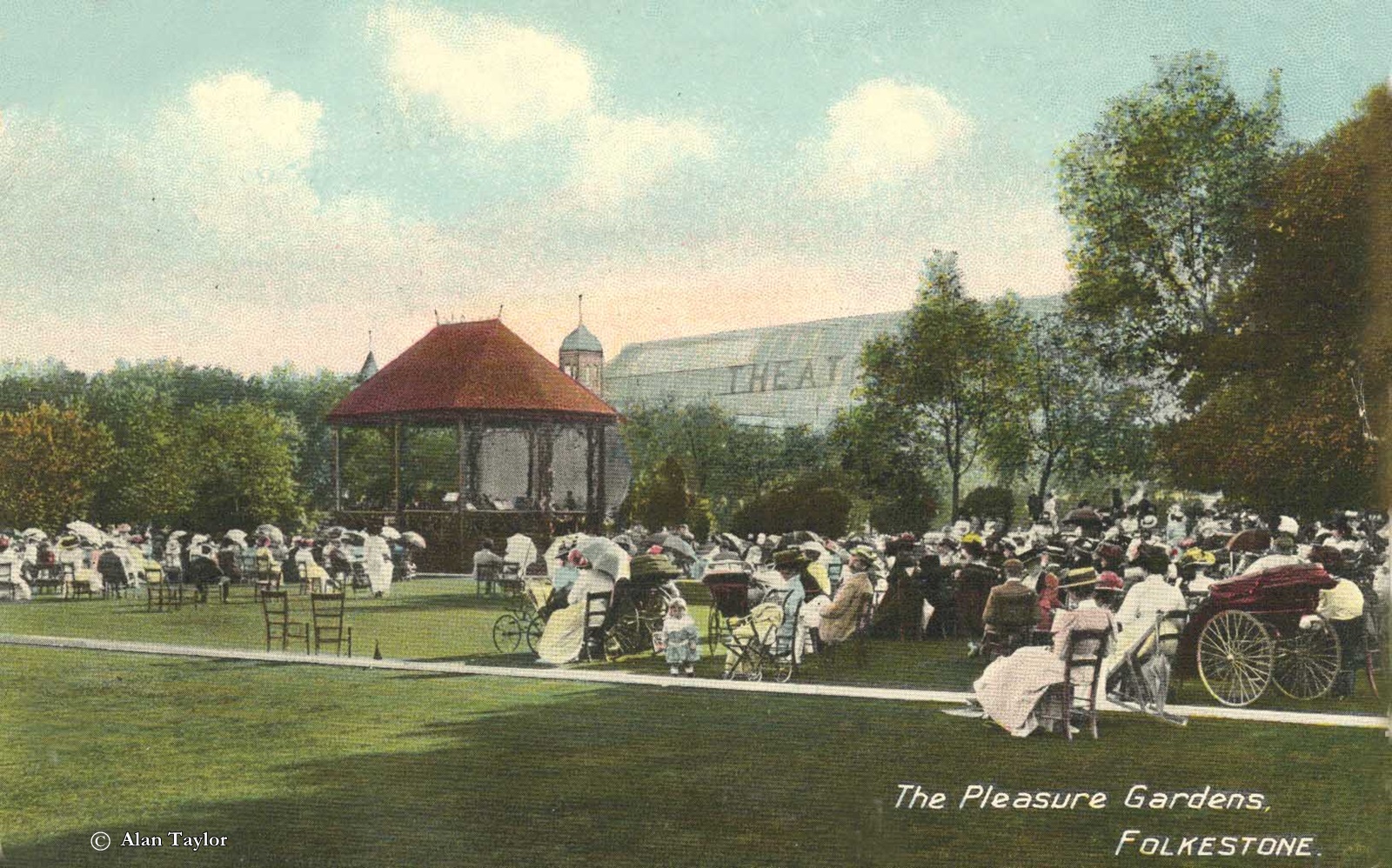
Look what else the Pleasure Gardens Theatre had, its own Gardens complete with a bandstand. What a pleasant way to pass a summer afternoon Do you think they had that bath chair on the right specially made? I don't think I have ever seen one that big, must have been very heavy to push. Thank you Alan Taylor for this photograph.
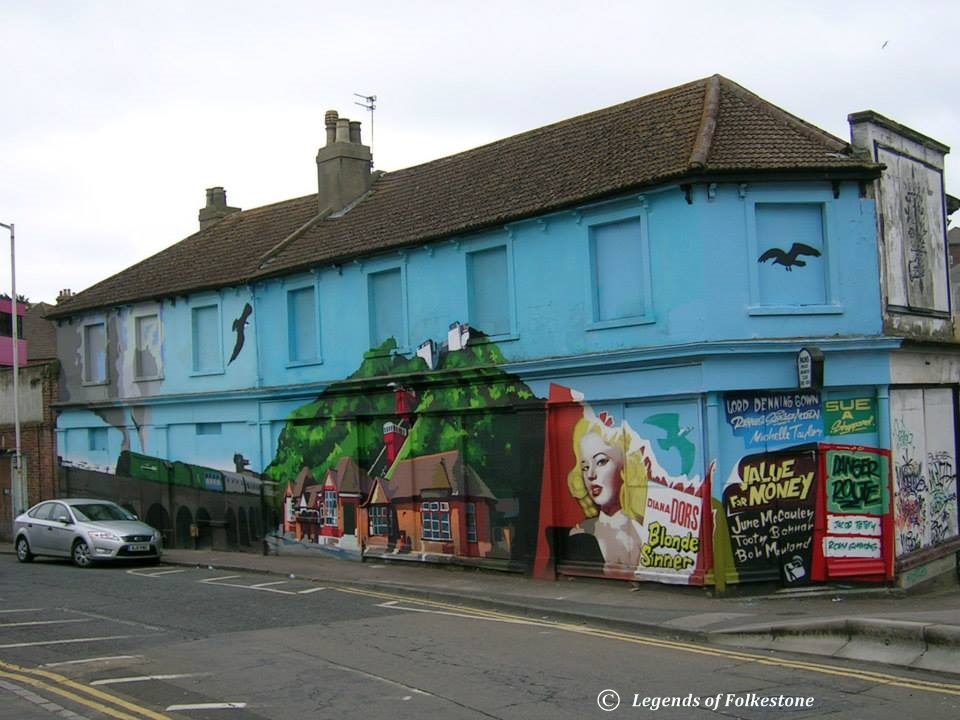
This photograph, kindly loaned by Legends of Folkestone was painted on the back of what used to be the Co-op. I am not sure what it was being used for prior to demolition, but I am sure someone will let me know. It was located in Dover Road at the island junction with Tontine Street. I don't know who painted it, but they were very talented, and knew quite a bit of Folkestone's history. It shows the Golden Arrow going over the viaduct, the lifts and Diana Dors, who did indeed visit Folkestone while on a film shoot.
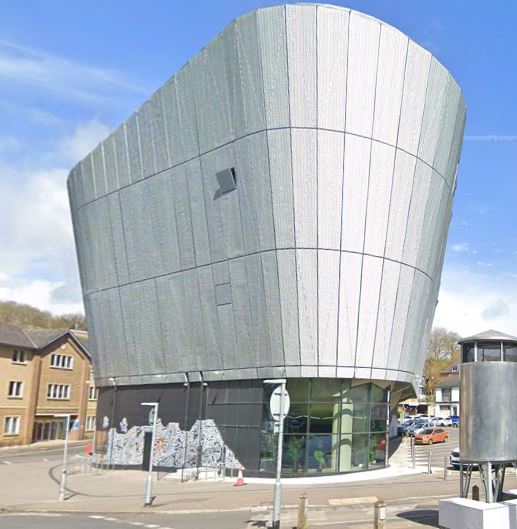
The building on the left had to go, along with the artwork, to make way for F51, that took years to build. It is a Skate Park with three skate park floors, (including the world’s first suspended concrete bowls), a 15 m climbing wall (the tallest in the south east), a dedicated bouldering area, boxing facilities, and a café.
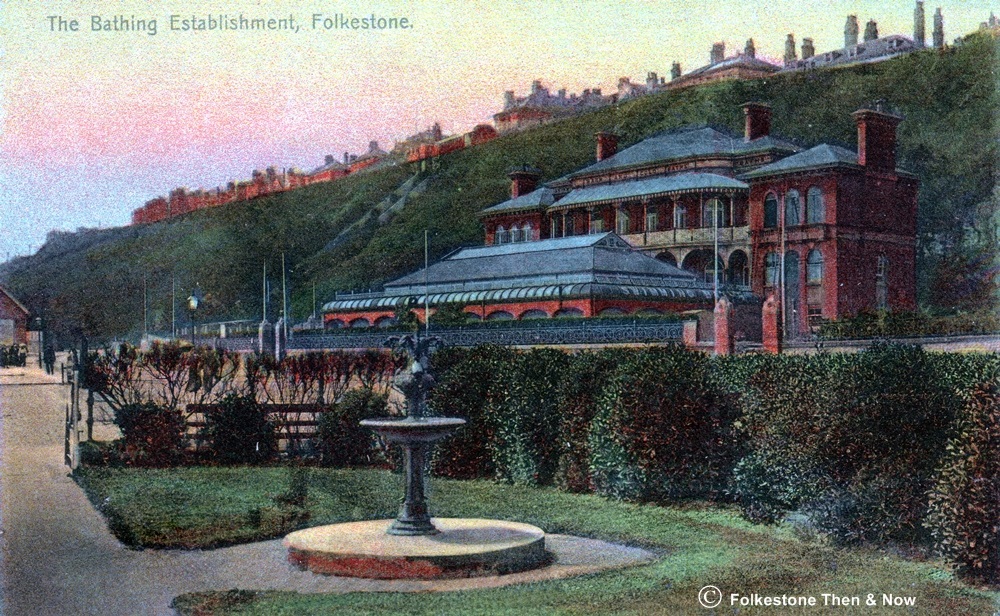
This was the Bathing Establishment located to the right of the lifts on Marine Parade, and it is clickable if you would like to see a larger version along with a price list for their services back in the day. We also have an advertisement for it. Later on it was renamed The Marina, now demolished.
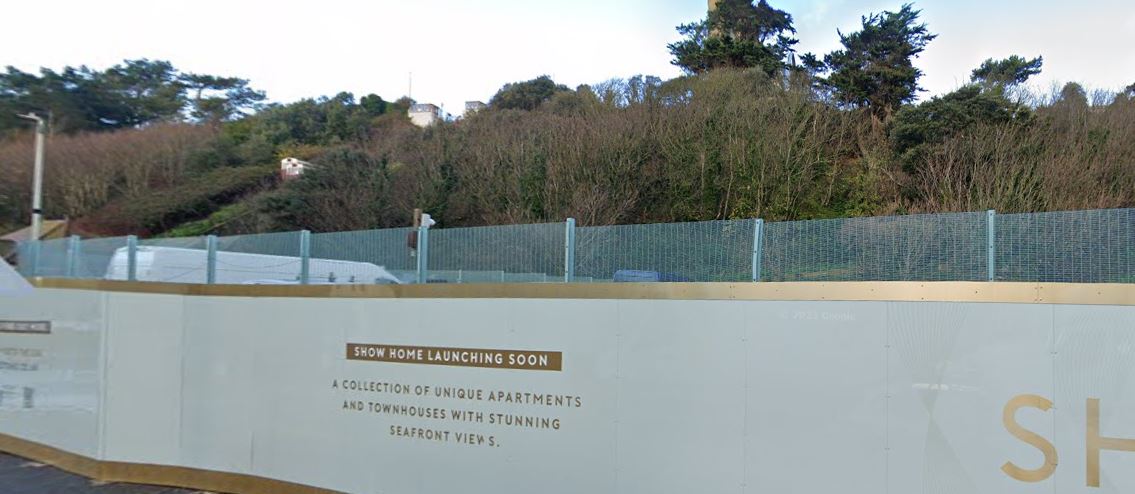
This was the site of the Bathing Establishment/Marina in 2022. They were in the middle of building the Shoreline Luxury Apartments across the street right on the beach. I believe the first block is finished now, and available to buy. You can see the new block in the distance in the photo below.
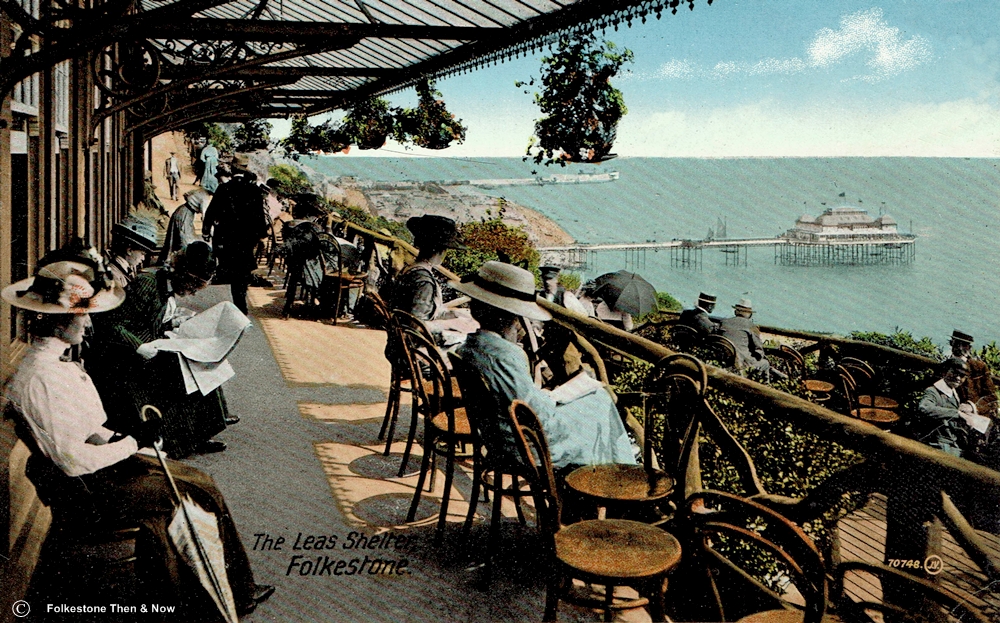
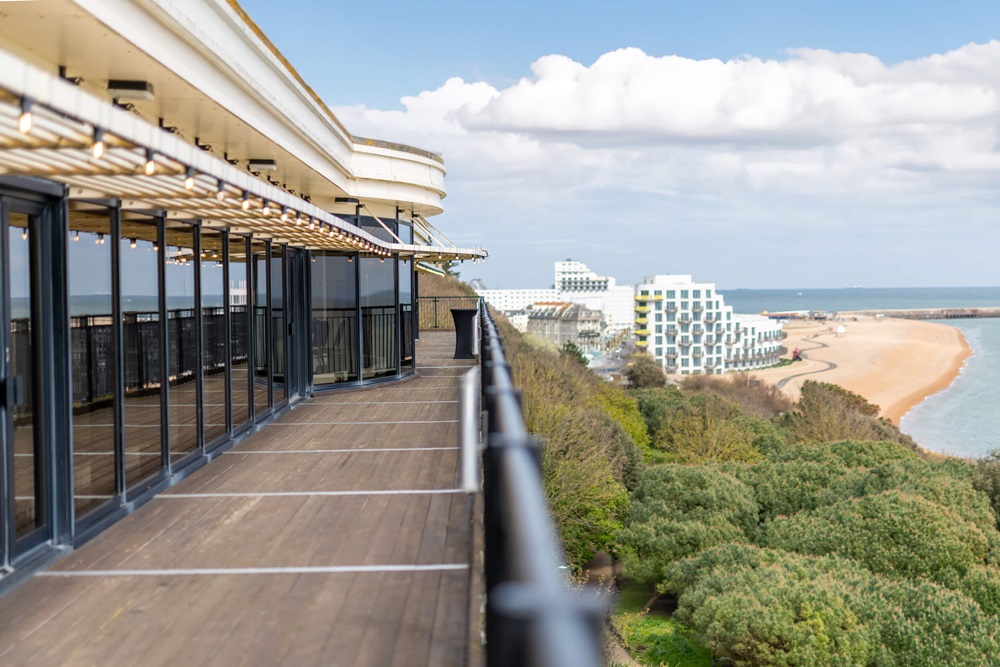
The Leas Shelter was constructed in 1894 which was the predecessor of the Leas Cliff Hall. The Shelter had a concert room for entertainment and seated 200, plus an orchestra. Then the Leas Cliff Hall was opened in its place by Prince Henry, Duke of Gloucester on July 13, 1927.
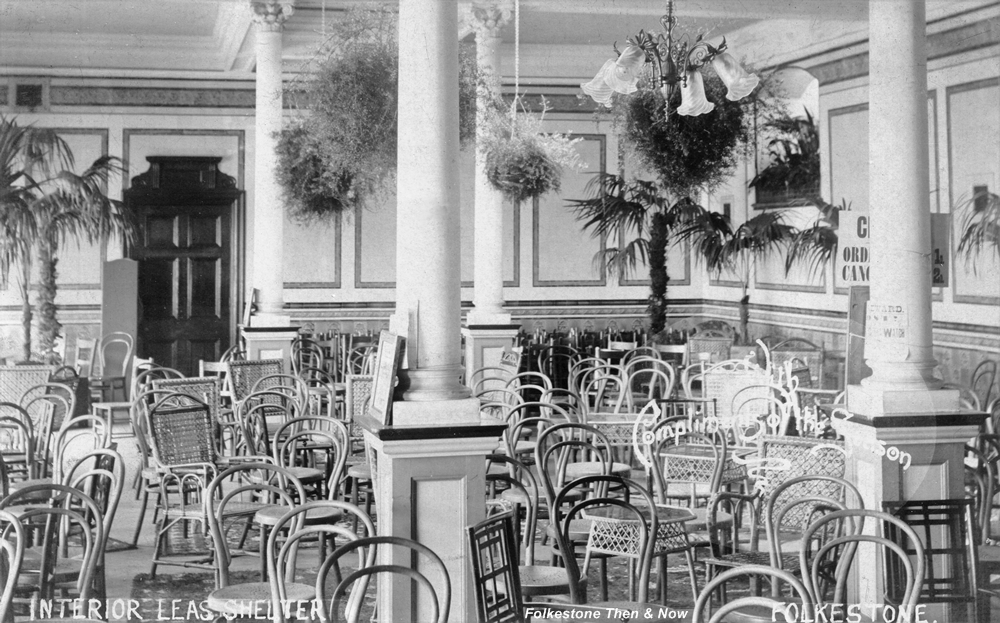
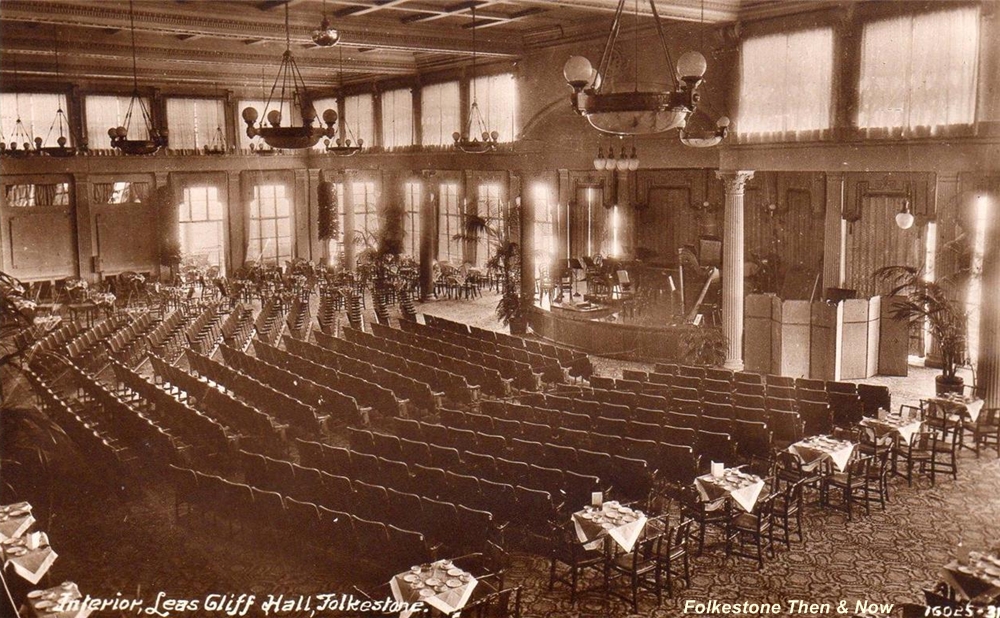
On the left, you see the interior of the Leas Shelter, and on the right, although the Leas Cliff Hall card was postmarked 1931, it still looked a lot like that when I was in there back in the early 1960's, except back then the seats and tables were removed so we could dance.
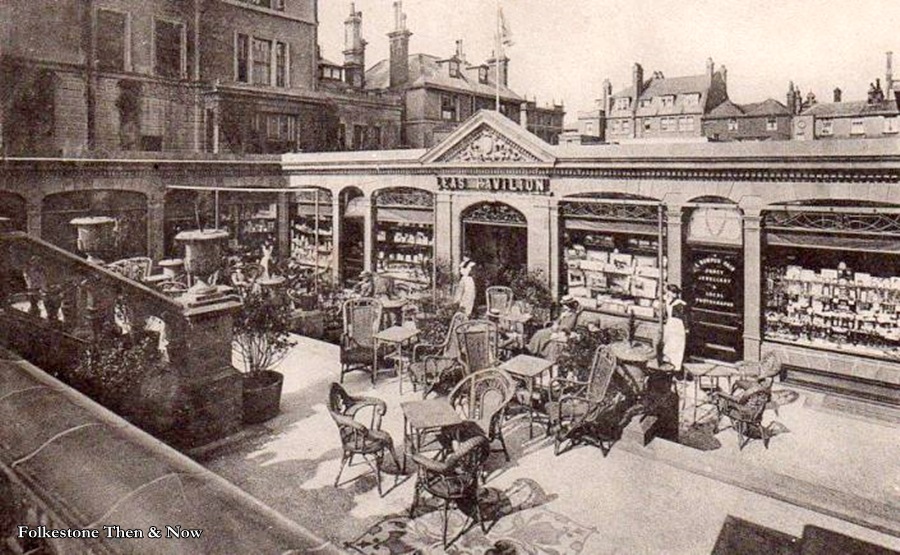
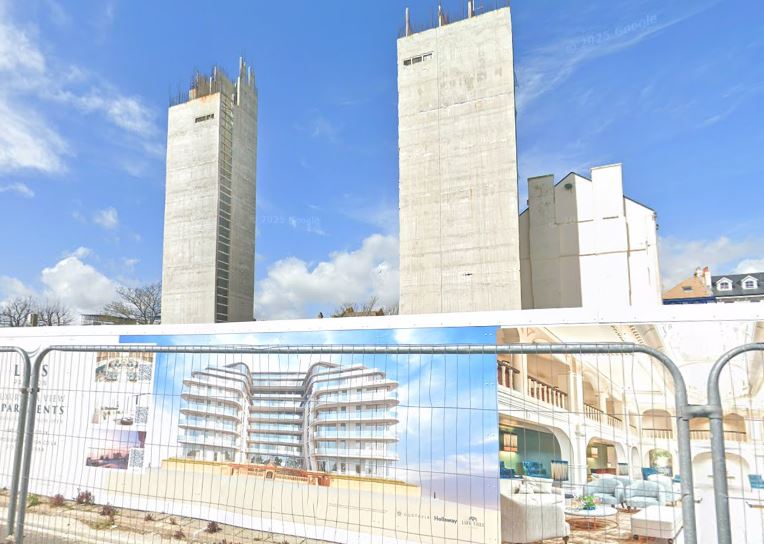
While we are on The Leas, we have to mention this one. Above left is the Leas Pavilion in 1904, built with a beautiful terra cotta facade, most of it was built underground so it wouldn't spoil the view from the hotels around it. As you can see, it was a tea room where you could sit outside, or inside in inclement weather, and a few little shops. It later became a wonderful theatre run by actor Arthur Brough. When the theatre closed, it was turned into a bar called the Leas Club, then suddenly the bar was gone and the building was under threat of demolition to make way for the inevitable block of flats. People were very upset about this, and started a movement to save it. Several well known actors put their names to the cause, and money was raised, but in the end it was sold to a developer who promised to save the terra cotta and the beautiful embellishments and replace them afterwards. The plans were as you see on the hoarding, with the lobby picture showing the balconies and arches that were inside the building, leading me at least to think they were going to build around what had been the theatre inside.
The builders did take off the pieces as promised, then put up a large hoarding, and completely demolished the whole building including the theatre. They erected the twin towers you see on the right, and disappeared. It has now been a year or two and everything still looks as you see it. I haven't heard if anyone knows where all the saved pieces are - if they really saved them. What a disaster!
The Leas has its own page, so you can find lots more photos there.
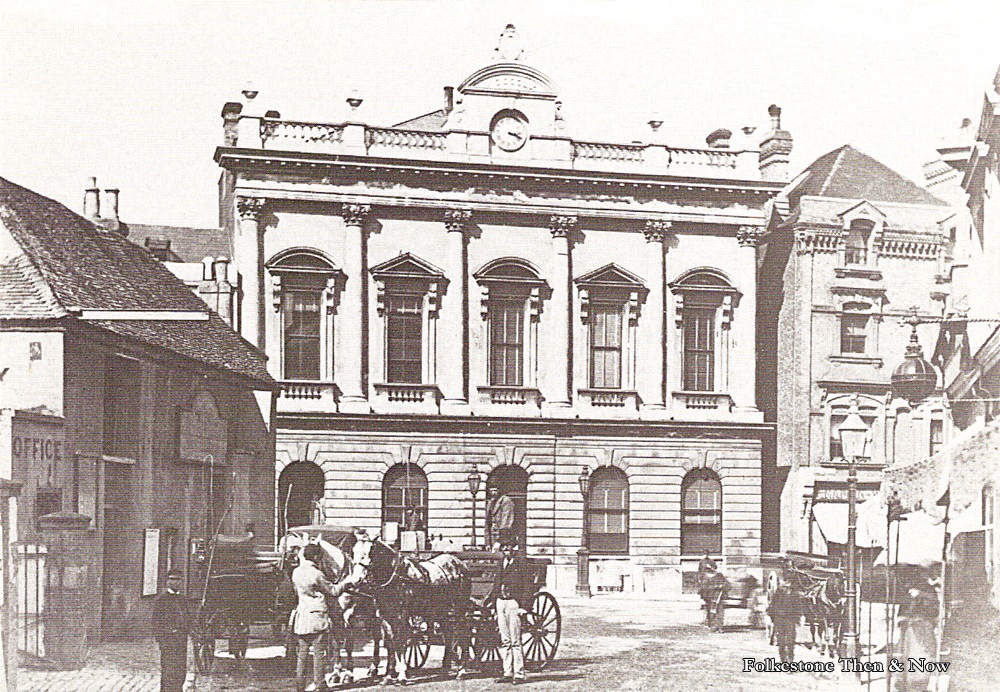
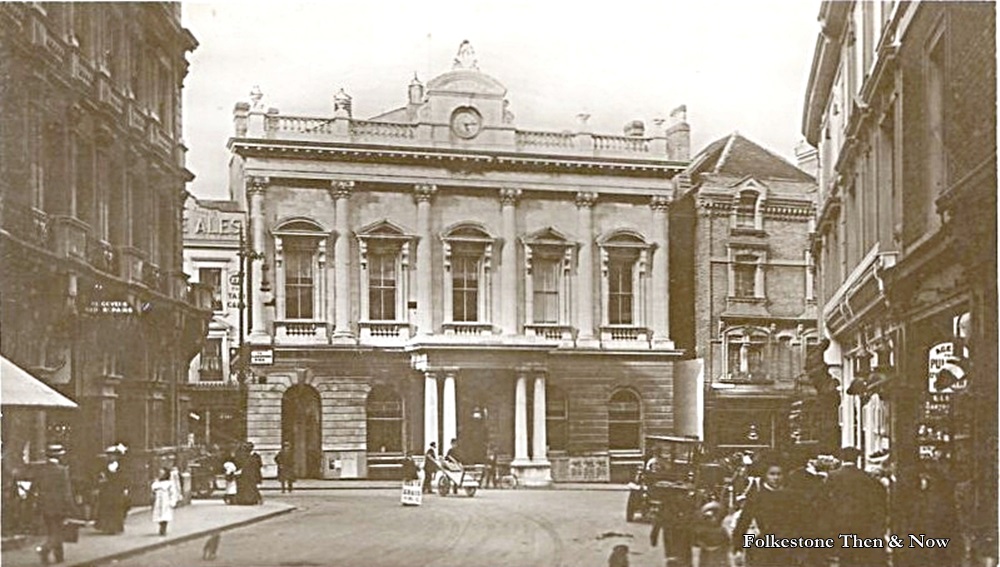
A very well known building in Folkestone is the Town Hall - or Guildhall as it used to be called, hence the street being called Guildhall Street. When it was first built in 1861, it was not only the Council offices, but also the police station with cells in the basement. There was also a covered market at the back of it. It sits at the junctions of Guildhall Street, Rendezvous Street and Sandgate Road, which was at one time called Cow Street. In the first photo on the left was Valyer's Stables, and the chimneys you can see behind the roof belonged to the King's Hotel that stood on the corner. The picture on the right dates from 1912, by which time the King's Hotel and Valyer's had been demolished, and the magnificent Queen's Hotel had been built on the site of both.
The photo below dates from 2017, by which time the Queen's Hotel had been demolished several years ago, much to the dismay of many of the locals, and Montague Burton Tailor's was in place, and later Bon Marché who is still there today in 2026, but possibly not for much longer. The town hall now is home to the Folkestone Museum, which had to move from their heritage building on Grace Hill due to some much needed repair work, for which the Council could not find the funds. The future of that building is still uncertain several years later. There is also a Silver Screen cinema inside the Town Hall, but I hear that too is in jeopardy because of lack of repair funds. I fear the internet and lack of tourist trade are still taking a toll on the town's income despite the extra tax revenue brought in by the many new apartment blocks that have been built. They don't seem to be able to afford to maintain the buildings they own, and their answer is to sell them off to developers. So Folkestone is slowly but surely losing their services. The Town Hall itself looks much the same except it has lost the tops of the finials on the roof.
As we mentioned the Silver Screen Theatre, why don't we look at the cinemas of Folkestone, or rather the lack of them today:
The Guildhall was the first place in Folkestone to screen silent movies, and they did it shortly after it was built, but by 1910 the first dedicated cinema was built. This was the Electric Theatre on Grace Hill.
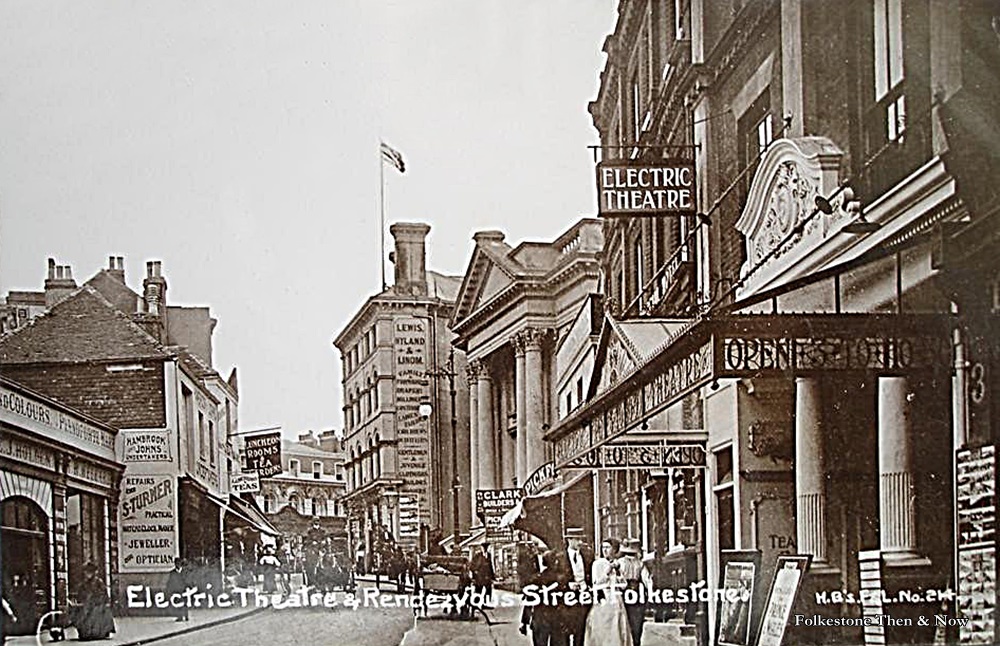
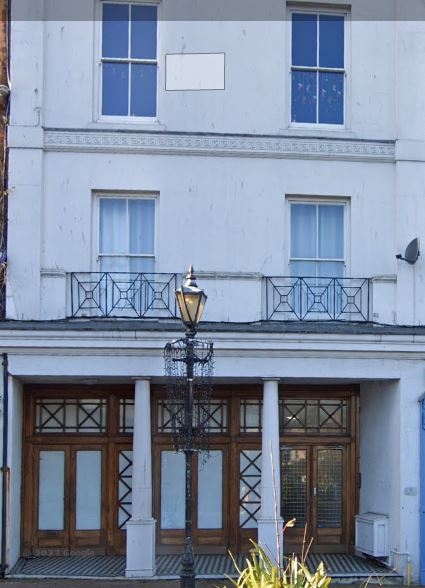
Electric Theatre - later Savoy Cinema - Bingo Hall - Now flats
Electric Theatre built Grace Hill 1910
Electric Theatre, after a fire, the cinema was rebuilt and renamed the Savoy in 1928.
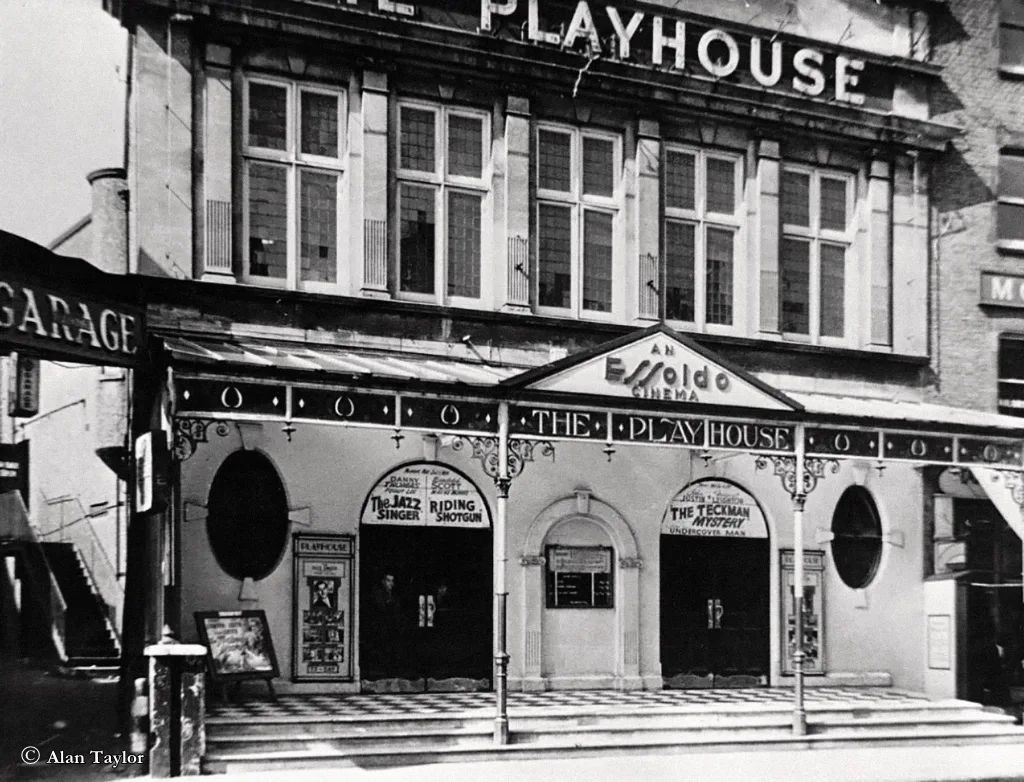
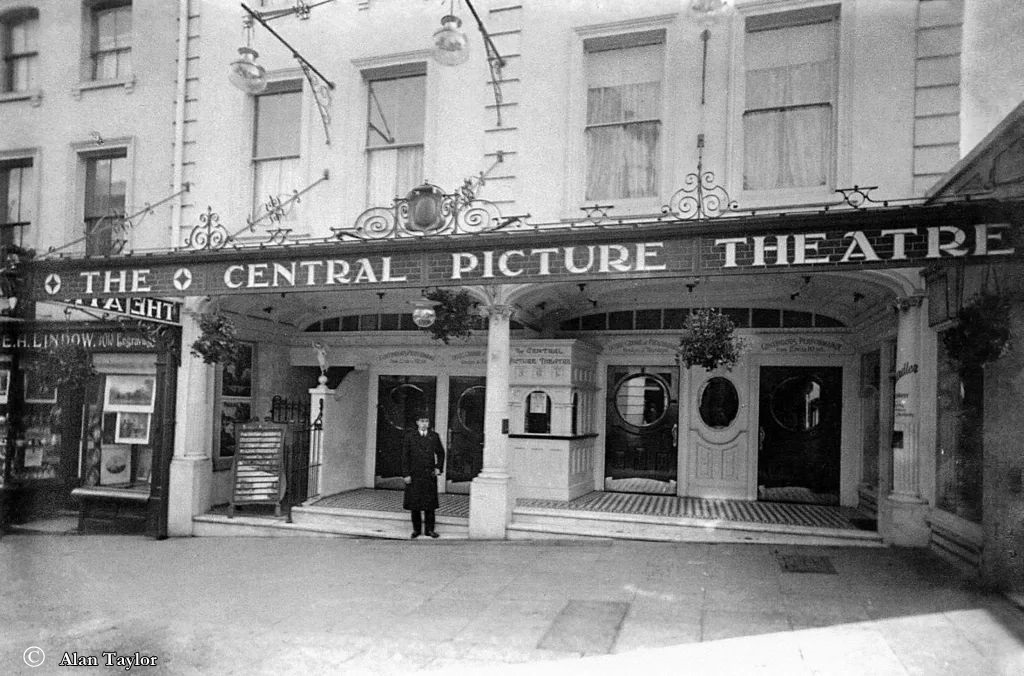
1912 Saw the Playhouse Cinema open on Guildhall Street, and the Central Cinema in George Lane.
The Queen's also opened this year in Tontine Street, but it only lasted 5 years, and so far, I haven't found a photo of it. I have seen a lot of arguments about the name of the Central Cinema. Mine is that it operated under that name all the time I lived there, and have a few Kelly's Directories that back that up. I have a 1949, 1952,1958,1960,1962,1964 and 1966 and every one lists it as the Central Picture Theatre, owned by Essoldo. So the Curzon name must have been after that, and/or before 1949.
The Playhouse closed in 1962 and the Central in 1987
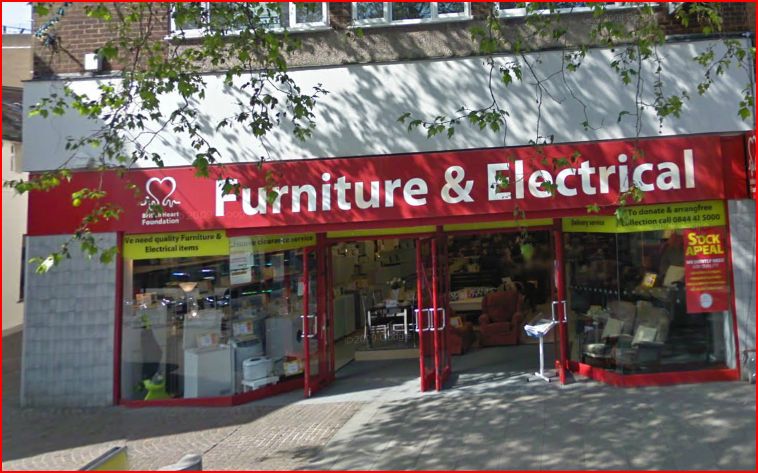
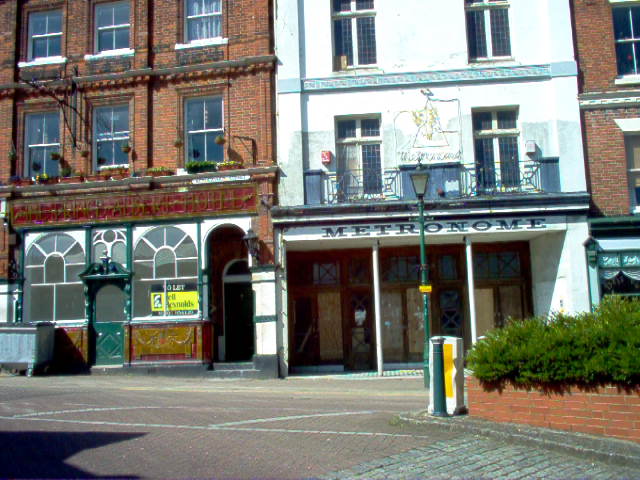
This photo was taken in 2005, they tried to operate under the Metronome for a while, and switched it from films to Bingo, but as you can see, it was already boarded up.
This is the last business I am aware of that is in the Playhouse Theatre location on Guildhall Street
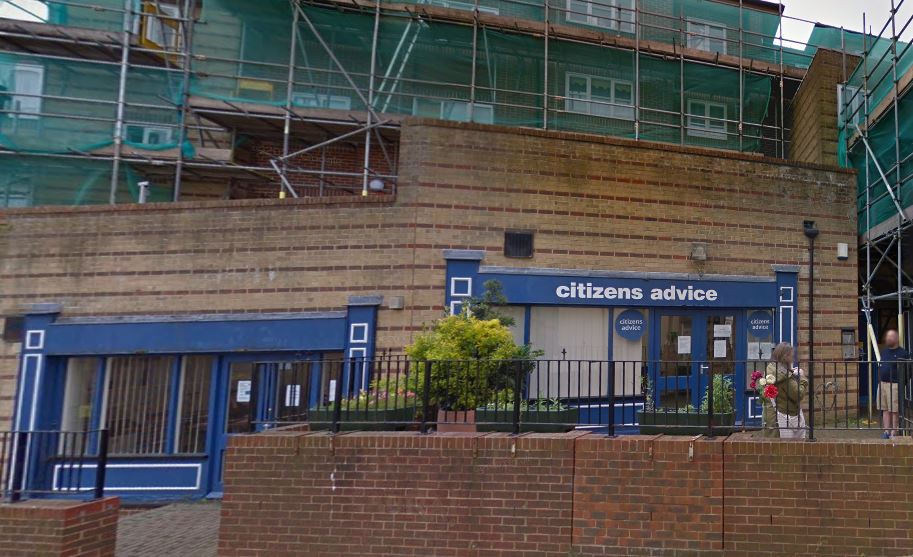
This was where the Central Cinema was located in George Lane. It is now a Council building, that includes the Citizens Advice Bureau. This photo dates from 2018
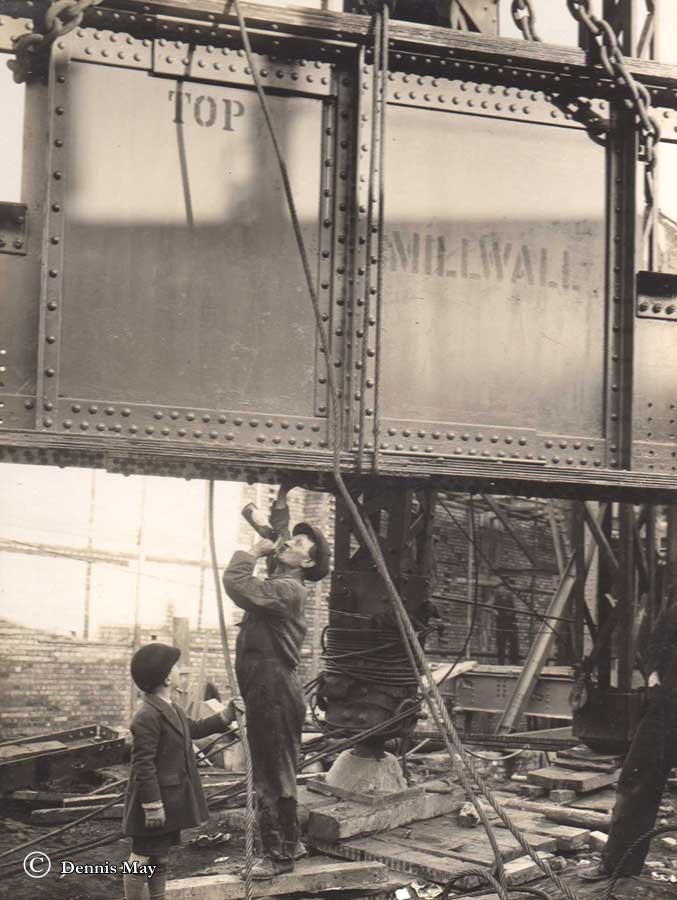
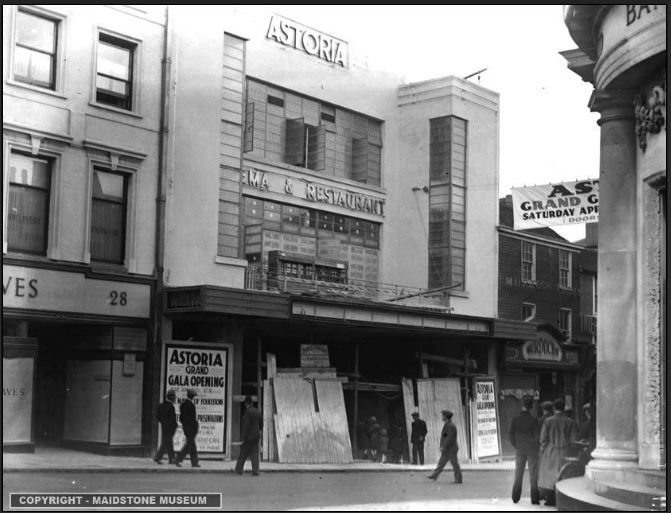
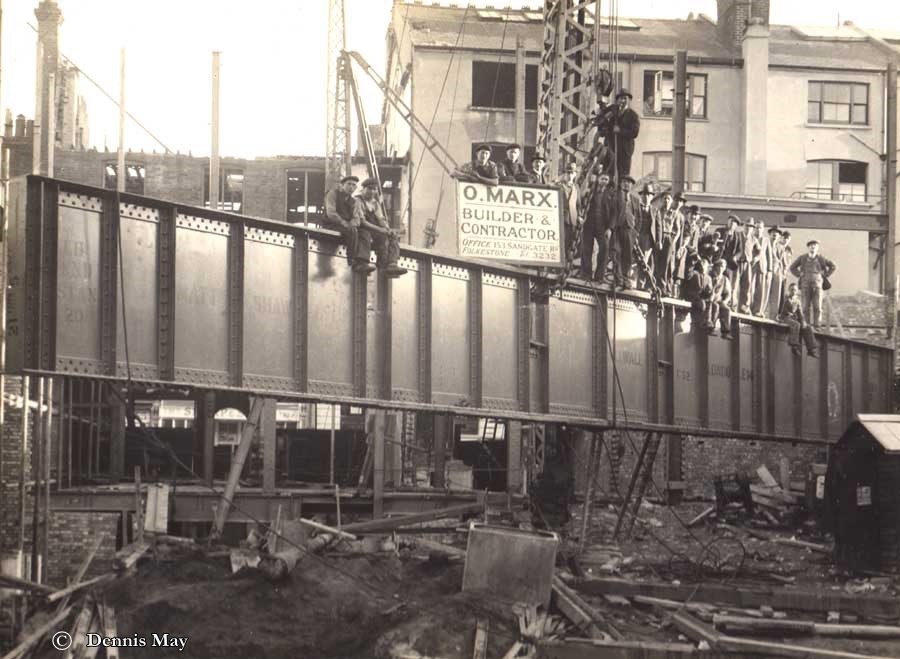
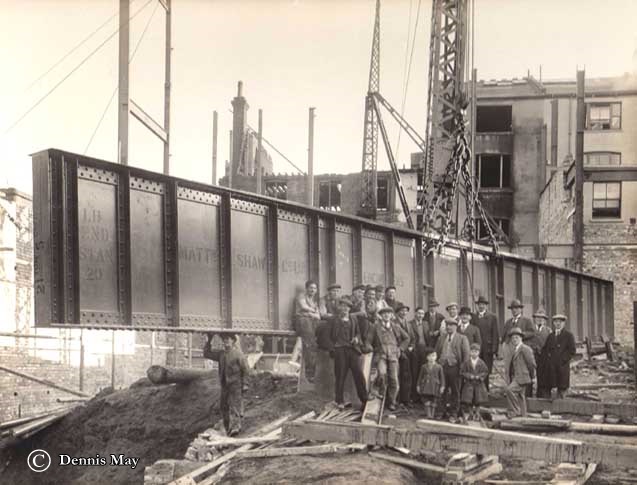
Now we move up into the 1930's. the above three photos were sent to me by Dennis May, who tells me his Grandfather, William May worked for Otto Marx, and suspects he is the one wearing a bowler hat. They built the Astoria Theatre in Sandgate Road. He thinks the child in the third one was his father who went on to serve his apprenticeship with the same company as a carpenter and joiner. They are great photos Dennis, thank you. The Astoria opened in 1934, and closed under the name of The Odeon in 1974. As you can see by the photo shared by the Maidstone Museum, it also had a restaurant upstairs. The Odeon also had a bar. I wouldn't know, all I went there for was Saturday morning picturesas a kid, and to attend the Cliff Richard & The Shadows concert when I was in my teens. Well yes, I went to the pictures a few times too, but those are the two things I remember the most.
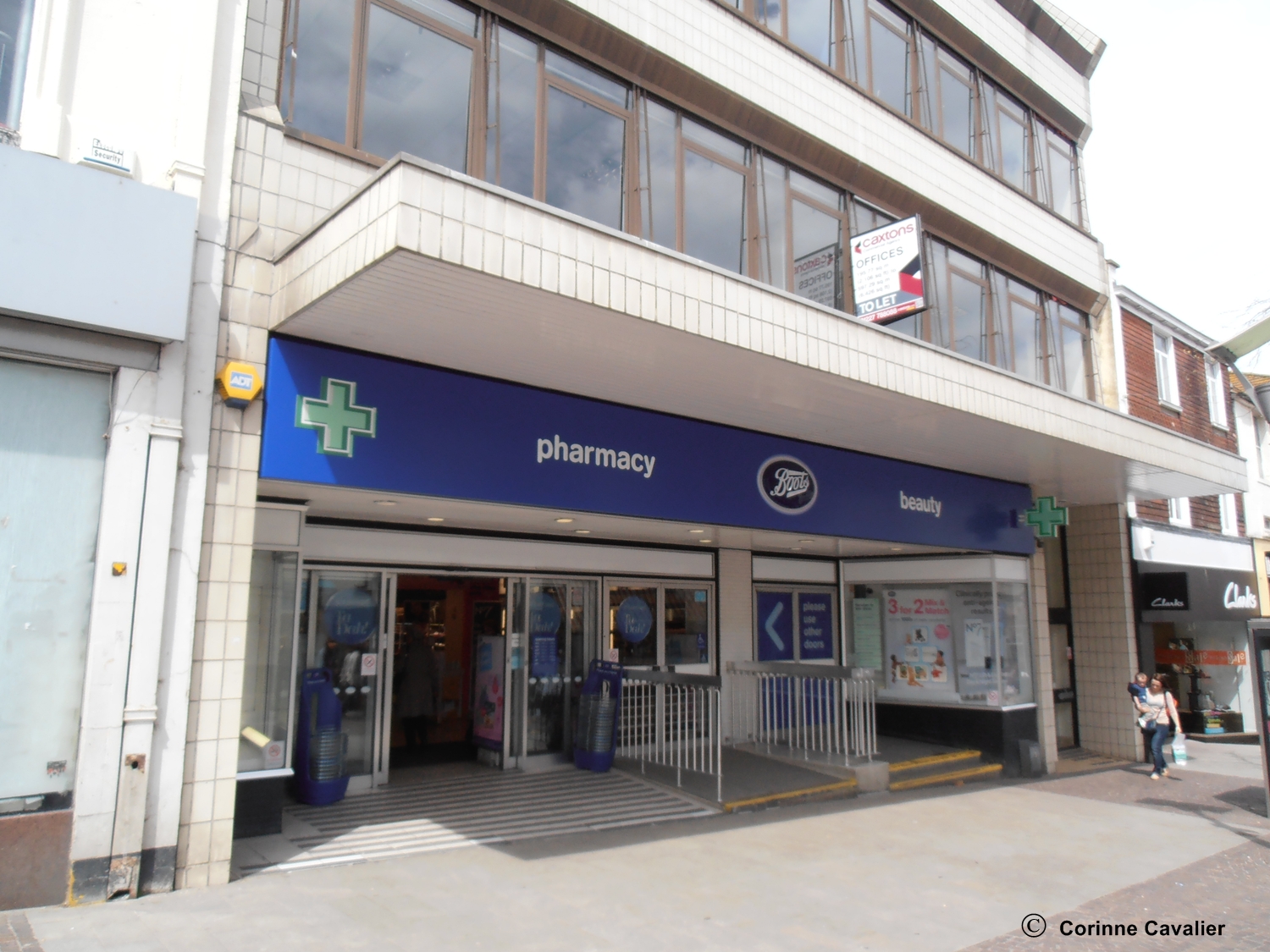
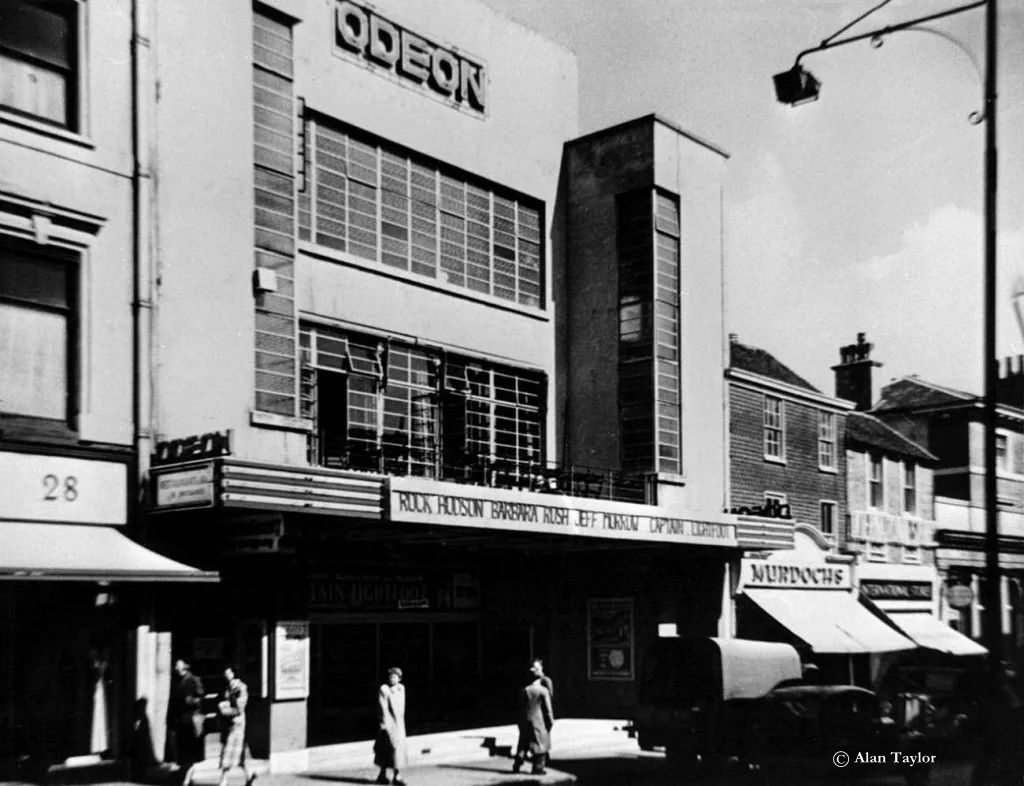
Here it is as The Odeon, with thanks to Alan Taylor (and for several more above), and the way it is today as Boots Chemist, photo supplied on the right by Corinne Cavalier
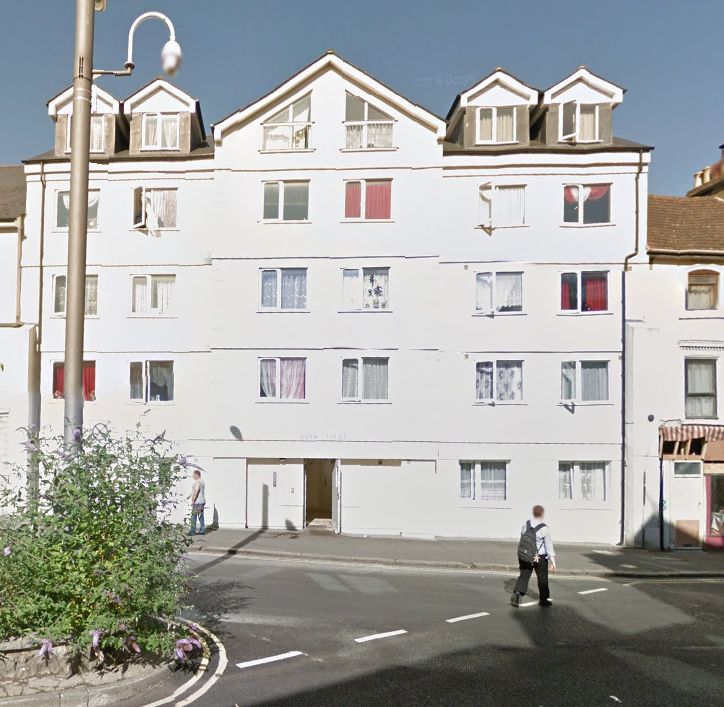
This was possibly the location of the Queen's Cinema in Tontine Street. I have just found some information on it:
The Queen's Cinema was a short-lived cinema. Opened in June 1912 with a raked floor and motorised projection, it was handicapped by pillars adversely affecting sightlines. Prices were cut, but to no avail, and the Queen's Cinema closed at the end of 1917.
The building became a Temperance Hall then, by 1937, Day by Day Printers After the war it was converted into a plastics factory. In the late 1990's it became the Rendezvous Club, but now has been converted into living accommodation.
Information obtained from https://www.cinematreasures.org
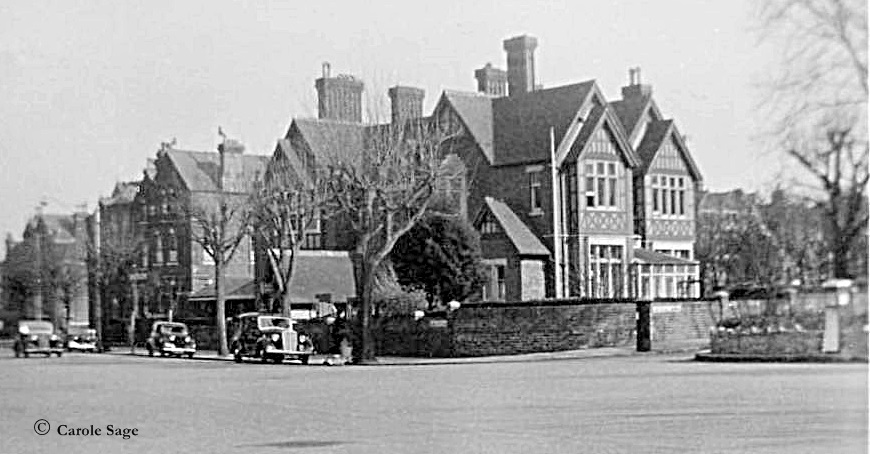
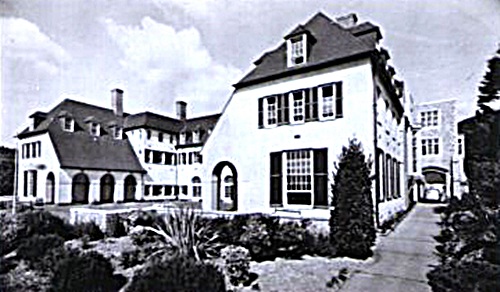
I have already shown you where the police are now at the top of the page, and these two show where they were. The 1949 photo on the left, kindly sent by Carole Sage, shows the Police Station when it was located on Shorncliffe Road, and the photo on the right is where they moved to in Sandgate, in the former Star & Garter Home. This building was demolished to make way for the huge Saga building. More photos of this on the Sandgate page.
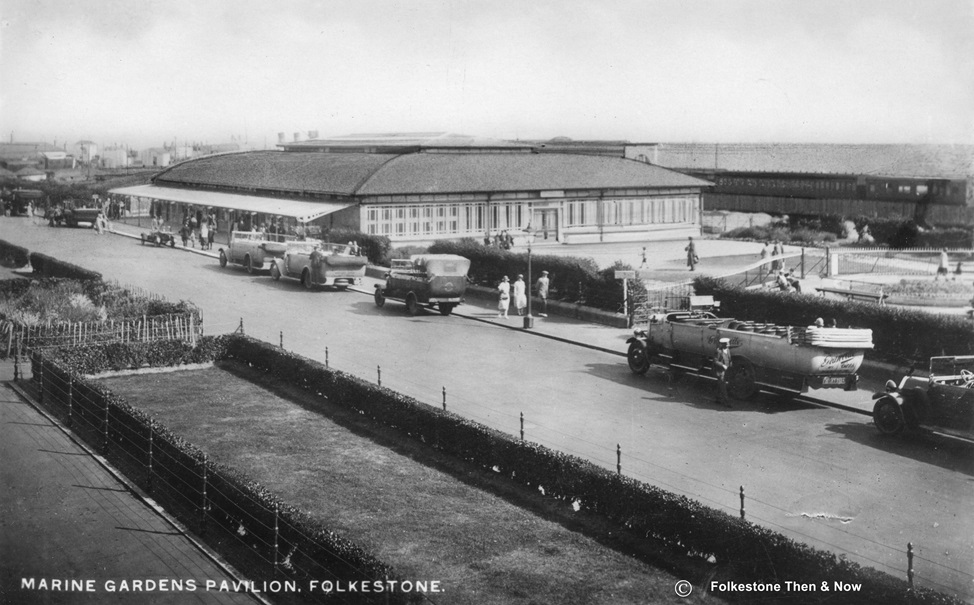
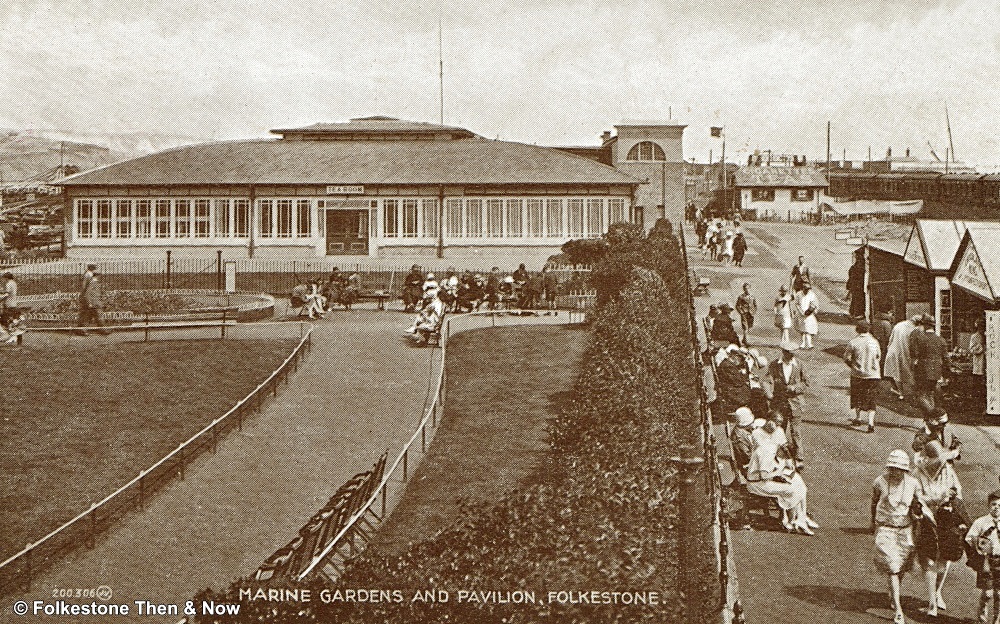
Down to the seafront now, we see the Marine Gardens Pavilion on Marine Parade. Built as part of the Marine Gardens development in 1926, the whole area was beautiful with flower beds, an ornate shelter and a bandstand, in later years they had a crazy golf course. Above you are looking at it from the front and the side. Don't you love the charabancs in the first photo, they could carry a surprising number of people. Behind the building you can see they used to store train carriages, as the trains used to run from the Junction Station (Folkestone East) where people would arrive on the London train, right down onto the harbour to pick up and drop off passengers to and from the ferries, that also no longer run from Folkestone. The person who sent the side view card says on the back "I prefer Cliftonville over Folkestone, it's too stony here." Hope they came back after the East Cliff Sands was developed.
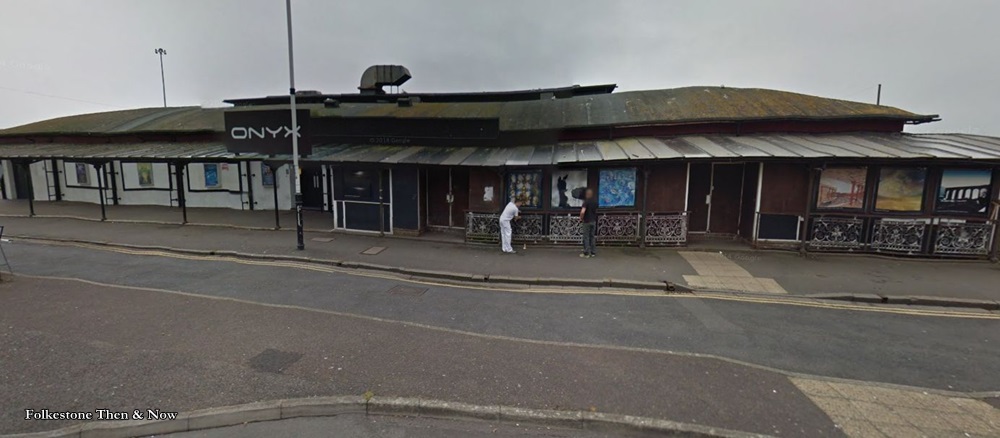
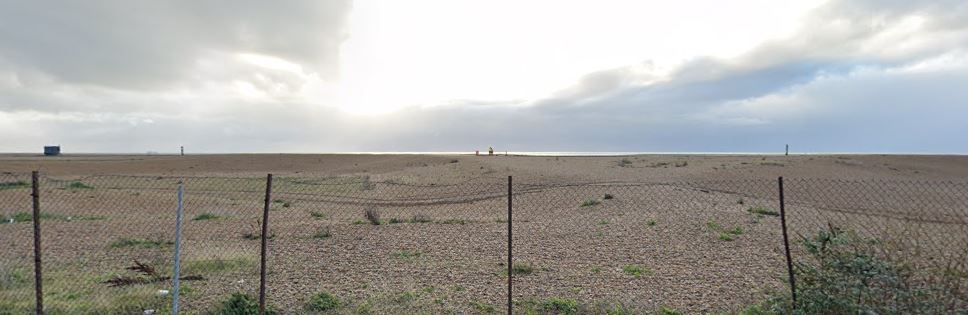
The Marine Gardens Pavilion was used for many purposes over the years, for boxing matches, dances, song and dance shows, roller skating (in my era) and then they morphed into night clubs like La Parisienne, Club Indigo, Bonkers and the Onyx, which were very popular. Sadly they came to an end around 2015, and in March of 2016, while the usual argument was going on about what to do with the building, the Marine Gardens Pavilion went up in flames by a suspected arsonist. (Seems to happen a lot to buildings in Folkestone that appear to be in the way, it puts an end to the argument, and is probably cheaper and quicker than demolition) Now, as you see below right, it's hard to tell it was ever there.
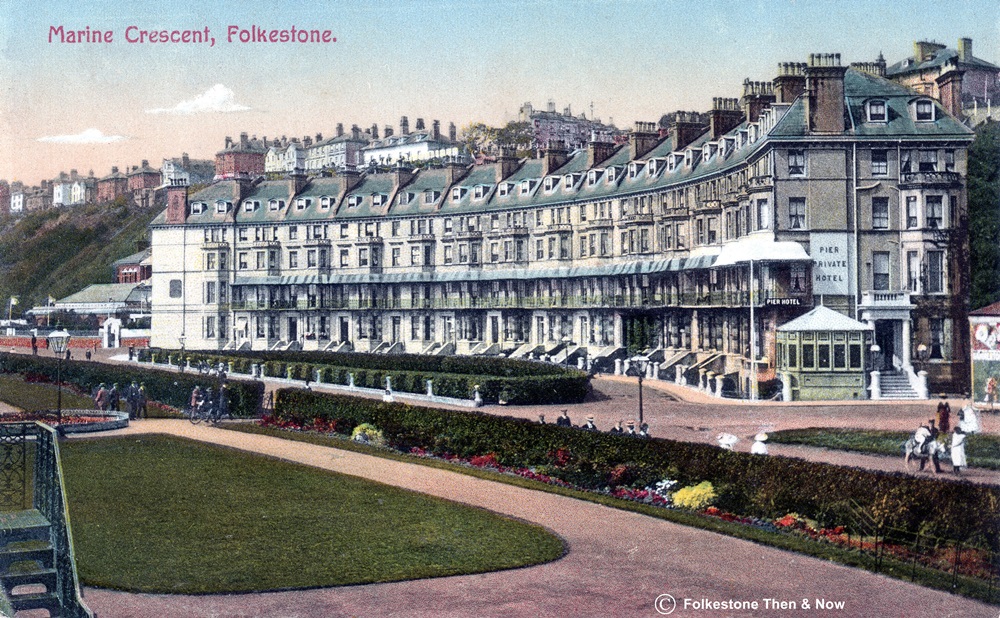
This is how beautiful Marine Gardens used to look, the steps on the left led up to the roof of the shelter that had a balustrade all around for safety, another place to sit and get a tan. Across the street are the beautiful Edwardian houses of Marine Crescent. At one time, most of them were hotels, but they have now been modernised inside and converted into condos. Their view, apart from the sea, used to be the Rotunda funfair, then after that, the Sunday Market. Now there are plans to build blocks of luxury flats in front of them, but as it has taken several years to get one block finished, and they are still in the process of selling them, I don't think they will get that far along in my lifetime. I could be wrong, but I am sure those currently living in Marine Crescent are hoping I am not, or their view will be the back side of something like this on the right. This building is Shoreline, in front of the Lifts, and has apartments available now.
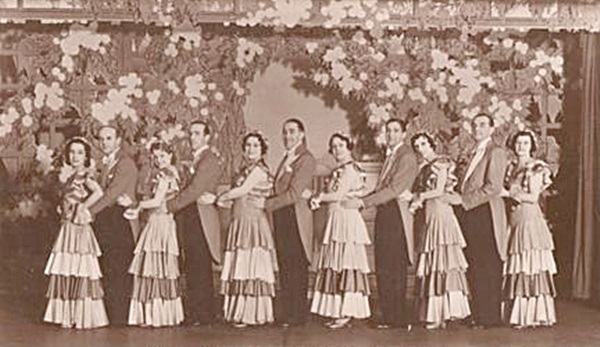
Before we leave the Marine Gardens Pavilion, I would like you to meet The Bouquets, who used to be regulars on the stage there in 1936
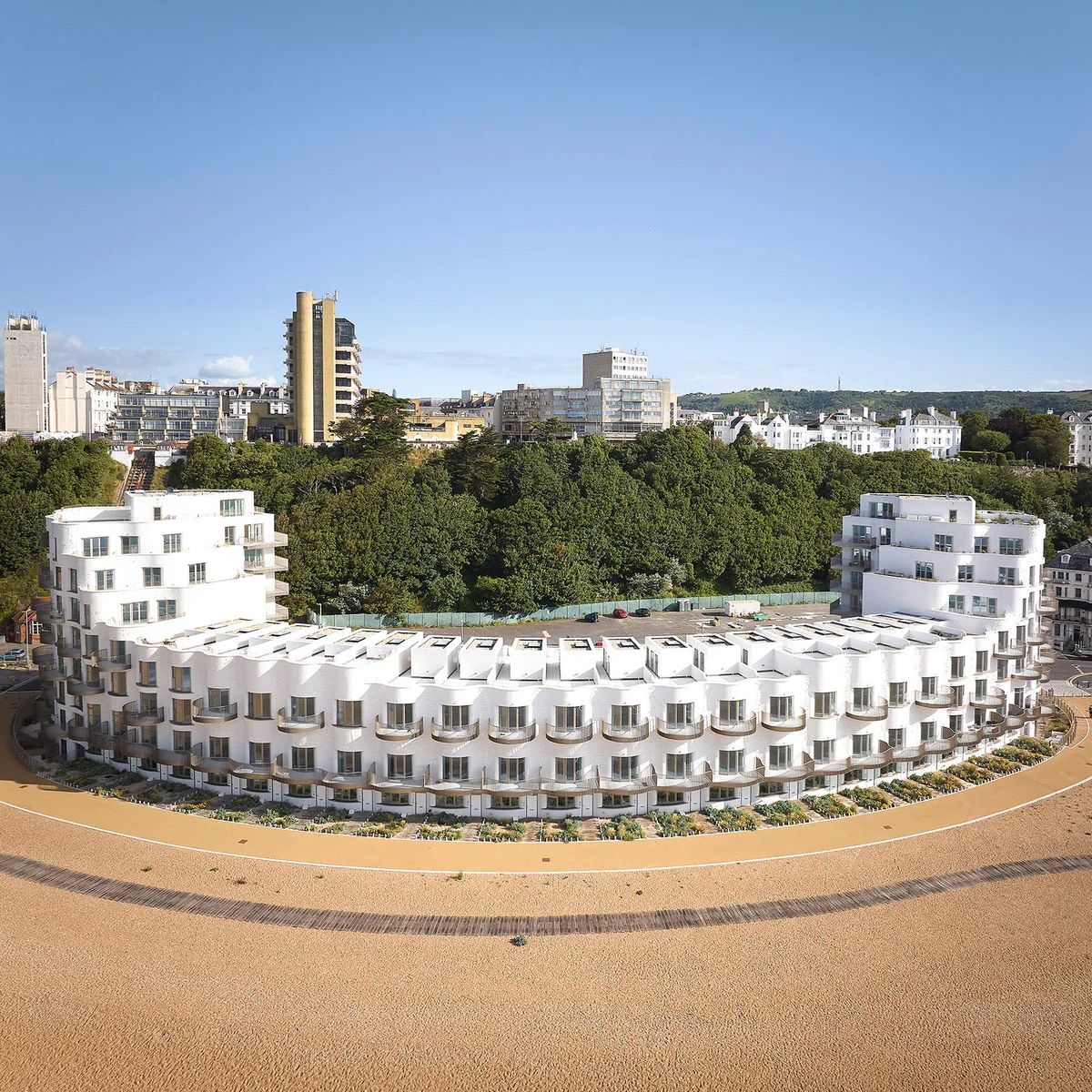
Shorline by Hufton Crow for Acme
©
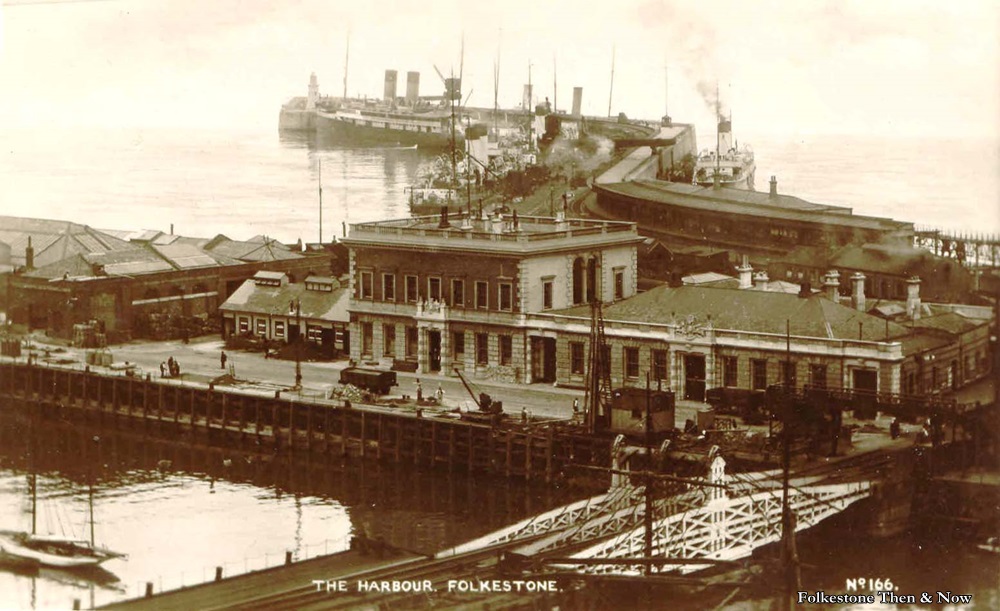

Talking about buildings on the seafront, the photo on the left shows the harbour the way it looked when it was a busy port, giving lots of Folkestonians a well paid job. You can see three ferries berthed on both sides of the pier (yes, it was called the pier in those days, not the harbour arm) . There were also many more buildings which were necessary for both passengers and cargo coming and going.
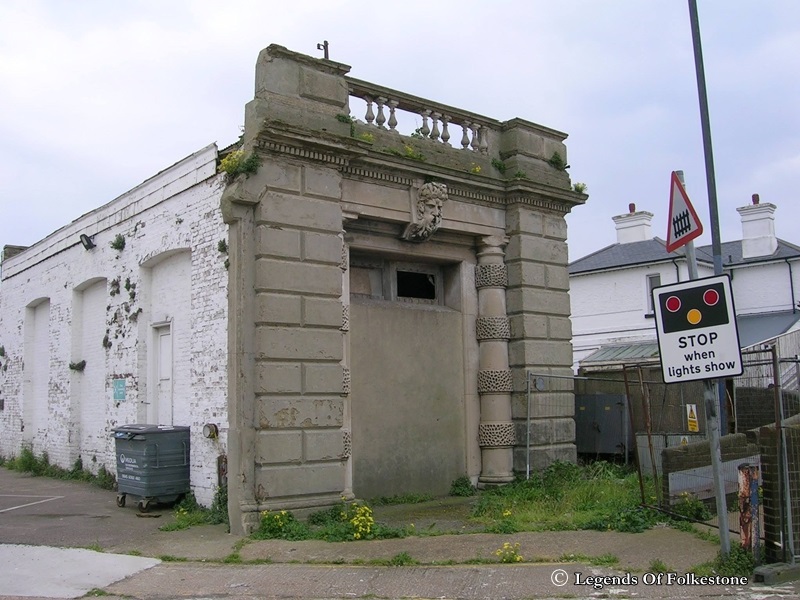
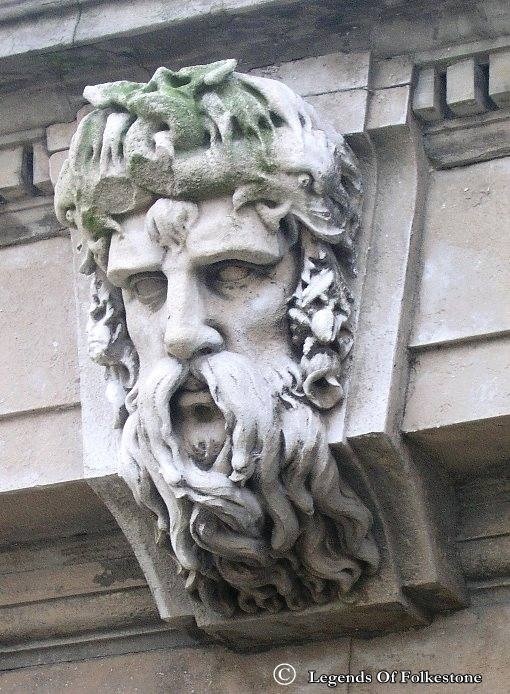
This also meant having a Customs House, and we can tell the photo on the left dates from before WW2, as it was badly damaged at that time. Part of it was salvaged as per the photos to the right, kindly loaned by Legends of Folkestone, but as you can see, almost all of the buildings (photo top) have now been swept away as they plan to build high rise housing all over the harbour at some point.
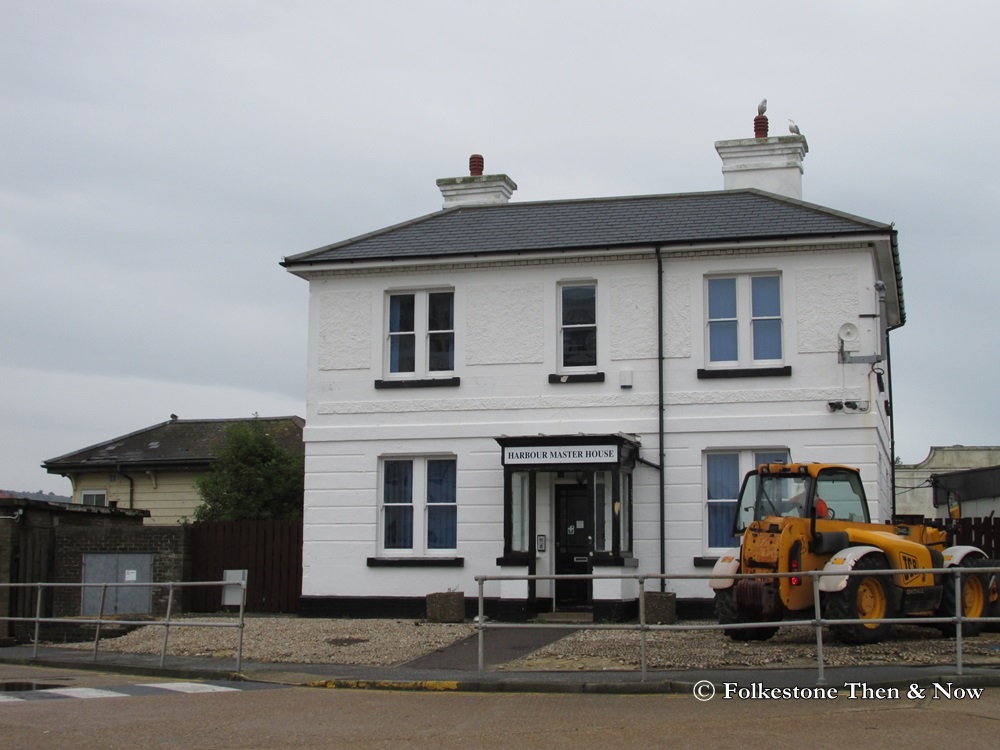
Another saved building on the harbour was the Harbour Master's House, the residents had to fight for it though. I took the above photo in 2014 as I stood and watched the fellow back that piece of equipment out through the space in the fence without touching the sides - very good driver!
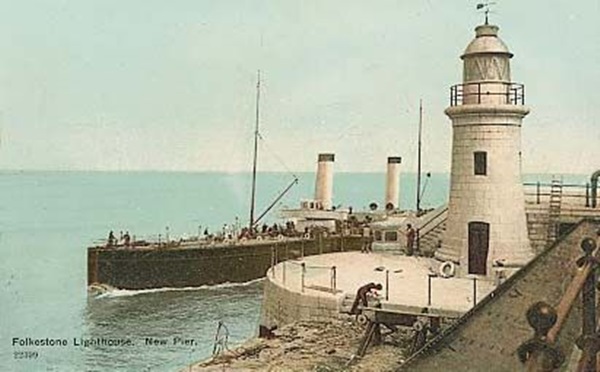
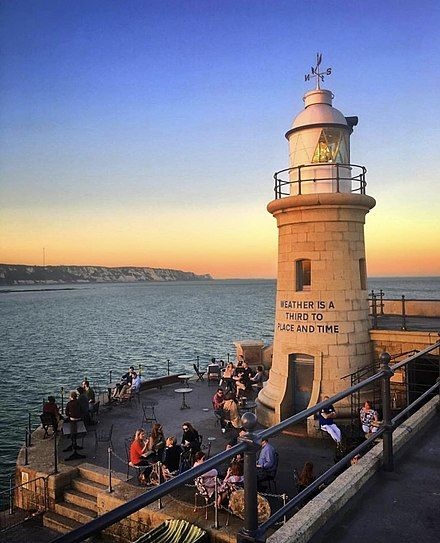
Another building on the harbour, in fact right at the end of what is now called The Harbour Arm is the lighthouse. This was built when they put in a new pier in 1903, and I am sure it has guided many a boat safely into the harbour over the years. It is now being put to good use as a champagne bar. I am not sure if it is still in use as a lighthouse at night, hopefully it is, and hopefully someone will let me know. The writing 'Weather is a third to place and time' is left from one of the Folkestone Art Triennials.
It would take a whole page to tell you the history of Folkestone's Martello Towers, instead, here is a very informative site that will give you the whole story: https://martellotowers.co.uk/kent
Originally 103 towers were built along Suffolk, Essex, Kent and Sussex, between 1805 and 1812, of these, only 9 remain in their original state, and many have been demolished, or converted into other use. They were designed as defence against Napoleon's army, the flat roof, which was the tower's gun platform,was covered with lead and surrounded by a solid parapet usually 6ft high and at least 6ft thick. There was a raised platform in the centre with a pivot for a 360 degrees traversing gun or cannon, with the gun being turned by the use of ropes and pulleys. The walls had narrow slits for defensive musket fire.
These are the towers in our vicinity:
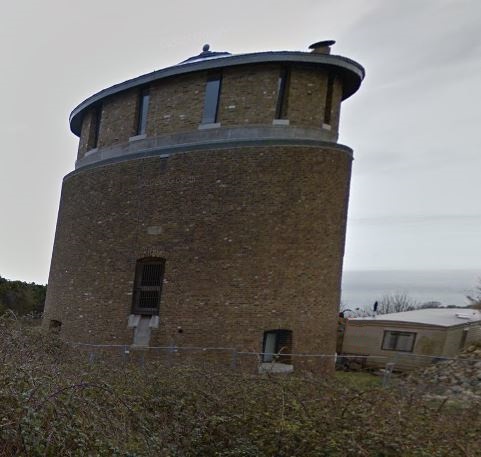
This is number 1, privately owned. Not sure if it is being lived in, the top was converted in 2015 with lots of lookout windows, you are looking at what was the original door, accessed by a retractable ladder, but I believe they added a door at ground level. This photo was taken in 2019, and I see they have a caravan in the garden along with a lot of rubble, so imagine the conversion was still underway at that time. It is located on the East Cliff Wear Bay.
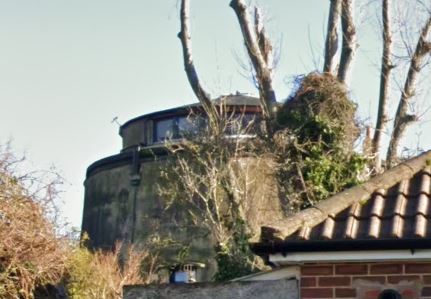
Martello Tower No. 2, very well hidden. It is also privately owned and has been converted to a private residence for several years. This is more inland on the East Cliff, but would still have a great view of the sea from the addition on the top.
Martello Tower No. 3 is the one that was very visible to anyone who has ever golfed on the East Cliff, located behind The Pavilion, the building that used to be called the East Cliff Pavilion. I believe there is still a pitch and putt course up there too. This tower has been sadly neglected. It was owned by the Council in the 90's who turned it into a visitor centre, giving the public a chance to see inside, but they closed it after a while, and it was deteriorating badly. It has now been leased to the Creative Quarter, so we shall see what they do with it, and hope they take into consideration they are Scheduled Monuments.
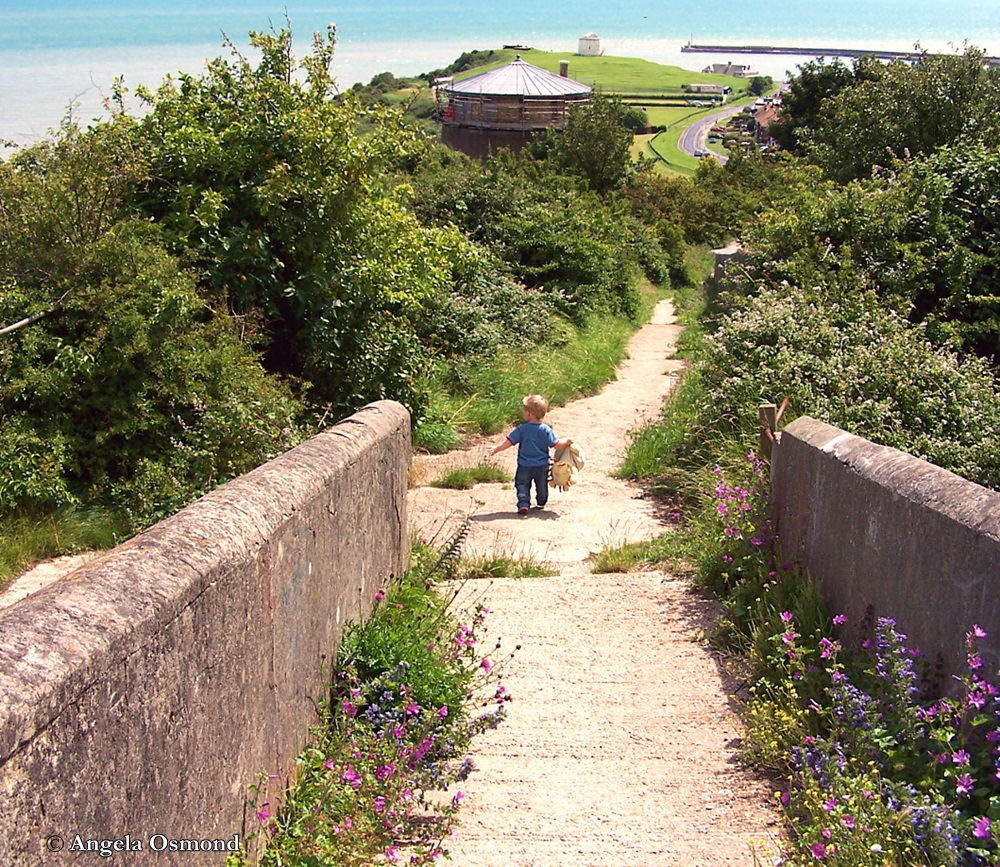
This is my absolute favourite photo of Martellos 1 and 3. Sent to me by Angela Osmond of her son and his best friend (not sure who or what he was) going for a walk on a warm sunny day. Thank you Angela, it was some time ago that you sent this, so I bet he is not so little now!
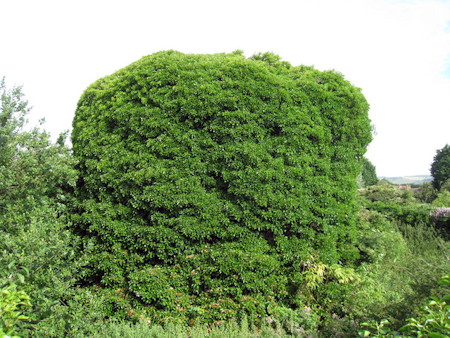
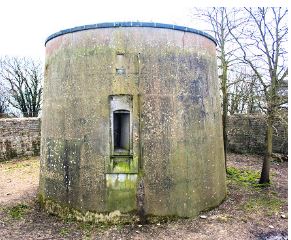
Martello Tower No. 4 is at the far end of the Leas In a private garden, and although it is completely overgrown, it is apparently in pretty good condition underneath. It was used as an observation post during WW2, and it was once used as a semaphore station.
Martello Tower No. 5 is also in pretty good shape, probably because it is not too close to the sea, and is located immediately west of the Folkestone School for Girls. As you can see, the original door was located a few feet off the ground, and once had a drawbridge that lowered across to the wall of the dry moat around it, that could be drawn up for protection. The drawbridge is gone now, but this one still has the wheels of the mechanism inside.
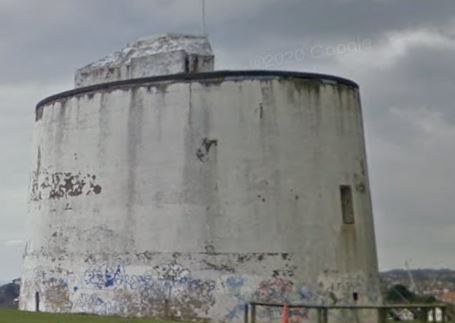
I do hope the Martello Towers website will forgive me for using their images of the last two, as I couldn't get near them. If you object, please let me know and I will take them down. I urge people to check their site, because they have information and photos of lots more, Sandgate and Hythe alone have several.
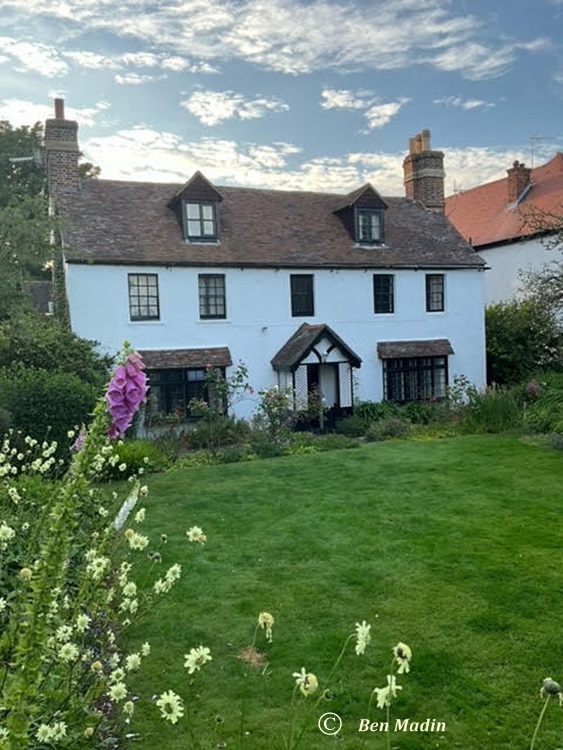
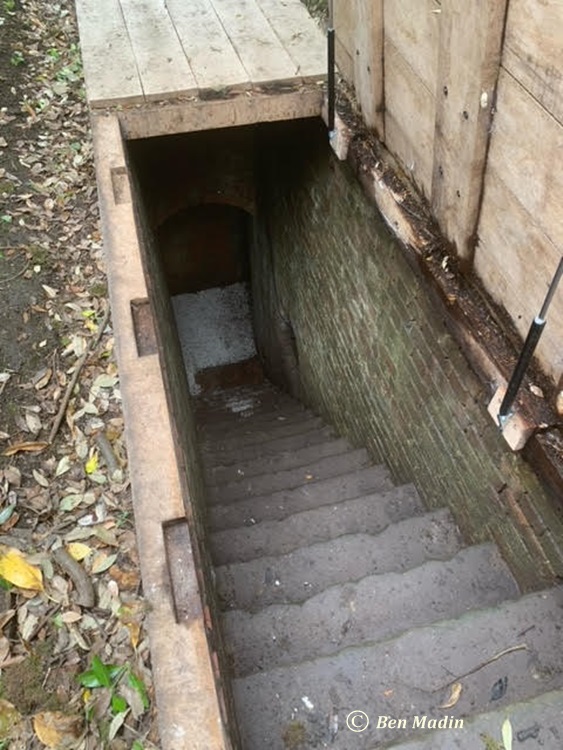
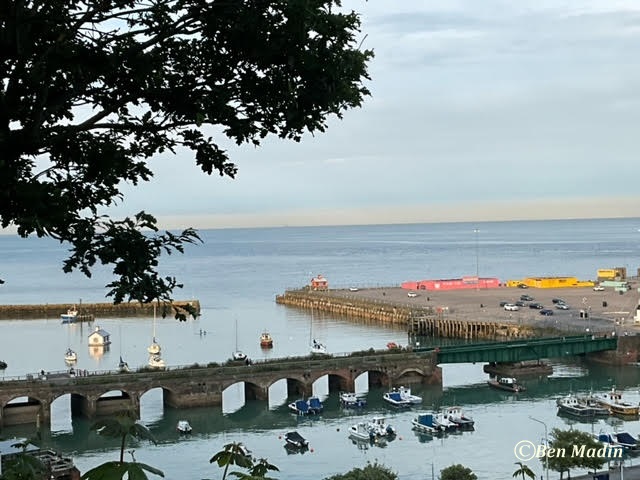
I am sure most of you have never seen the above beautiful house, yet it is located right in the heart of Folkestone. It is the house of the Battery on The Bayle currently owned by Ben Madin, an Australian who bought it - including the cliff beneath in 2023. The picture on the right shows the stairs leading to the gunpowder magazine. Below is the view he sees daily from the Gun Mount.
I asked Ben what he knew of the history, and this is what he said:
"The house was built in 1760 but the documented history of The Battery goes back to 1598 when Queen Elizabeth I declared a Bayl Fort be constructed. It is thought that King Eadbalds Earthen Fort was located in these grounds in c630, given the elevated view of the sea and his daughter establishing a nunnery on the grounds around the same time it seems a reasonable assumption."
According to my Kelly's Directory, Mrs. Hawksworth Wheeler was living in this house in 1949, and was still there in 1952.
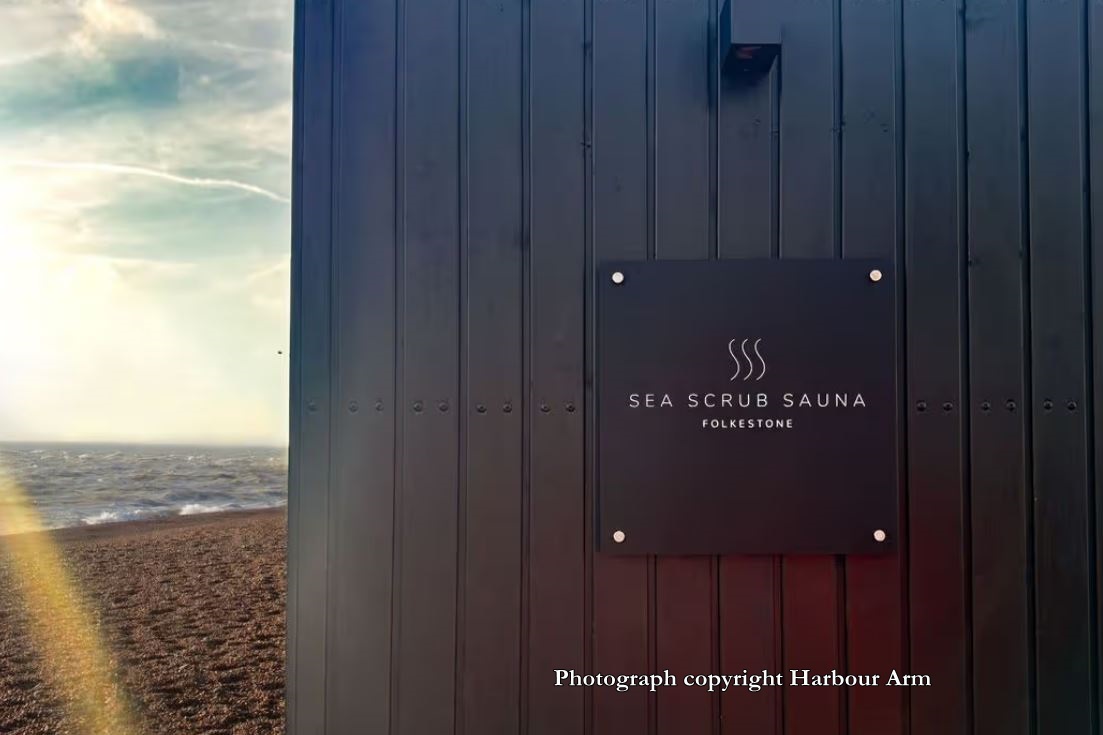
Directly on the shingle, the spa will bring Scandinavian heat-and-cold therapy to the Kent coast. The site will feature two wood-fired saunas and a hot tub with jacuzzi, two chilled plunge pools and traditional bucket showers for cold-water therapy and a new wellness café and a dedicated event space for yoga and moon ceremonies
Planned open date - March 2026
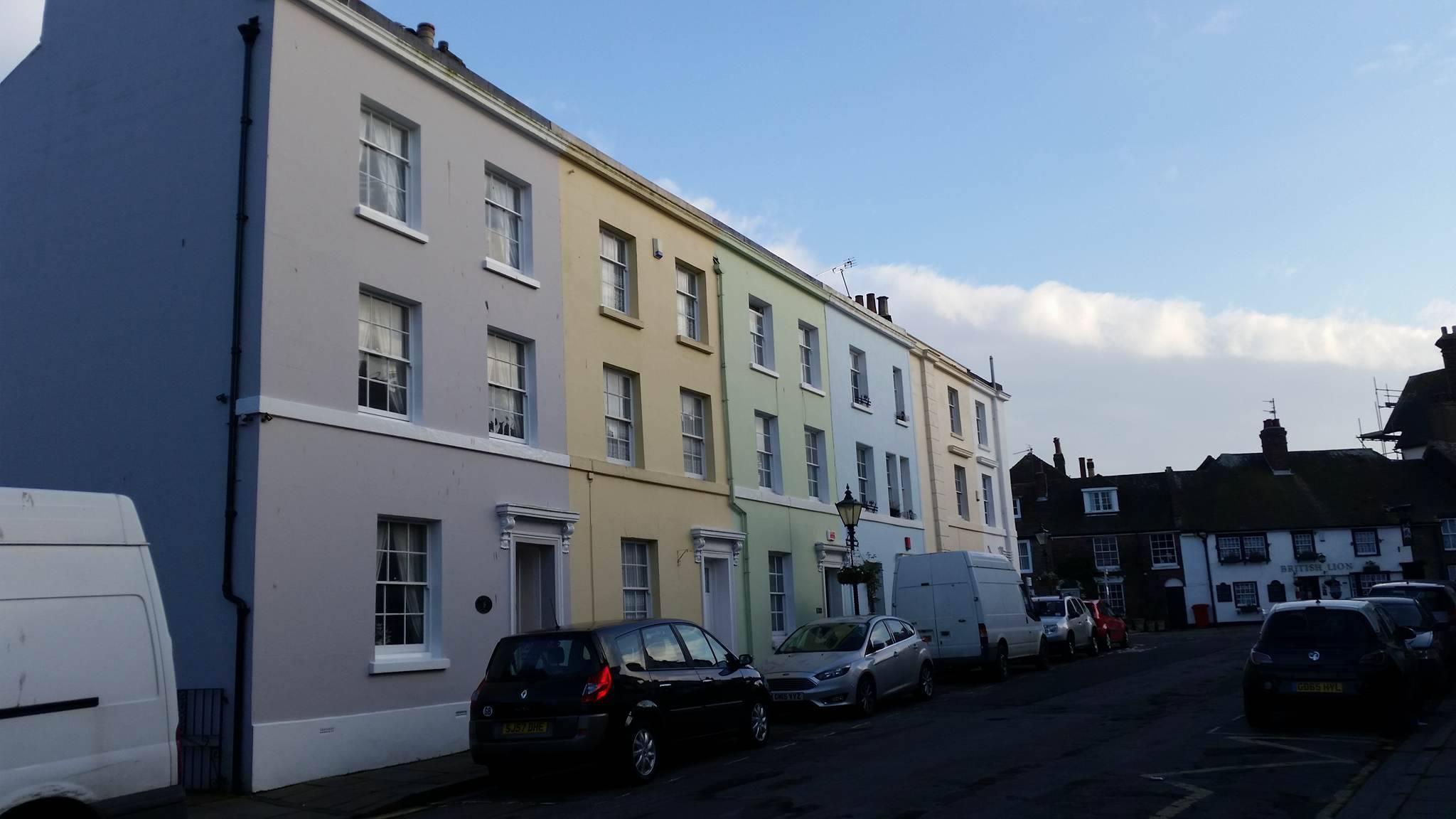
Had an email from someone working on their family tree who was looking for an ancestor's address. It was Battery Terrace, and we came to the conclusion that this block of houses must have been it, but possibly more of them back then on The Bayle. If anyone has any further information, please let me know.
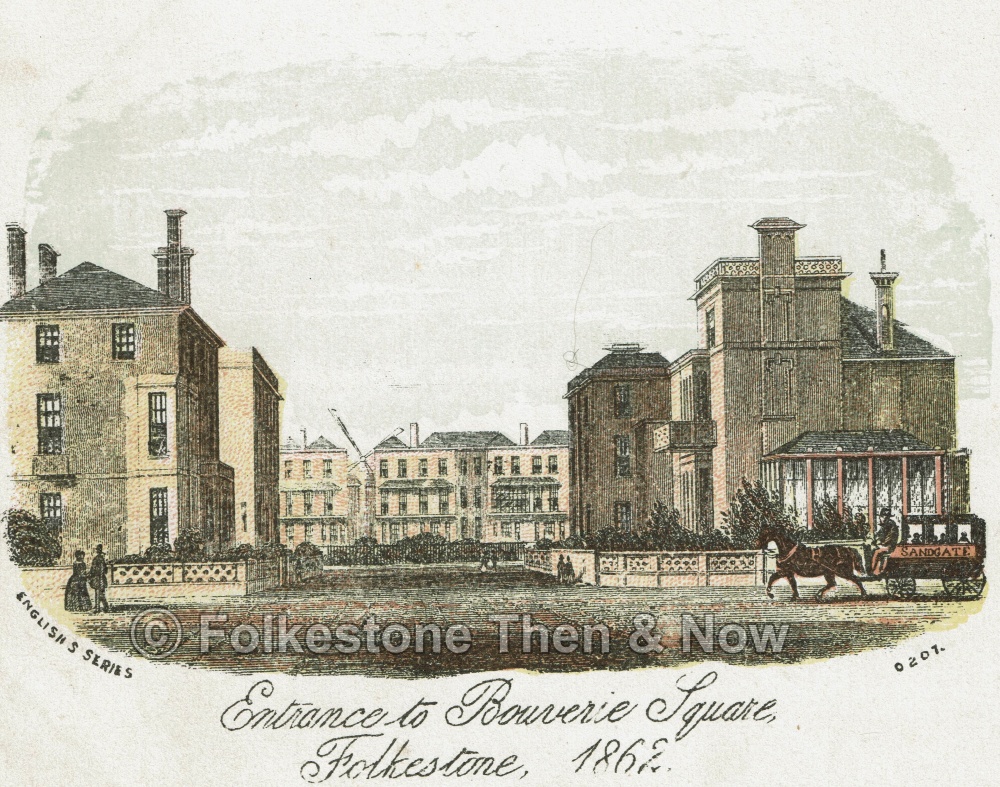
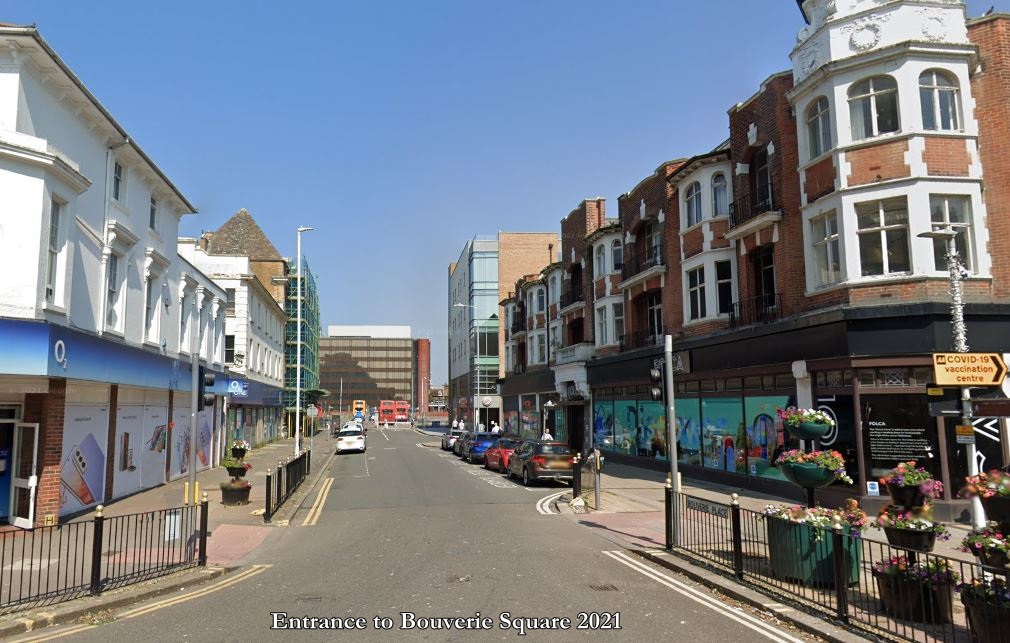
As you can see, in 1862 the buildings around the Bouverie Square park were very residential, but long before 2021, all the houses were gone except those on the West side, Bouverie Place was all commercial, the park had been a bus station since the mid 50's, and the building directly ahead was a multi-storey car park. In 2017 the houses on the East side of the Bus Station were swept away, along with the buildings in Alexandra Gardens to make room for the new shopping centre, Bouverie Place. Then in 2021 the Covid virus hit worldwide, and people discovered online shopping, more and more stores went online, some offering free shipping, and the retail stores really suffered, and even after it was over, people rather liked having their goods brought to their door, and lots of businesses closed, or shut their branches in the smaller towns. As I write this at the beginning of 2026, the Bus Station has been closed too, and the area is being converted back to 1862 - a park again, and buses are stopping in the streets around it. To be honest, I don't really understand why they are doing this, but maybe bus passengers have dropped to a level that the bus company can no longer afford the upkeep of the station? But the people who use the buses don't seem to like it, especially the elderly, the disabled and those with small children, having to walk from one street to another to change buses, having nowhere to sit to wait for a bus etc. is quite a hardship. But there it is, the people who make the decisions are probably not the people who use the service.
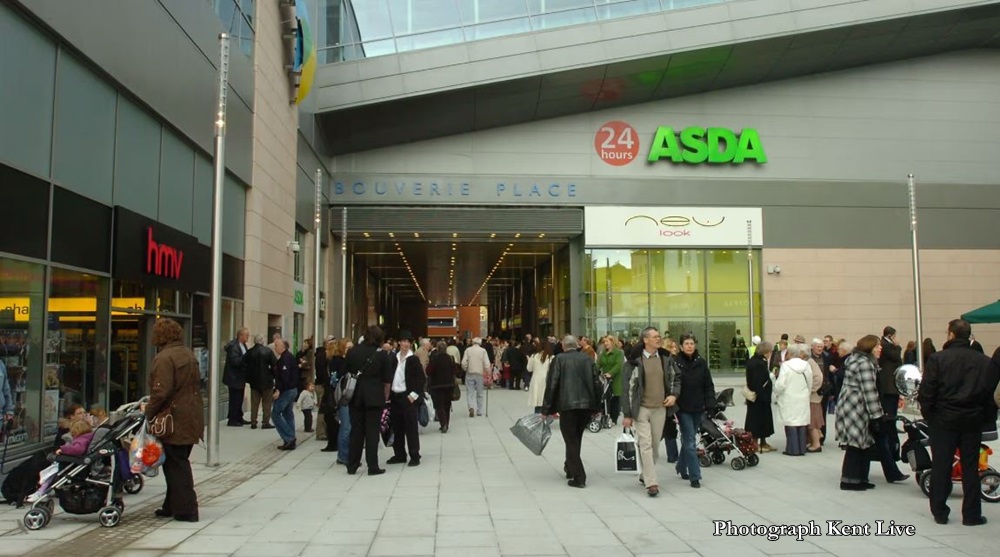
Bouverie Place Shopping Centre around 2019
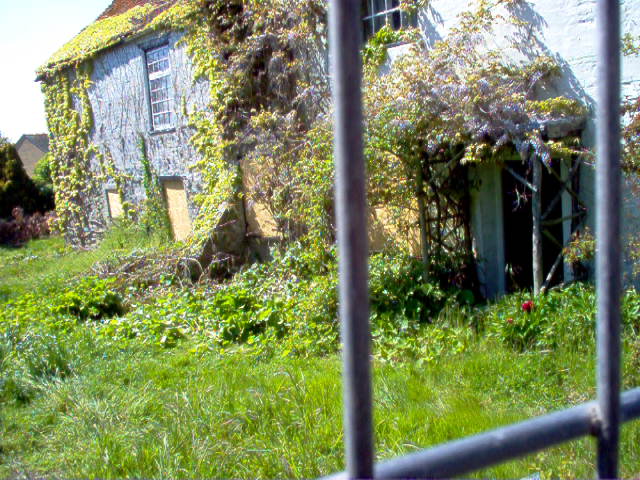
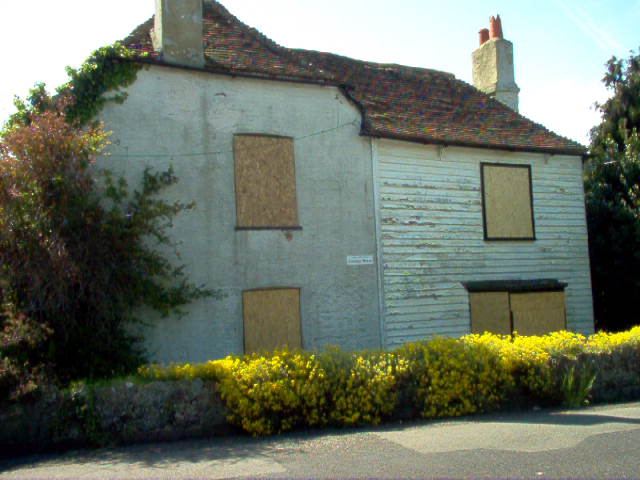
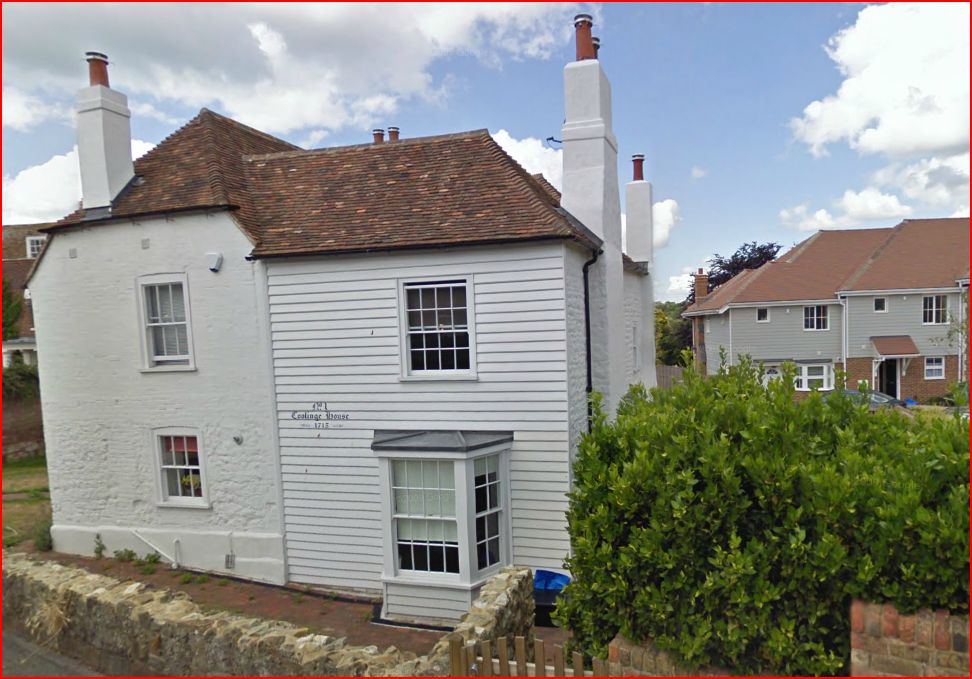
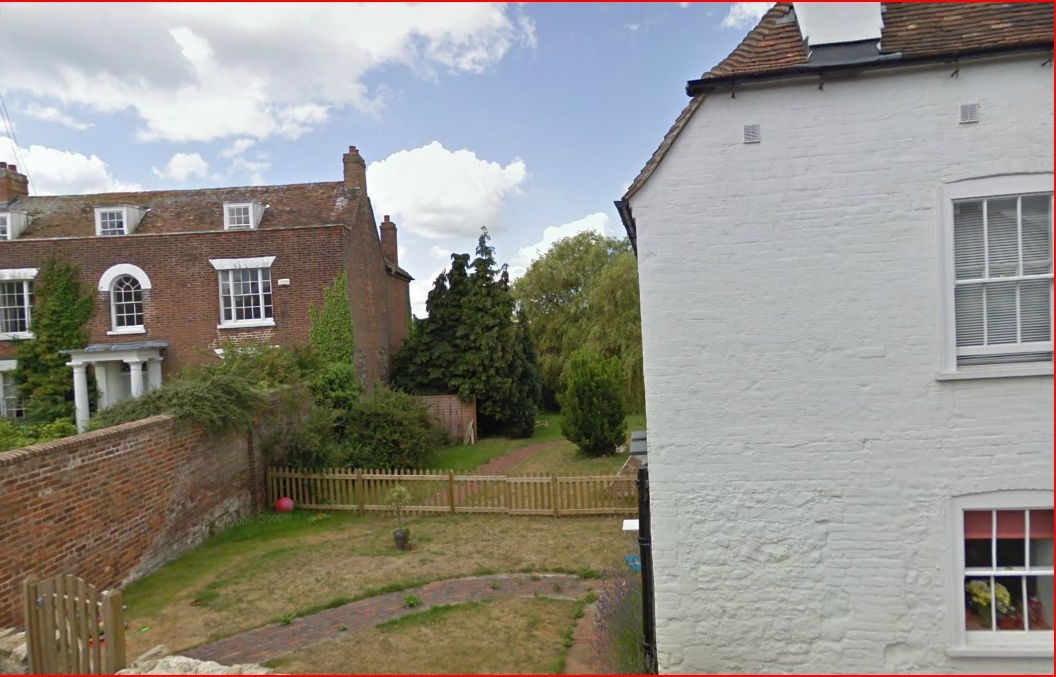
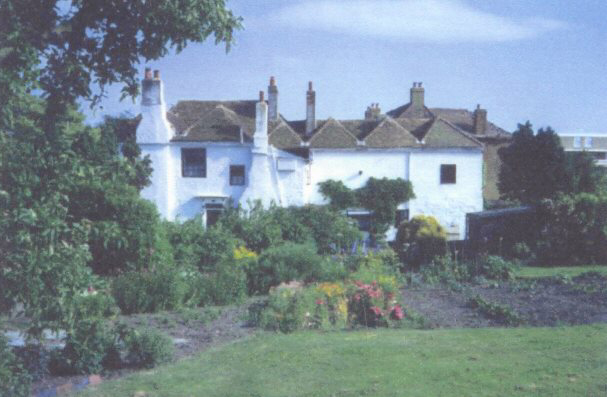
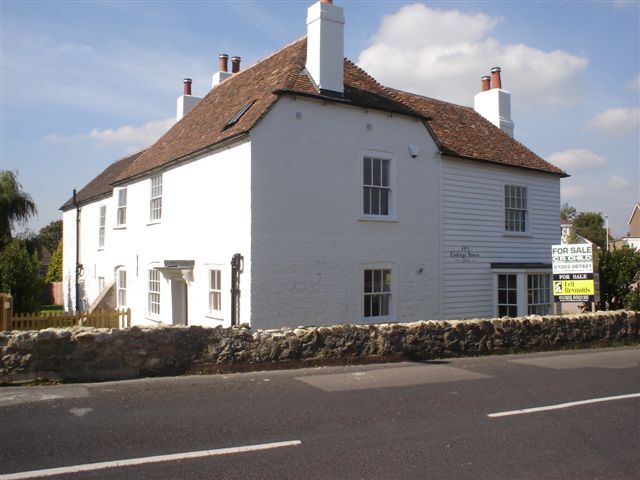
This is the oldest house in Folkestone, and is Coolinge House in Coolinge Lane, which dates back to 1715. At least, the photo on the far left is the way it looked when it was owned by Peggy (Down) Sims. This photo was sent to me by her cousin, Maureen McManus. Peggy unfortunately died in 2001, and when I went over in 2005, the other two photos show the way it looked by then.
After that it was refurbished and divided into condos. The photo on the left was kindly given to me by Pat Duke, and shows it finished and up for sale. The two on the right show them sold, and lived in once again. You can see on the right that the garden has also been divided into small individual plots.
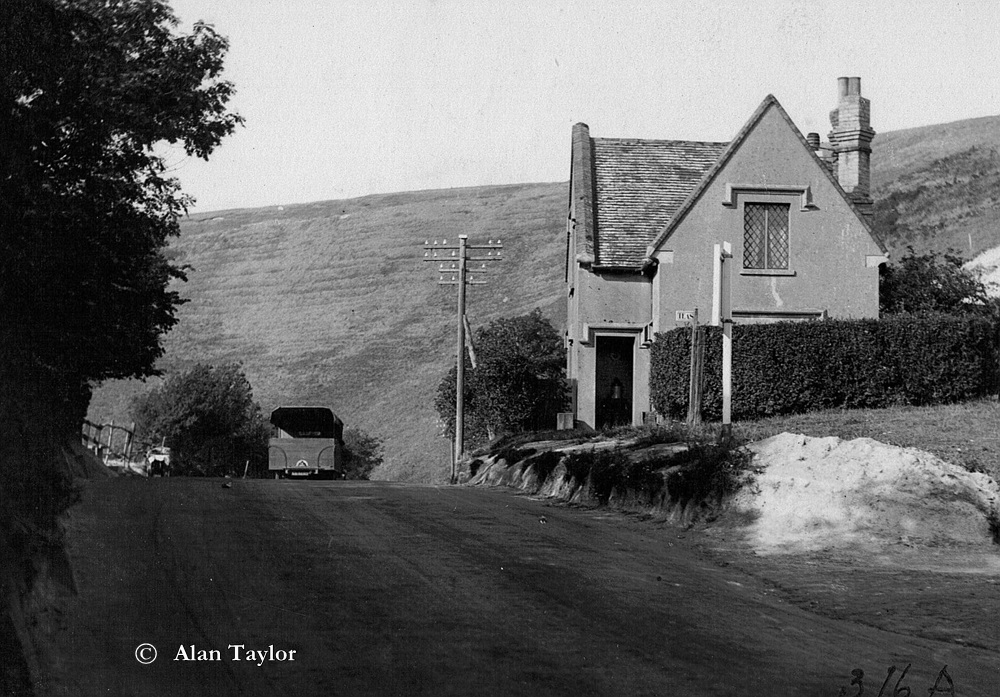
The Turnpike Cottage was on the bend in Canterbury road opposite Sugar Loaf Hill. Turnpikes were abolished in 1877 after which this one was occupied by the chalk quarry keeper, the chalk pit being next to it. It was later a tea rooms run by a lady called May and it was nick-named 'Granny May's', the building was demolished in 1963.
Kindly sent by Alan Taylor
The pedestrian walkway leading into Bouverie Place is still called Alexandra Gardens, but you wouldn't recognise it as such, I will pick a year at random and tell you what used to be there. How about 1952? Alexandra Gardens ran from Sandgate Road to Bouverie Road East. The West side was mostly residential with the exception of McIroy's that was on the Sandgate Rd corner, the Mecca Hotel at 7 & 9, proprietress Mrs. L. Ivory. a dressmaker next door, Florence Zaccone and a dentist, Lewis Axon at 19, the houses ended at number 29.
The East side was more commercial with Radio Rentals at 2, Chartered Surveyor, James Brittain at 10, next door was Turner's Greengrocers, and at 14, Elizabeth's flower shop run by R.C. Philpott jnr. and Presto Cleaners, run by E.R. Hawkes was next door to that at 16. On the other side of Oxford Terrace was a ladies' outfitter named Muriel Hall. Morris Holmes Bakery was at 20 with a little café upstairs run by Horace Cutmore. 22 Was Westholme Guest House run by Mrs. M. Kellett and a residential house was between that and another Guest House, the Alexandra, F. Burgess proprietress, then a couple more houses before 34 which was the Aynesley Guest House run by Mr & Mrs N. Haynes. Lastly was Horace Carswell a taxicab proprieter in number 36.
Let's not forget Alexandra Gardens....
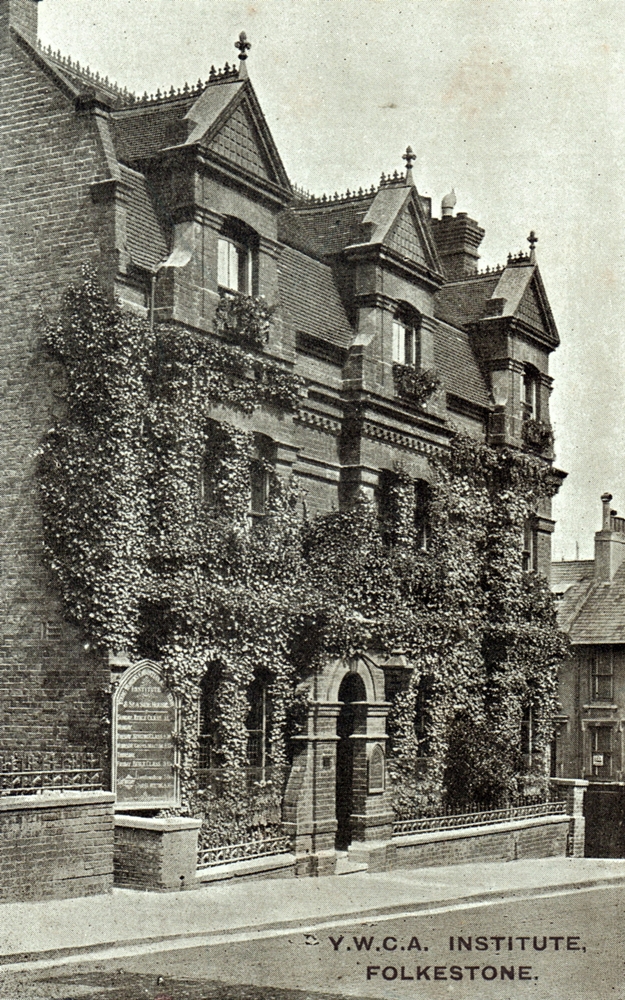
Another building that hasn't survived the wrecking ball is the YWCA Institute that used to be behind what is now Boot's Chemist in Oxford Terrace. I never could resist a building clad in ivy.
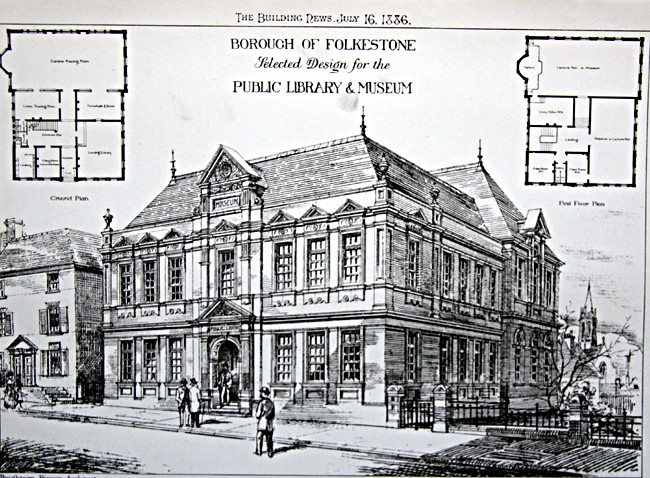
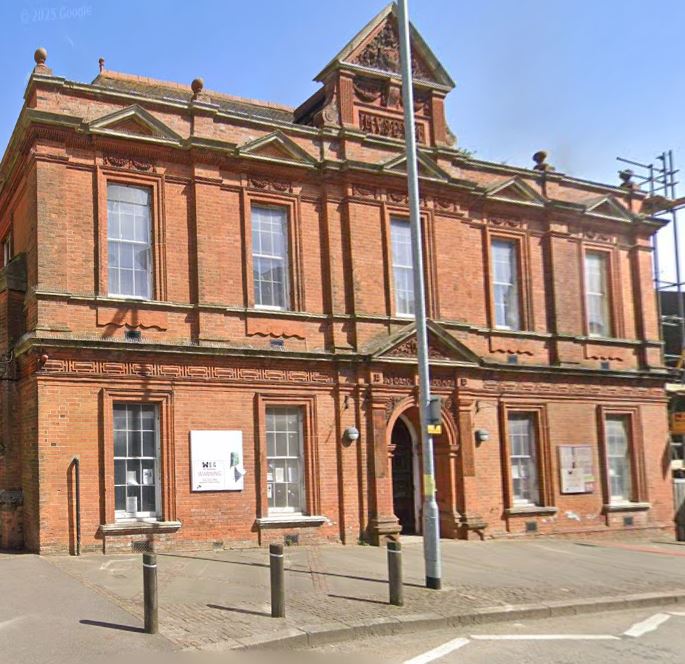
Another fight going on to save the Folkestone Library heritage building on Grace Hill. Maintenance on the building had been sadly neglected, and it had reached a point where is was going to cost more to repair that the Council were prepared to pay, so the museum was moved into the Town Hall, and part of the library was moved into an empty building nearby, with the rest going into storage. Library users protested loudly, as did groups dedicated to preserving the historic buildings in Folkestone, as they knew by experience that once sold to a developer, the wrecking ball would be next on the scene, and a tall block of flats would be there. Negotiations are still going on, I will keep my ear to the ground....
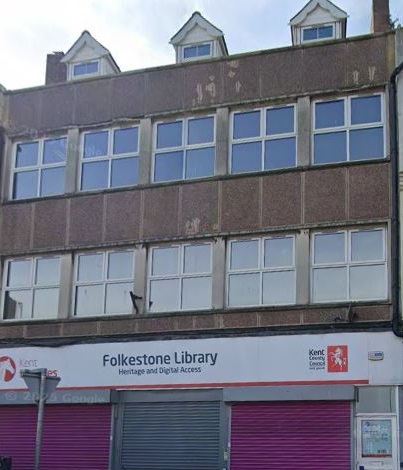
Temporary Library building on Grace Hill
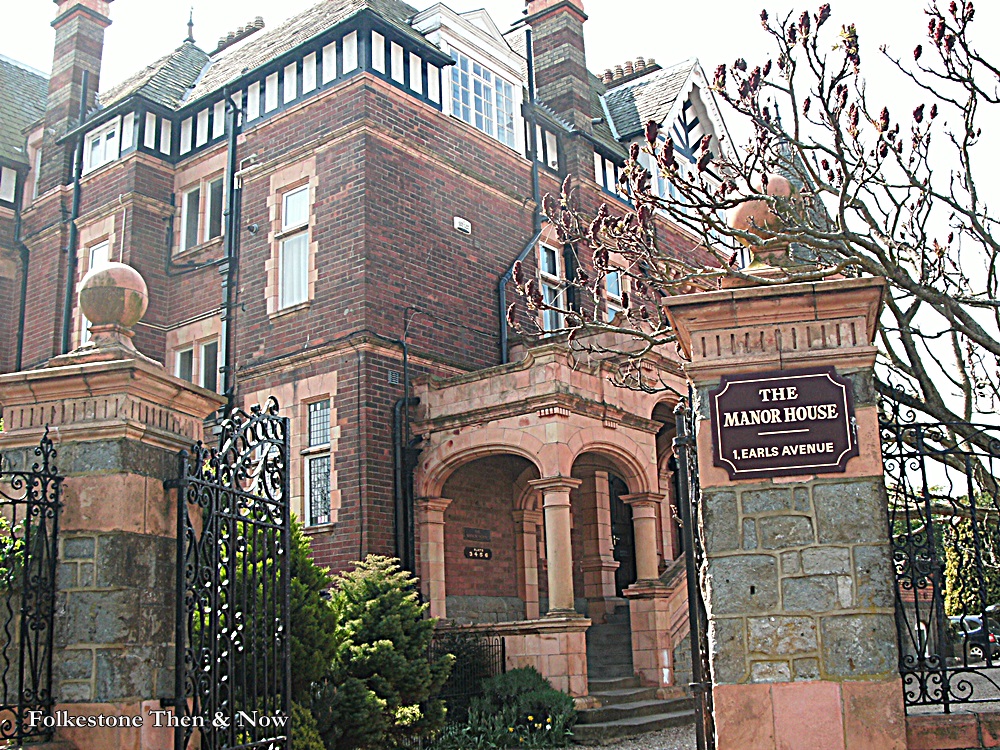
A grade 11 listed building, The Manor House at 1 Earls Avenue was first built around 1900 for Lord Radnor. I took this photo in 2011, and no need to put another one older or newer, as I don't think it has changed much in all those years on the outside. I think I heard somewhere that inside it has been converted into luxury flats, but I stand to be corrected on that.
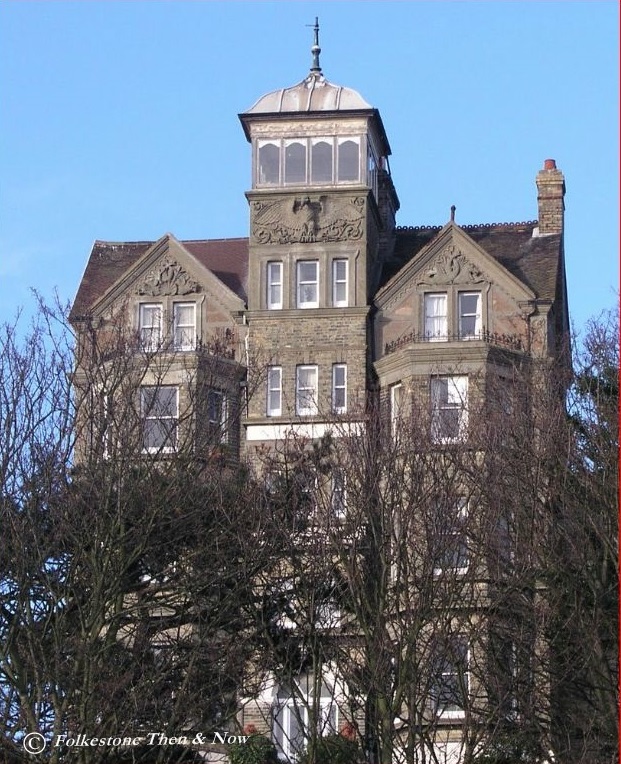

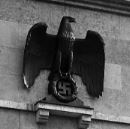
It doesn't matter how old a photo you find of the Stade or harbour, you will always see the Shangri-La in the background. I don't know when it was built, but it was certainly very well made, because it is still standing. It is just a large block of flats in The Parade, off Bayle Street near the Parade Steps, the end one of which is called Shangri-La, and I think at one time, it was a hotel with that name. There have been lots of stories about this building that are not true, unfortunately they were spread by a BBC documentary who had obviously not done their research. It has been checked, and discovered it was never a German Consulate, in fact the only Germans likely to have stayed there are tourists. The eagle that you see on the top is not a German insignia, it is just an embelishment dreamed up by the architect long before WW2, and as far as I know, nobody has ever been shot in the garden.
I don't think the room middle top is in use, which is a shame, as it would make a wonderful studio for an artist, or a cosy reading room with a fantastic view. I have seen pictures of the inside, and at that time it was sorely in need of some TLC.
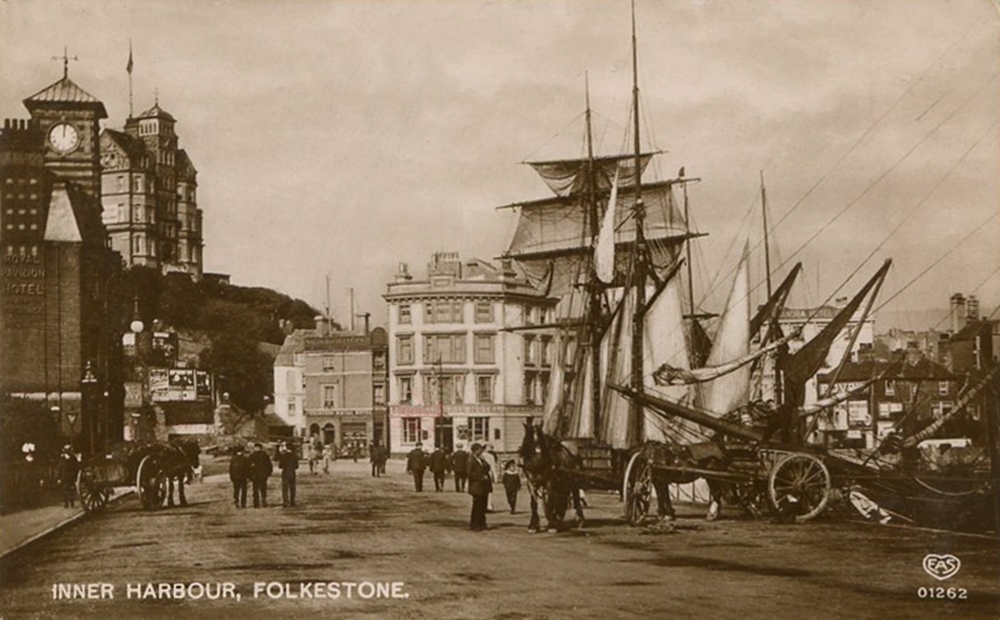
NOT ON THE SHANGRI-LA!
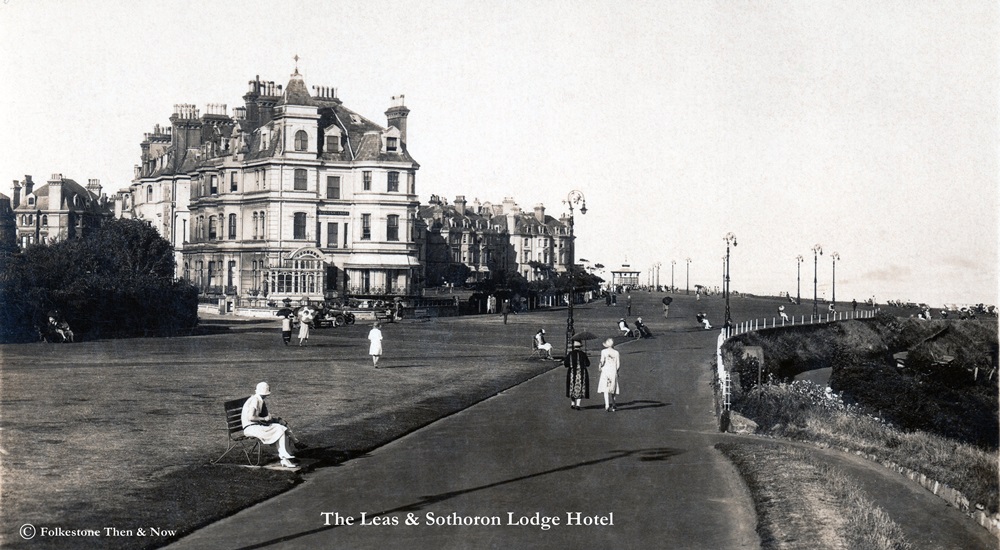
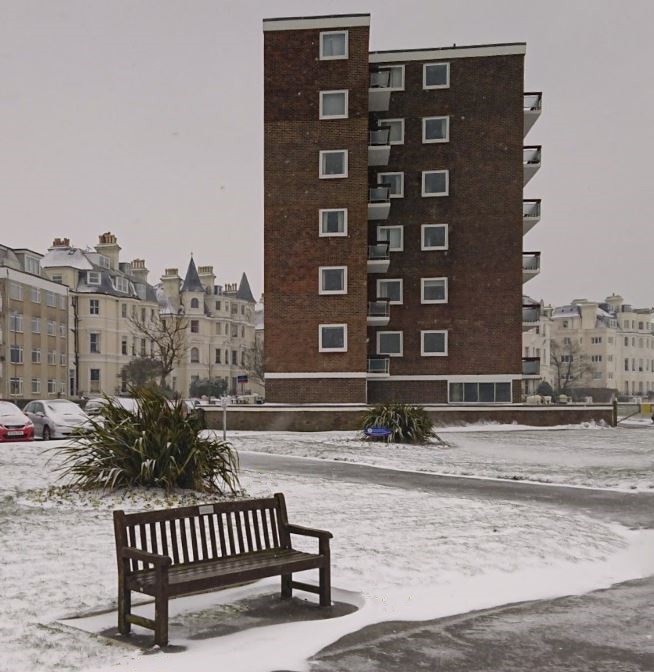
Now the Hotels have a page of their own, but I can't put up a page of buildings without showing you the one that puts my teeth on edge every time I look at it. On the left is Sothoron Lodge, which later was called Seagulls. A lovely piece of architecture and a perfect show piece for the Leas end of Clifton Crescent. Then planning permission was given to replace it with Madeira Court. I am sure it is very nice inside, and the tenants probably paid a pretty high price for a view like that, but it doesn't fit in with either style or colour of the surrounding buildings. The architects of the past went to great pains to make that whole area a work of art, I am sure people from other towns came to look at that whole vicinity to get ideas to take back, it was all so elegant. Now Madeira Court has been there for a few years, I see more and more boxes are creeping in, so I guess with the Planning Department, it doesn't matter what something looks like as long as it brings in plenty of taxes. Harsh I know, but that is the way it appears to me.
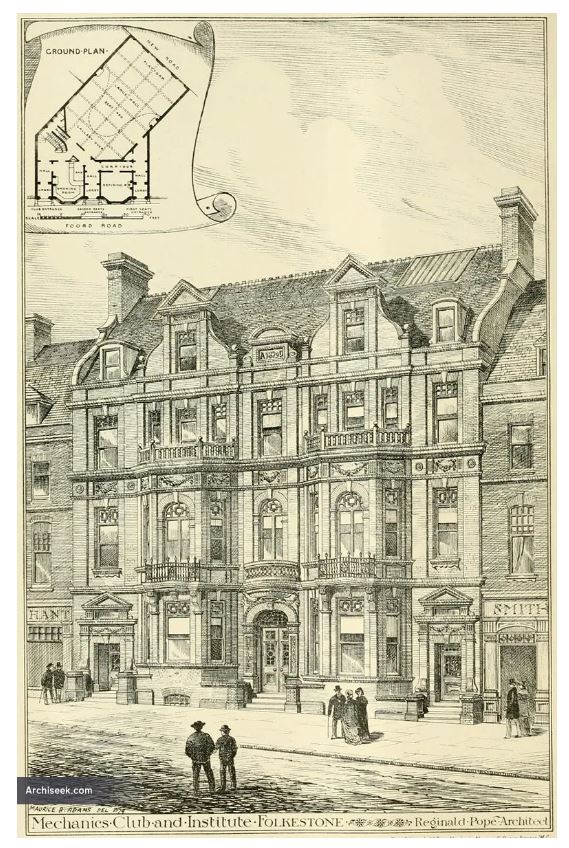
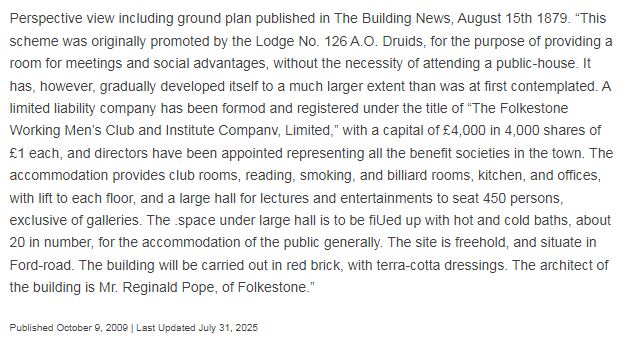
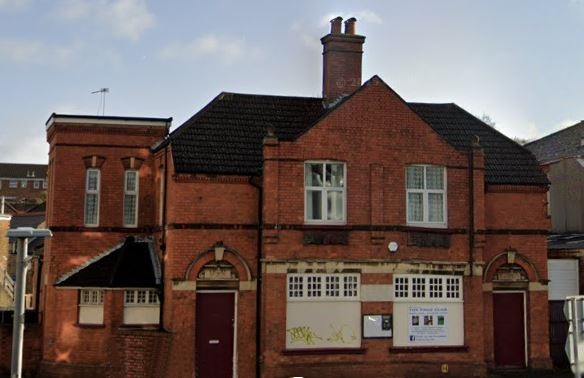
Here is one that someone might be able to help me with. I first came across the plans on the left for the Mechanics Club and Institute, and it says at the top it was built in Foord Road, and the Architect was Reginald Pope of Folkestone. I certainly didn't remember seeing a nice building like that on Foord Road, so looked up Mr Pope's name, and found the write-up of the building as above, and saw that it mentioned having public baths under the large hall. The only public baths I am aware of are or were located in the building you see here on Foord Road, which bears no resemblance at all to those plans, so does anyone know if there has ever been a building that looked like the plans? Was it altered beyond recognition at some point? Or was it demolished and the building you see was erected to house the baths?
If you are looking for buildings of Churches, Schools, Medical Facilities or Businesses, they now each have their own page, check the Index.
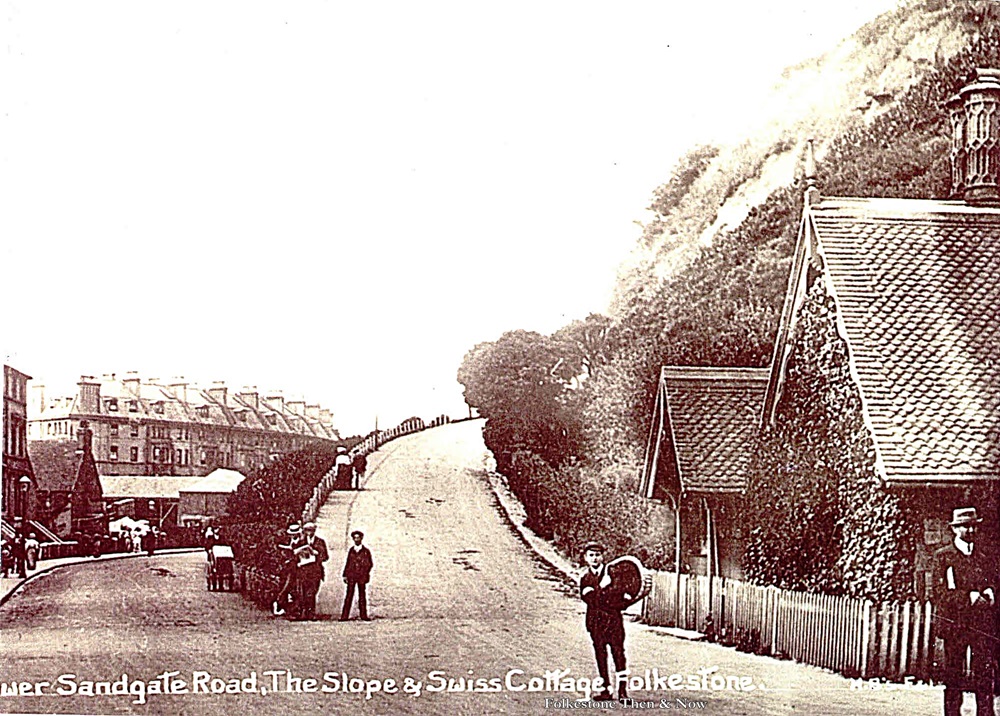
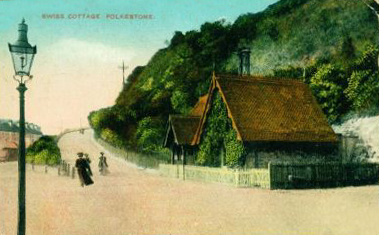
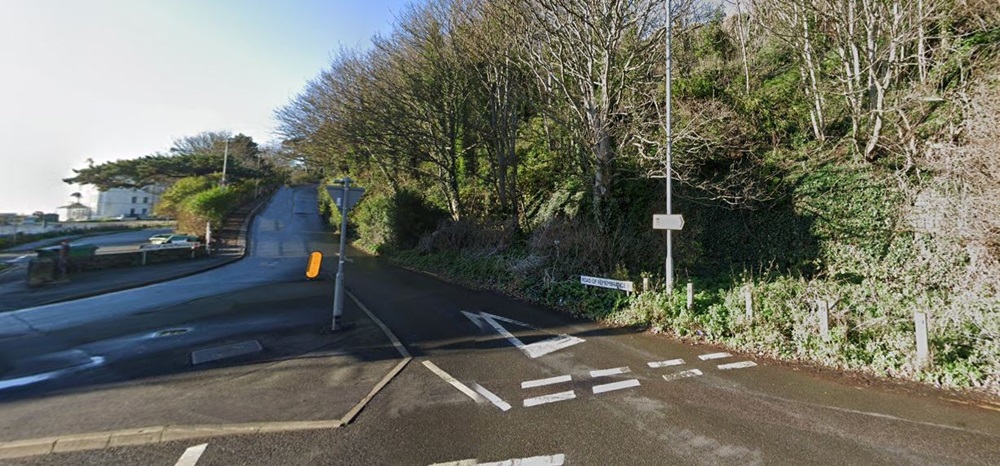
I hate to age myself, but I do remember Swiss Cottage being at the bottom of the Road of Remembrance, or The Slope as it used to be called. I don't know when Swiss Cottage was built, but it was a very attractive house with distinctive roof tiles. If you read the People of Folkestone page, you will find the name of a lady who was living in this cottage at the time of her marriage in 1891.
The Road of Remembrance, named thus following WW1 for the many troops that marched down that road to the ferries taking them across to the front. At that time they also planted rosemary bushes all the way down the road in their honour. These were replanted again in 2014 to commemorate the centenary of the outbreak of the war. I am not sure how well they were thriving a couple of years ago, because after a lot of rain there was an enormous land slip in January 2024 that closed off the road.
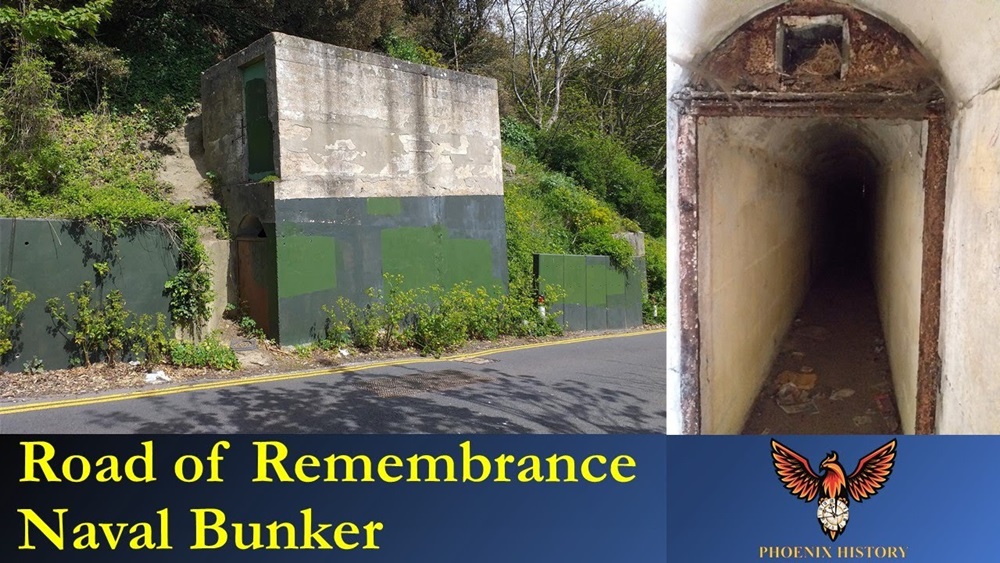
While clearing the debris, they discovered some Victorian urinals set into the cliffs, this was in addition to an abandoned WW2 Naval bunker with a lot of tunnels and rooms which was already known about. If you have always wanted to see inside that bunker, Phoenix History have made an interesting You Tube video here: https://www.youtube.com/watch?v=O9w3fCOEXtA
So with all that inside the cliff, plus the weight of the trees growing on the outside, it is no wonder that after a lot of rain, a huge amount of the cliff collapsed into the Road of Remembrance. As I type this, it is February 2026 and the road is still closed to traffic

Do you have memories of Folkestone? We would love to hear them, jot them down in the Guestbook below.
Guestbook
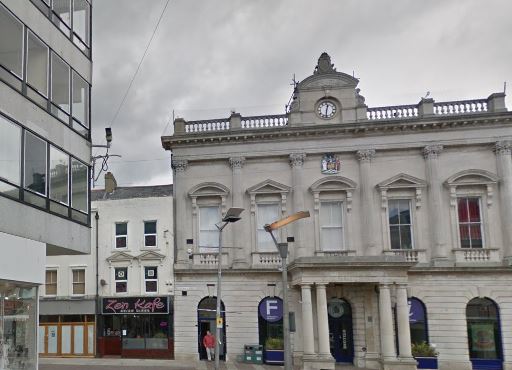
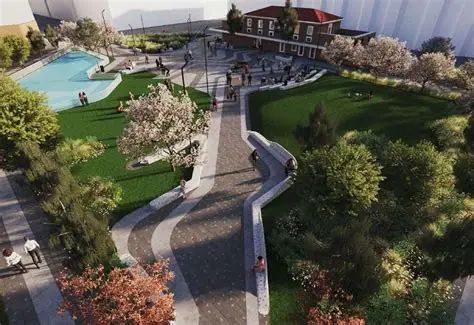
Buildings in Progress
The Bus Station in Bouverie Square is undergoing demolition, and buses are already not stopping there. The Station building is being retained, and among other things, I think a café is planned inside. Creative Folkestone have been commissioned to do a survey to get the input of residents as to what they would like in the Play Area, so if you have an opinion on this, contact them before April 28th 2026. Completion of this project is expected to finish in the Summer of 2026.
Folkestone & Hythe District Council
I think most of us know the last incarnation of the Marine Gardens Pavilion was as various night clubs, and many of us remember when it was an indoor roller skating rink, and a few of us oldies remember the days of the variety shows that were hugely popular, especially with the hundreds of tourists that Folkestone once hosted. But how many of you remember the boxing matches? I certainly didn't until I received an e-mail from Peter Rigby, telling me about his Grandfather. This is what he said about him:
"My grandfather was Johnny Rigby - a lightweight boxer from Camberwell in the 1930's. He had 52 known recorded fights between 1931 - 1938. He fought Harry Corbett at the Marine Gardens Pavilion, Folkestone on April 25th 1934 losing on points over 12 rounds. Harry Corbett was British Featherweight Champion 1928-29. Here is a photo of my grandfather - Johnny Rigby and one of Harry Corbett, also a scan of the programme.
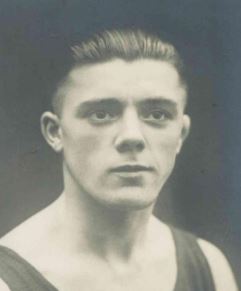
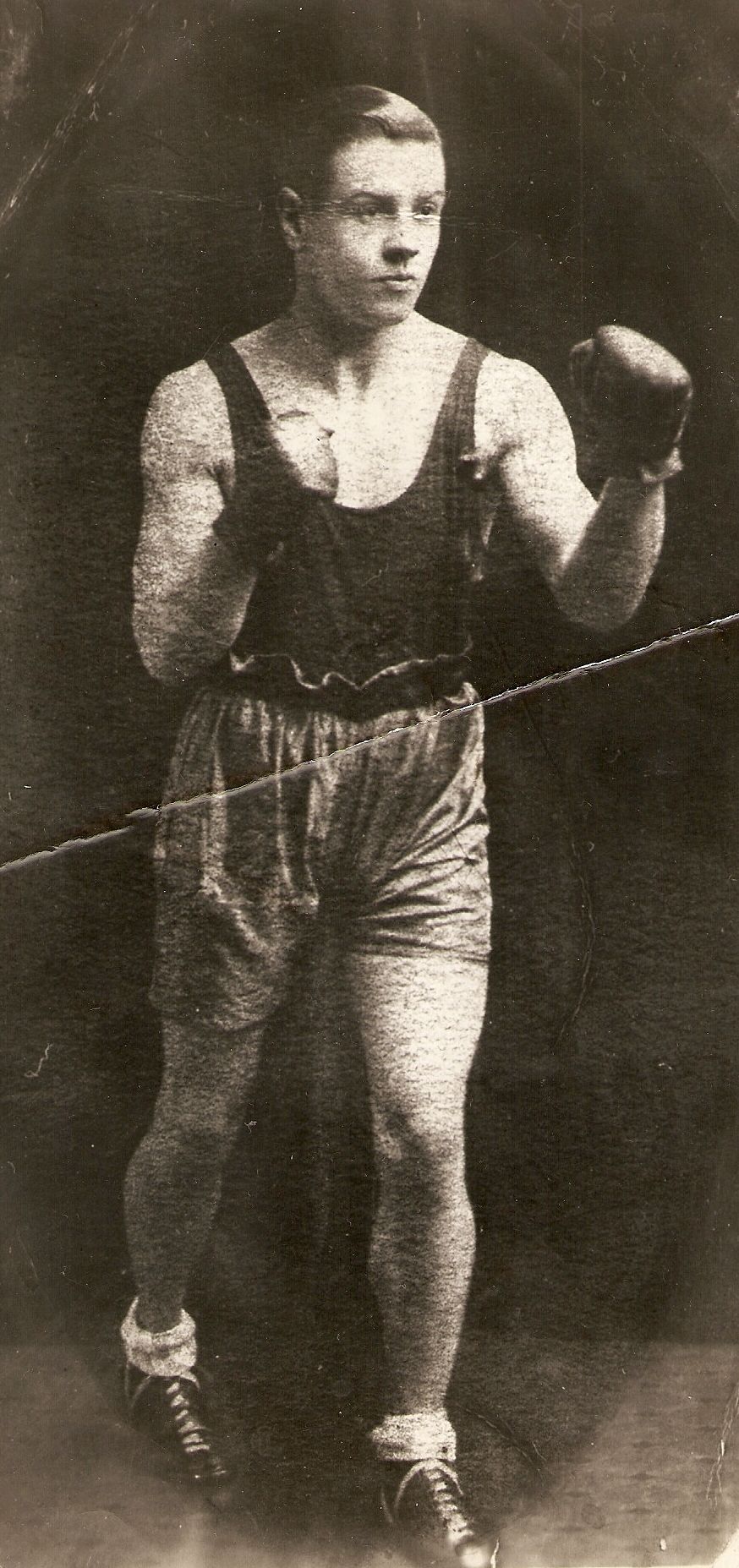
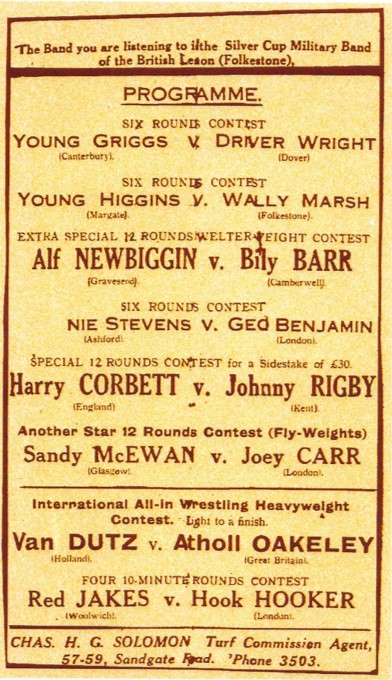
Johnny Rigby
Harry Corbett
Approximate site of the Marine Gardens Pavilion in 2026
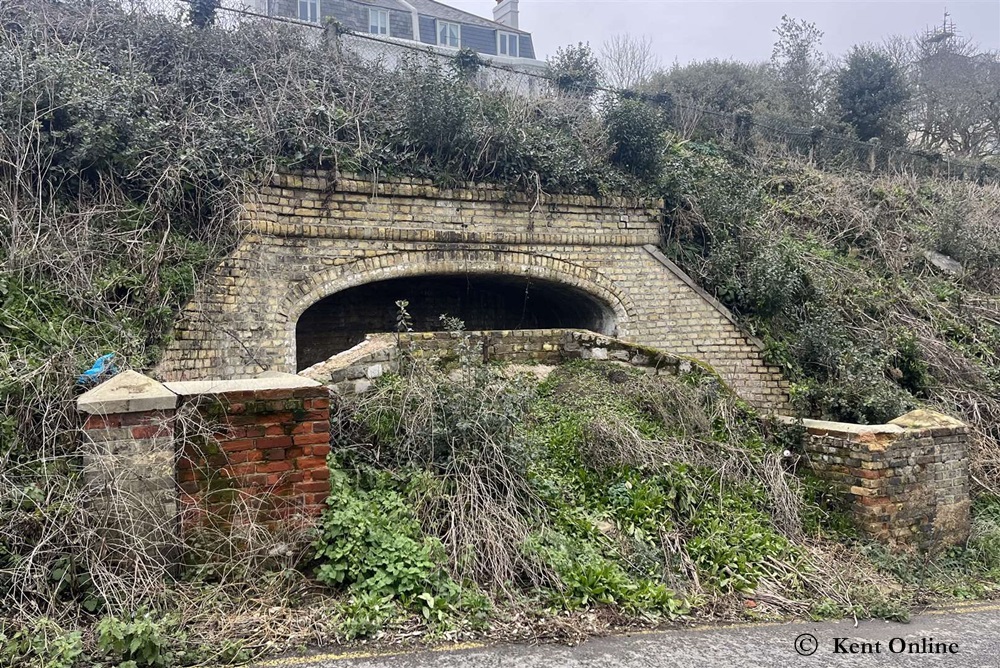
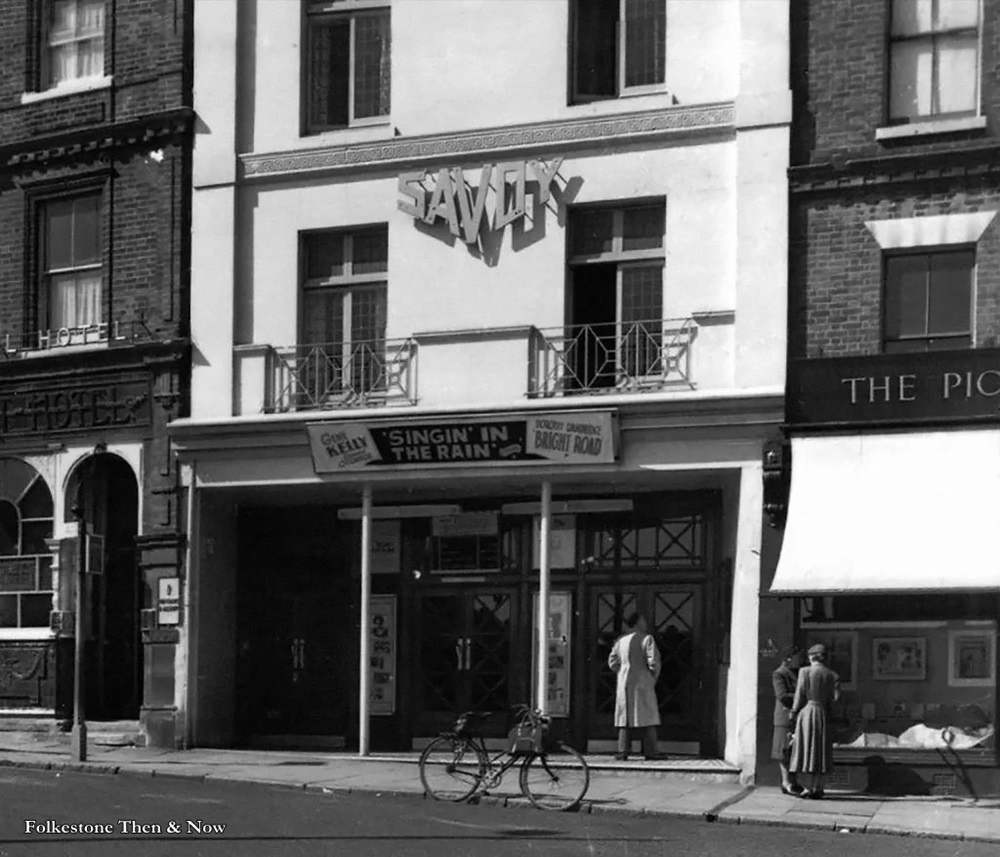
There was another cinema in Folkestone for a short time, this was the Queen's Cinema, Tontine Street. I have recently found some information on it, and have added it at the bottom of the page. Looking in the 1949 Kelly's Directory under Cinematograph Halls, I see there was also the Rex Cinema, 103 Sandgate High Street, and the Ritz Cinema, East Street, Hythe. I have nothing on either of them, so if anyone can help with a photograph, I would be very happy!
Update: Now Open!