


This website is best viewed with a screen resolution of 1152 x 864
Page updated 21 April, 2026
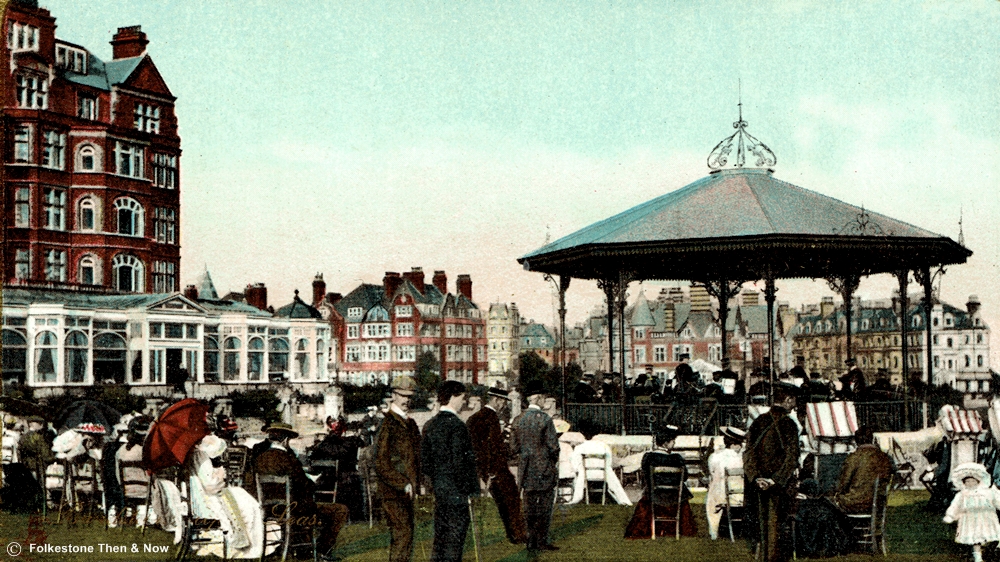
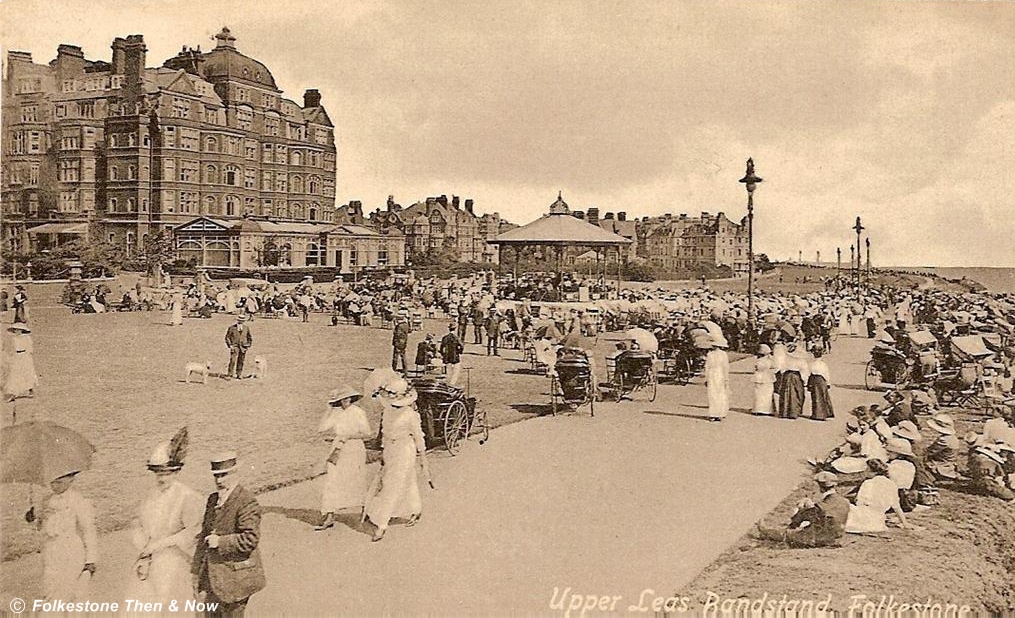
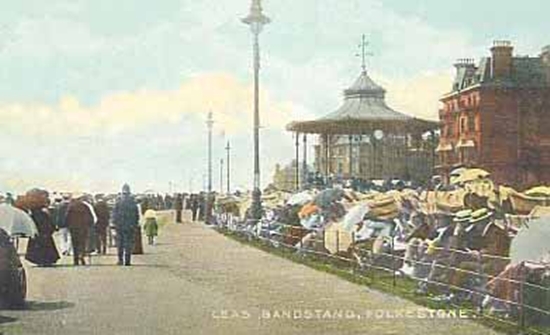
This bandstand is no longer there, it used to be opposite the Grand Hotel as you can see, and was very popular when both hotels were taking in paying guests. This card dates from 1912 and was hand coloured.
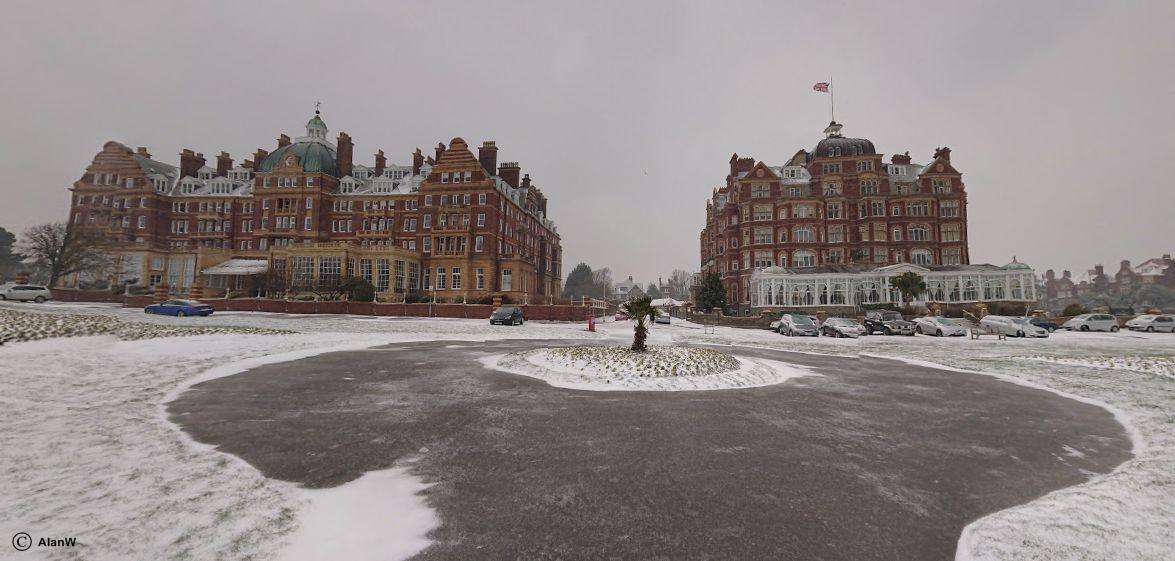
I found this fabulous photo on Google Streetview, and not sure how to contact AlanW the photographer to ask his permission to put it here, so if you object Alan, please let me know, and I will take it down. It was taken in March 2018 and shows both the Metropole and Grand Hotels, and you can see where the bandstand used to be in the foreground. I understand the snow didn't stay very long.
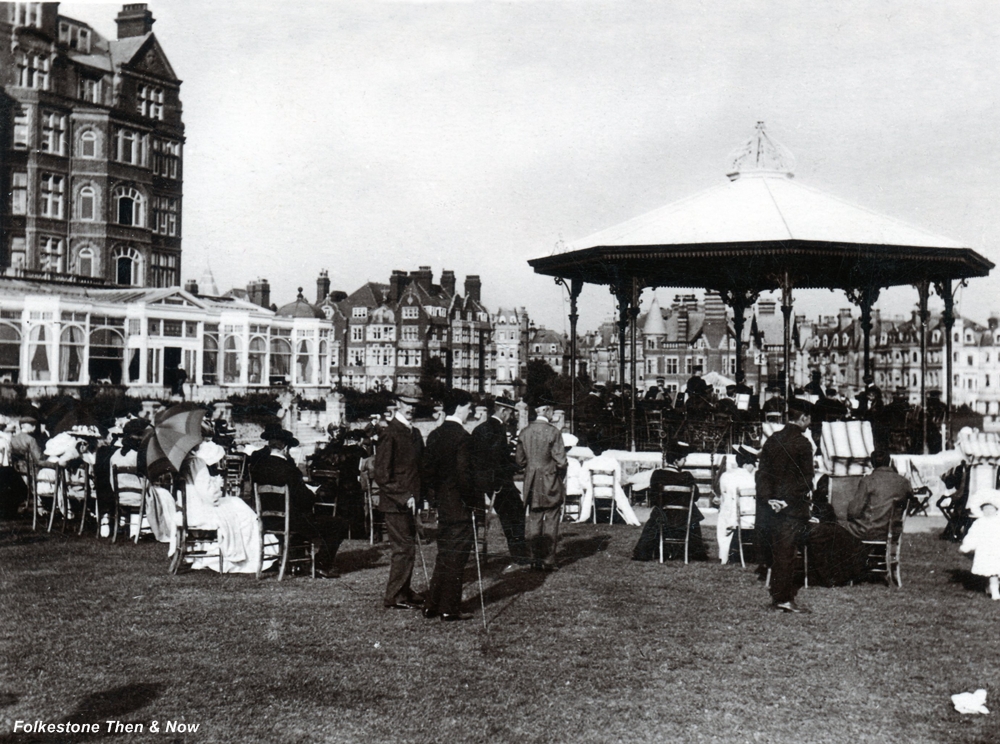
Same card as above, but in black & white. This one is post dated 1909, and the fellow on the back states that he is having a 'ripping time'.
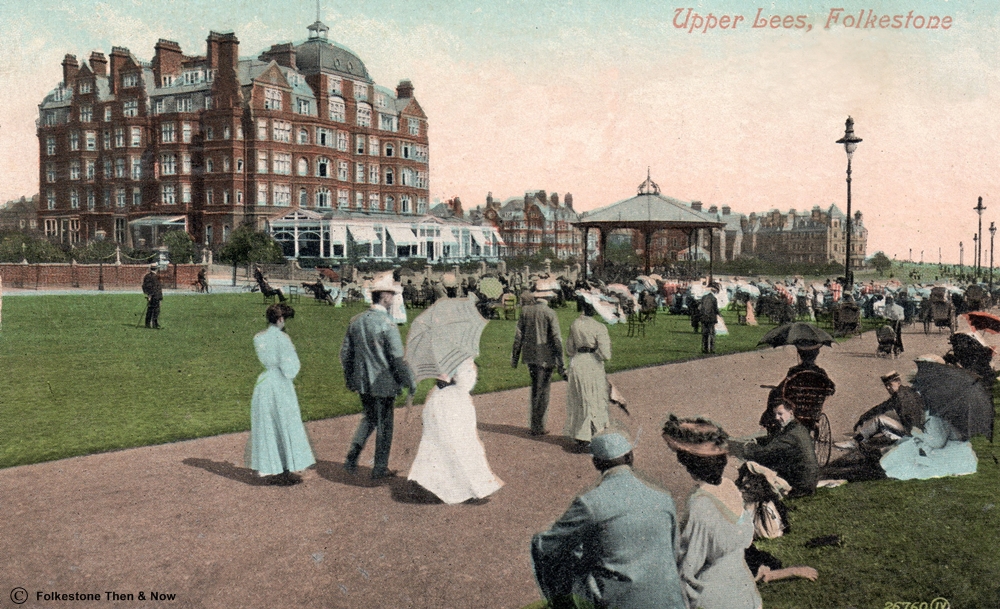
Another card posted in 1909 of the same area. You will notice that on this one, it was spelled Lees. This is the way it used to be spelled, I am not sure when it was switched to Leas, but as I speculated at the top of the previous page, my theory is they changed it when they realised that Lees, which means sheltered, is not a very accurate description on a windy day!
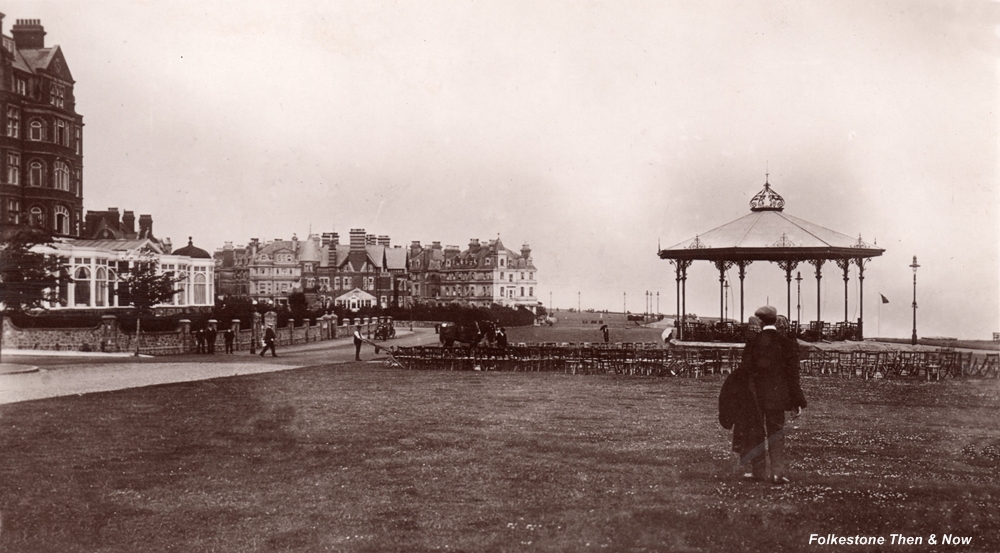
The bandstand is deserted, and it's a quiet day at the West end of the Leas, so one of the gardeners has decided to take the opportunity to cut the grass with his horse-drawn mower. Can you see it on the other side of the chairs?
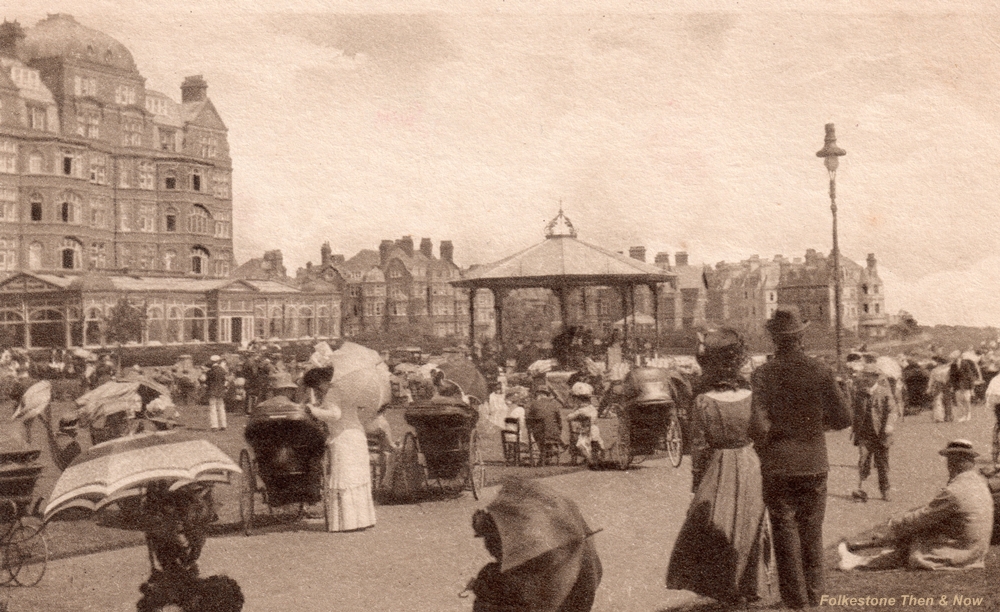
Another one at the West end, or Upper Leas as it was referred to. Lots of bathchairs out today.
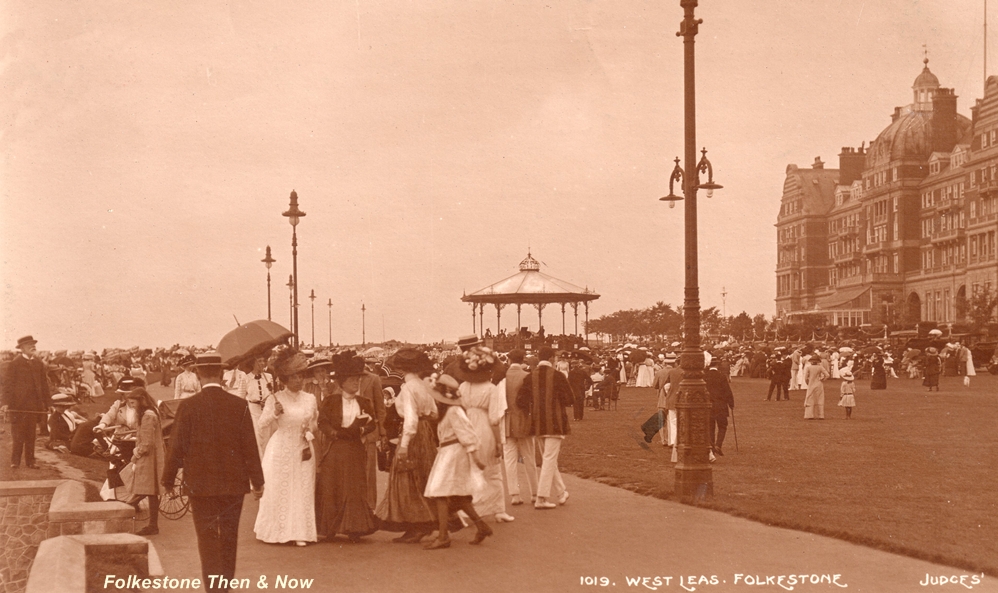
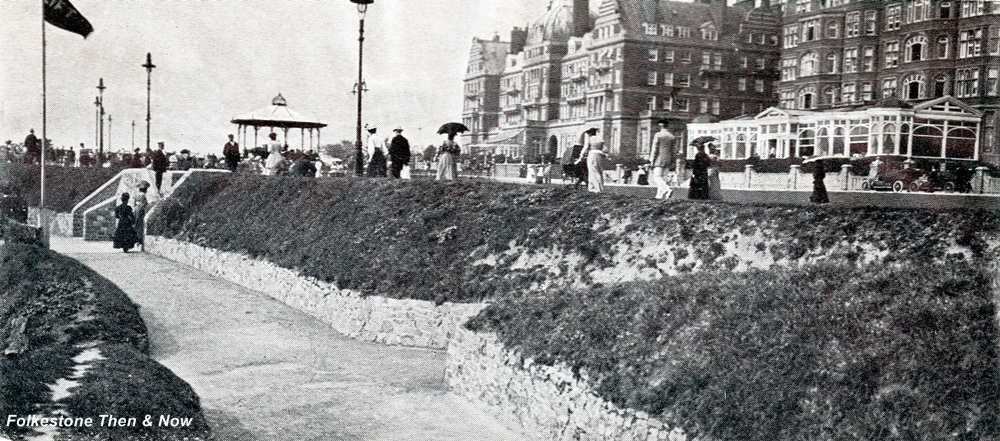
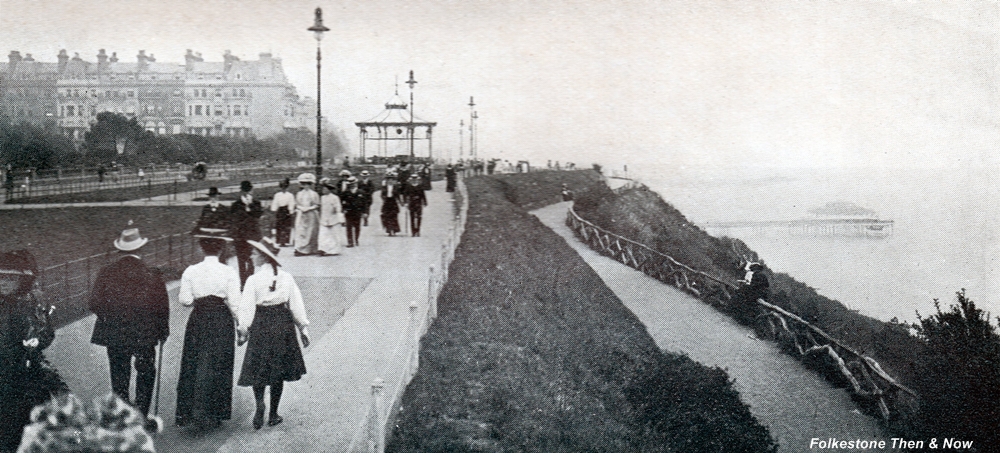
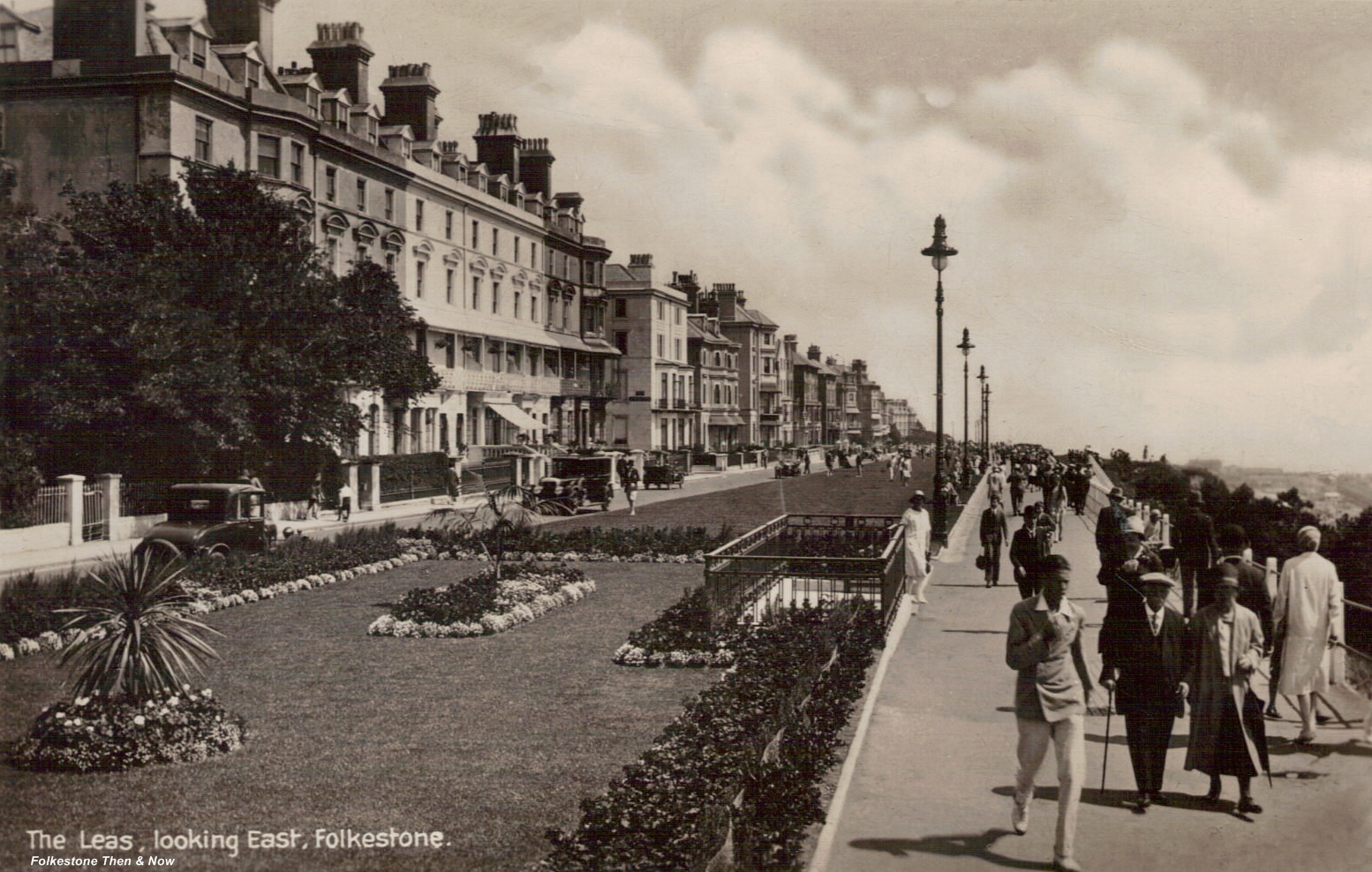
You can see why it was called 'Fashionable Folkestone' can't you? It must have been like a catwalk along the Leas in those days, and it's not just the women who were fashion conscious, look at the man with the striped jacket - I don't personally like it, but I am sure it was the height of fashion at the time. This picture is looking West, and this time has the Metropole Hotel in view. The wall you see on the left was steps leading down to a lower walk, and the Metropole Lifts, a single pair that went down to the Lower Sandgate Road. These lifts were destroyed by troops during WW2.
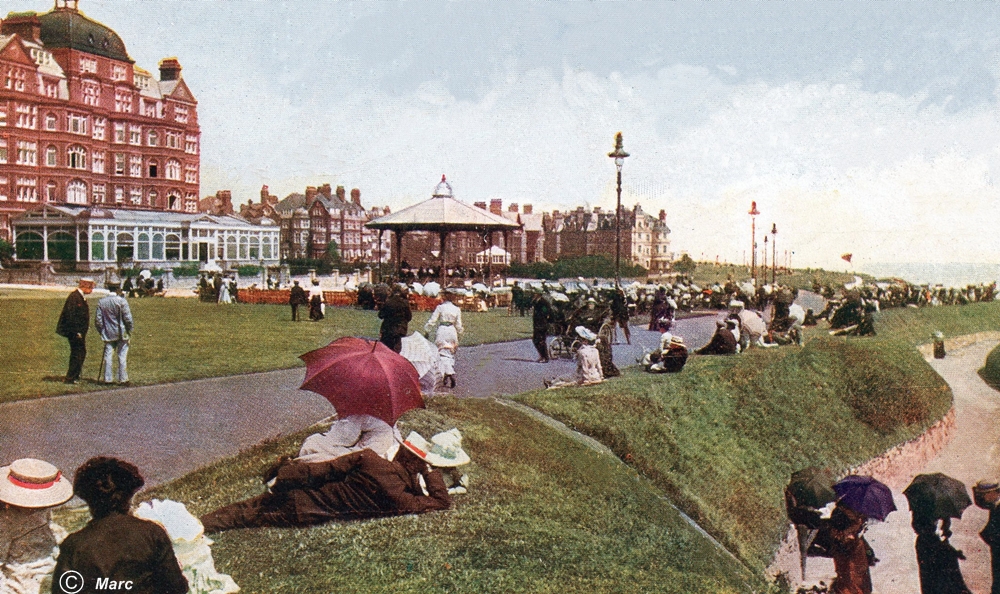
Sent to me by Marc, this one shows the walk mentioned to the left. I admit it, I get confused with these walks. I know one is called Madeira Walk, another is Sun Walk, and on various cards I have seen Pine Walk, Lovers Walk and Lower Sandgate Road Walk. (More than one name for the same view, so I think photographers tend to make the names up) The only one I know for sure is the Zig Zag Path, I don't think the others are sign posted, although I stand to be corrected on that. Looking at a Google map, they all appear to intersect with each other, and are all referred to as 'Unnamed road'. So if anyone can sort it out for me, I would be much obliged.

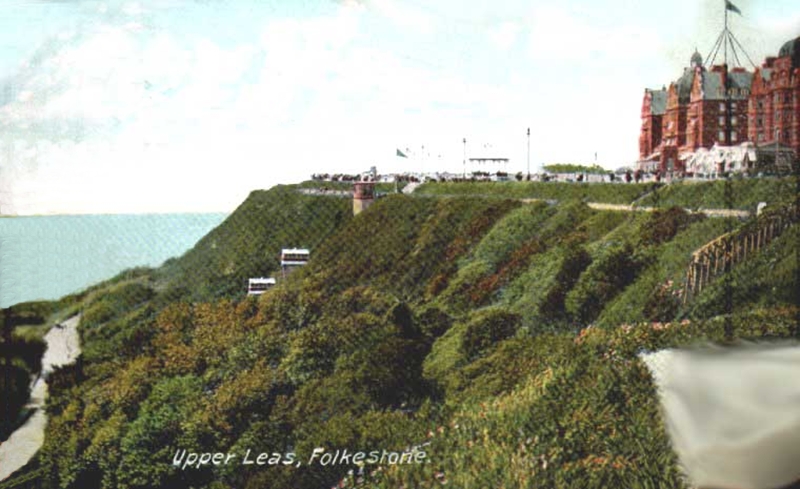
Another one of the Upper Leas, showing the Metropole Lifts in working order. I have no idea what that is in the bottom right corner, or what the wooden type structure is going down the cliff behind it, most peculiar.
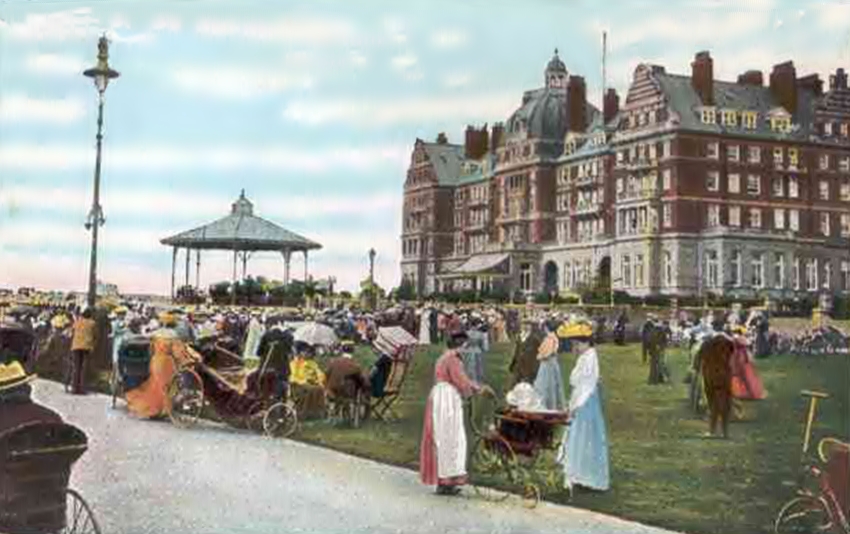
Another view of the Metropole and bandstand. The pram is fascinating, it has penny farthing type wheels, and I bet it wasn't very comfortable. I wonder how many children suffered from shaken baby syndrome in those days, especially those who were taken around the harbour and pushed over the cobbles. I would guess the lady in pink with an apron was a nanny.
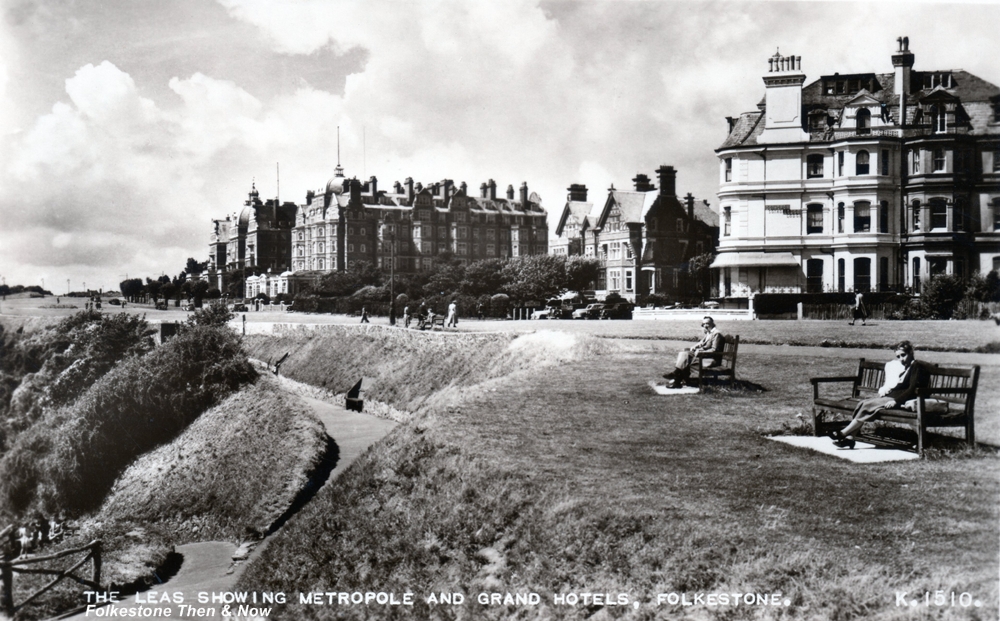
This card wasn't postally used, so I don't have a date, but the bandstand opposite the Grand Hotel appears to be gone.
Still there in this one though.
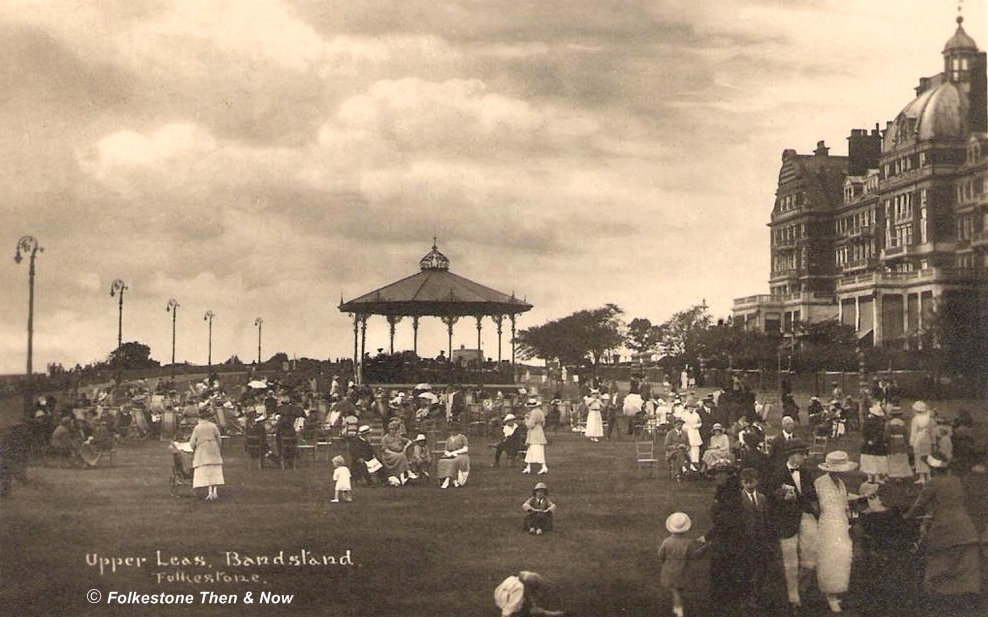
That man over on the grass appears to have his two dogs on leads, which was unusual in those days, most appeared to be running loose.
Lots going on in this one, the hemlines appear a little shorter, what would you guess? 30's maybe?
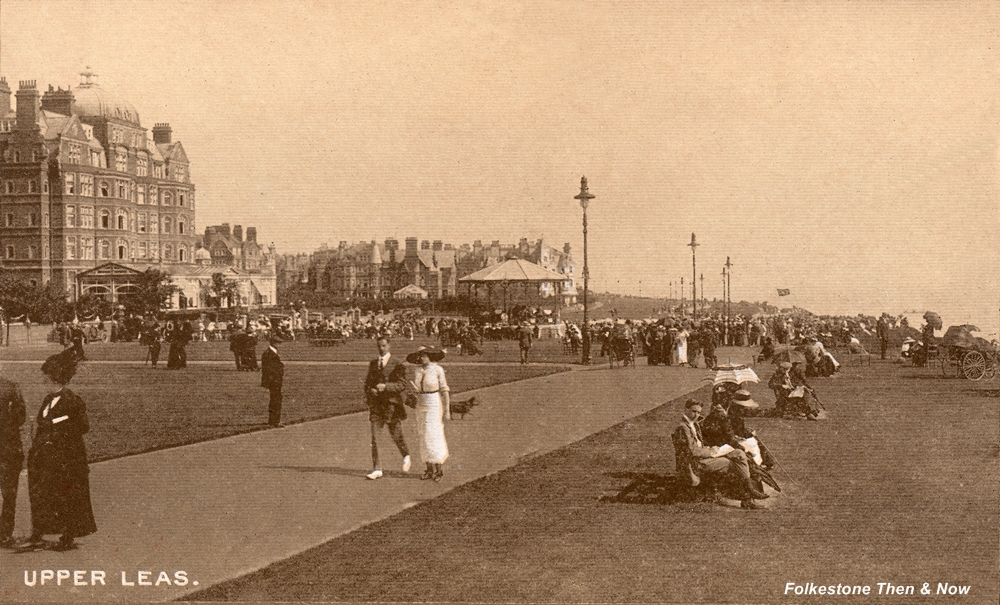
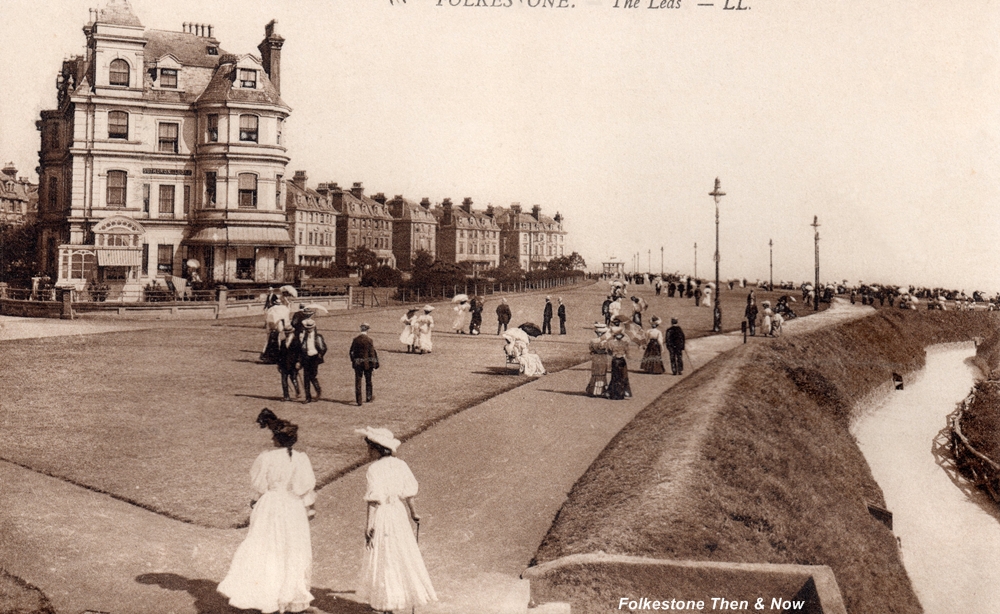
See the little dog off the lead? The man standing with his hands in his pockets may be watching it, but he doesn't appear to be attached to it.
This lovely view shows the Sothoron Lodge Hotel, which was on the corner of the Leas and Earls Avenue. Beautiful piece of architecture.

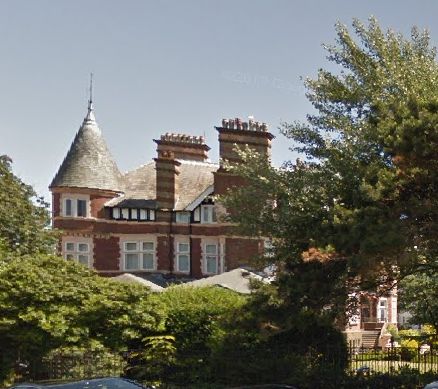
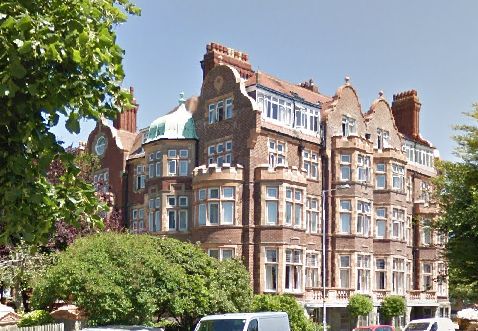

The Manor House, taken from a different angle but as you see, the turret is still there.
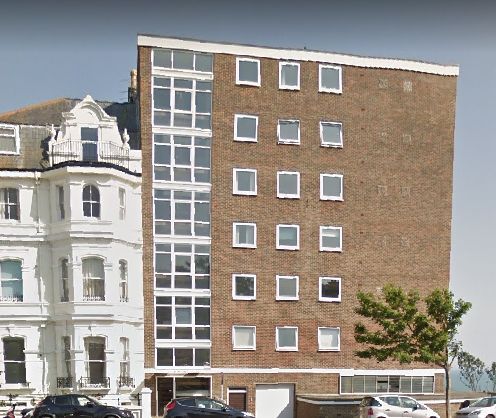
In the picture on the right, the square building replaced the beautiful Sothoron Lodge. Are there no rules in place these days that a building has to fit with its surroundings? Do they not need to get planning permission any more? Who in their right mind would think this to be a suitable replacement stuck on the end of all those beautiful buildings in Clifton Crescent?
Yes, definitely the back of the Burlington
Upper Leas again, and the wall you see on the left belongs to the Grand Hotel, and still there. I think the first building is the back of the Burlington Hotel, the building with the Turret is the Manor House, where Lord Radnor lived at one time, I am not sure about now. The building beyond that is Sothoron Lodge Hotel. It is hard to get the same shot today because of all the trees that have grown since this was taken. The Burlington is completely hidden from this angle.
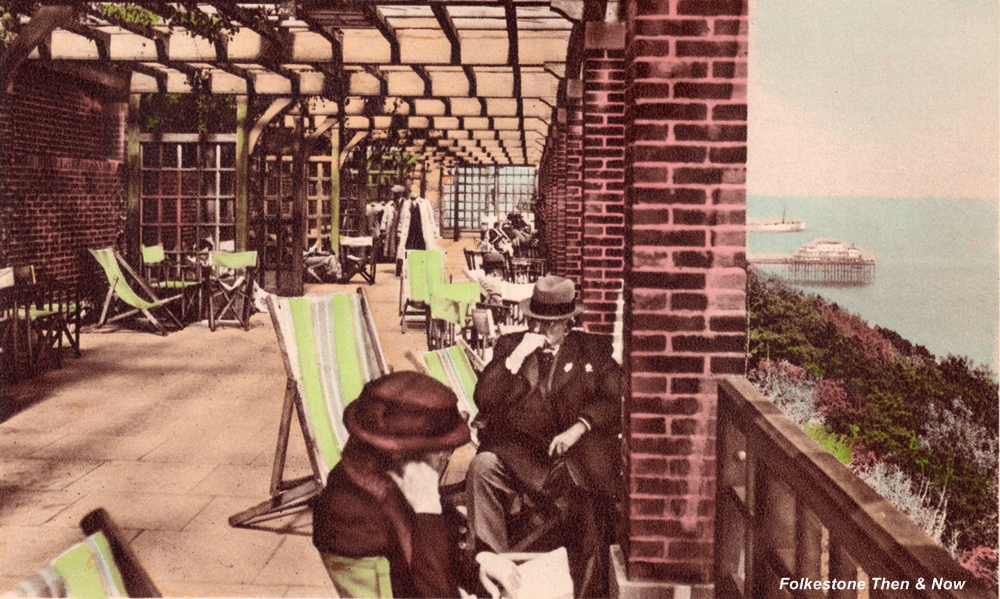
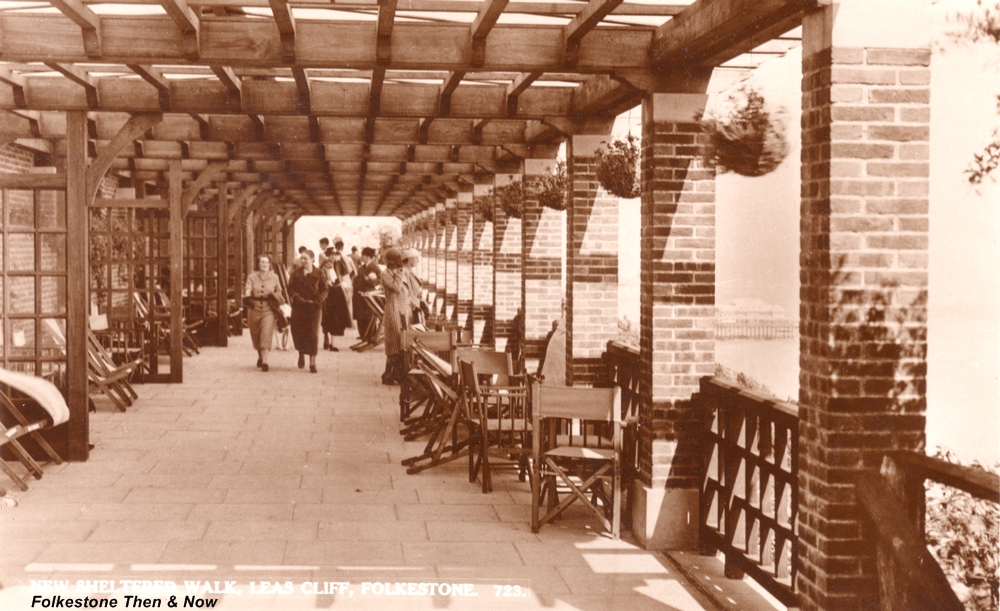
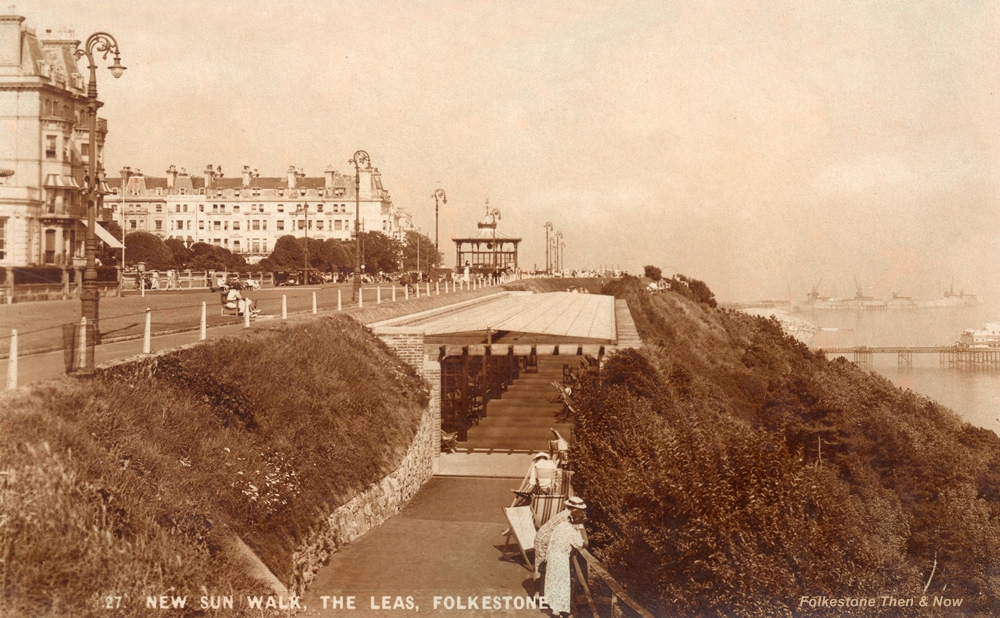
Along one of the walks just below the Leas you can find the Sun Shelter, where you can sit a while and catch your breath. You can no longer see the Victoria Pier, but the view from here is still magnificent. As you can see by the photo above left, they used to grow grapes inside this shelter, but these plants disappeared over the years. How could those men on the left sit there in the sun wearing a suit, tie and hat? They must have been suffering from the heat, surely? I don't think they had invented deodorant yet either had they? Whew!
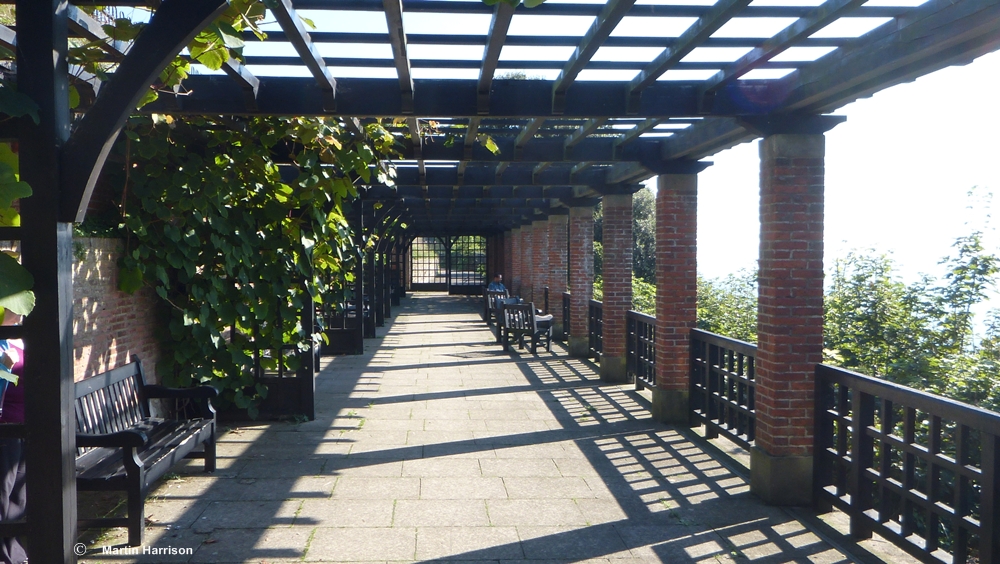
This wonderful photograph was sent to me by Martin Harrison, who lived in Linden Crescent between 1950 and 1970. I think they have done a wonderful job of refurbishing the shelter, and see they have planted grapes in there again - how wonderful! They have added gates at the end, and I am assuming they are at both ends, which hopefully will prevent the vandals going in there at night and destroying it. Thank you Martin - made my day!
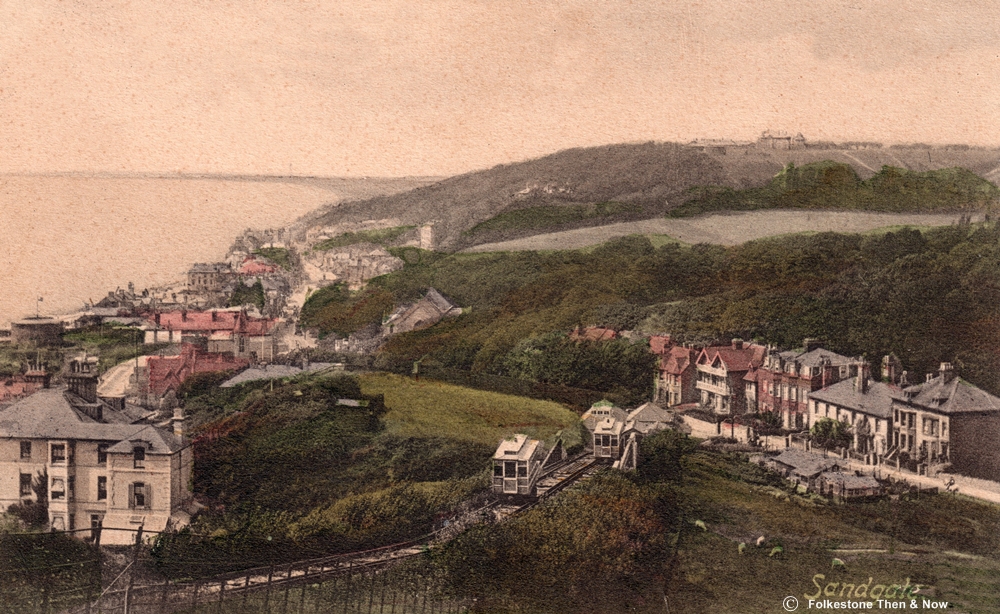
From the far West end of the Leas, it used to be a piece of cake if you wanted to get down to Sandgate in a hurry. You just had to board the Cliff Lifts, and they would take you there. I believe these lifts went out of business when the Sandgate Tram or Toastrack became the popular mode of travel in Sandgate. If you would like to see more photos of the Sandgate Lifts, check out the LIFTS page, and if you would like to see more of the Tram, you will find it on the SANDGATE page, and also the PUBLIC TRANSPORT page.
Now, between pages 1 and 2 we have walked the length of the Leas from East to West, let us go back and take a second, different look at some of the places we have seen.
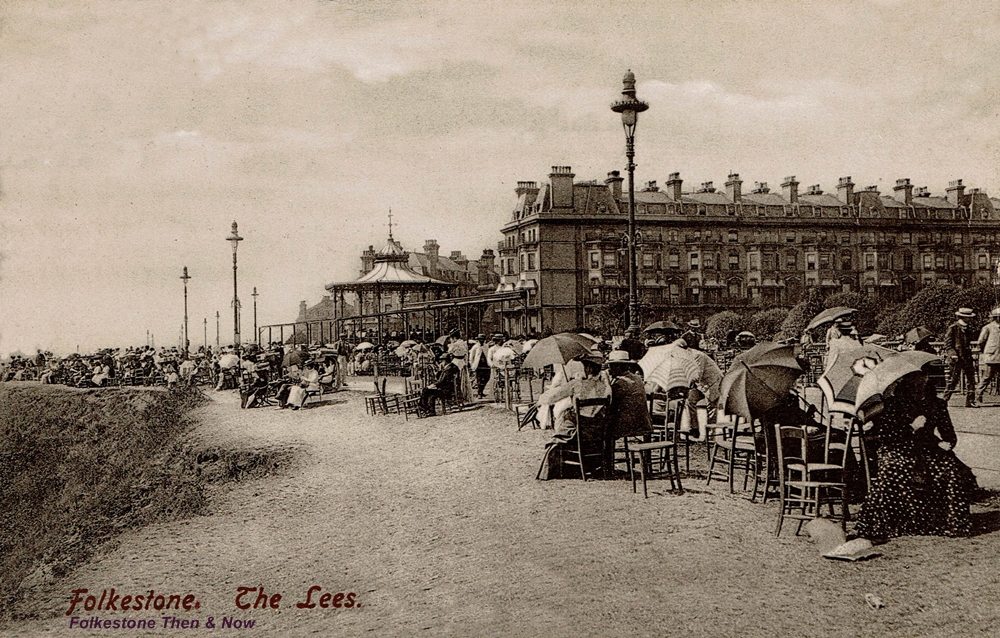
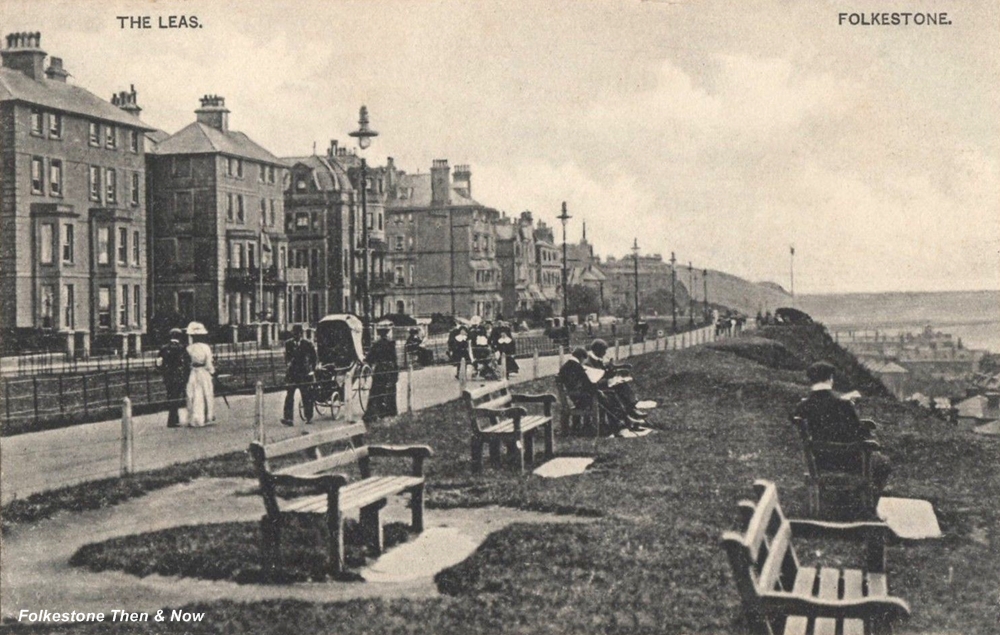
Dated 1905, this is the bandstand that is still there.
1905
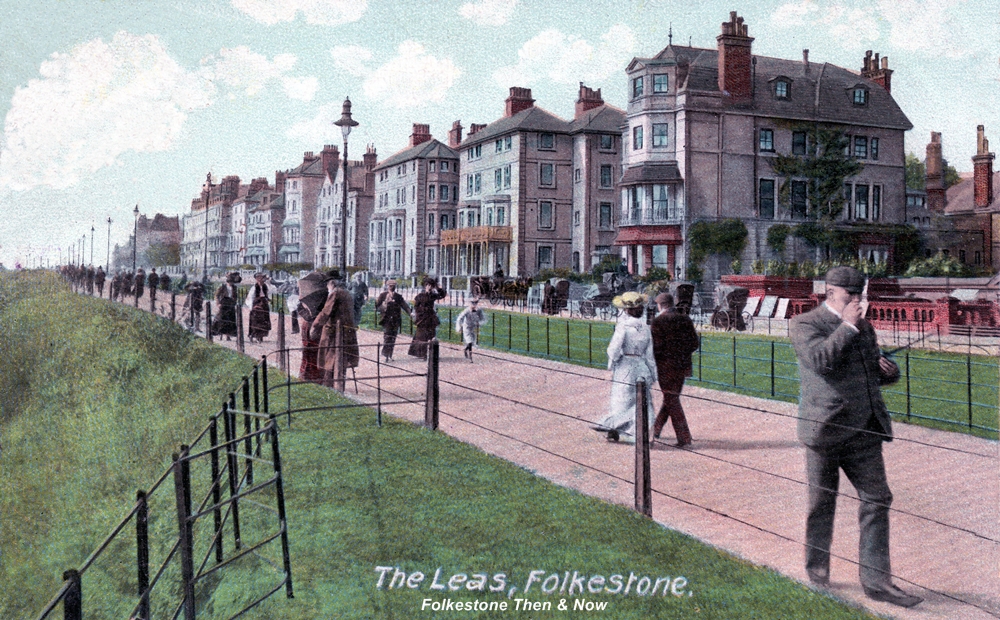
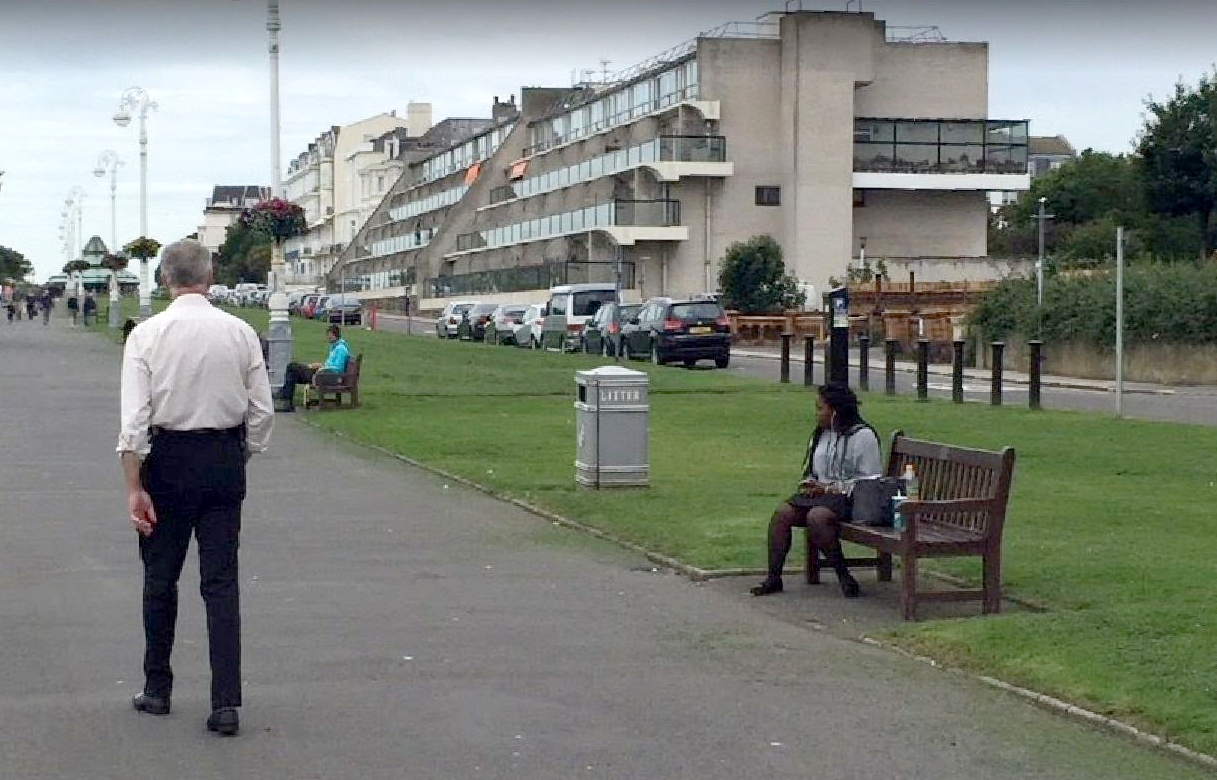
1907 Showing the Leas Pavilion in the background
Taken by Sarah Li Na in 2016, you can see the difference in the buildings beyond the Leas Pavilion, and the developers would dearly love to turn that building into more of the same.
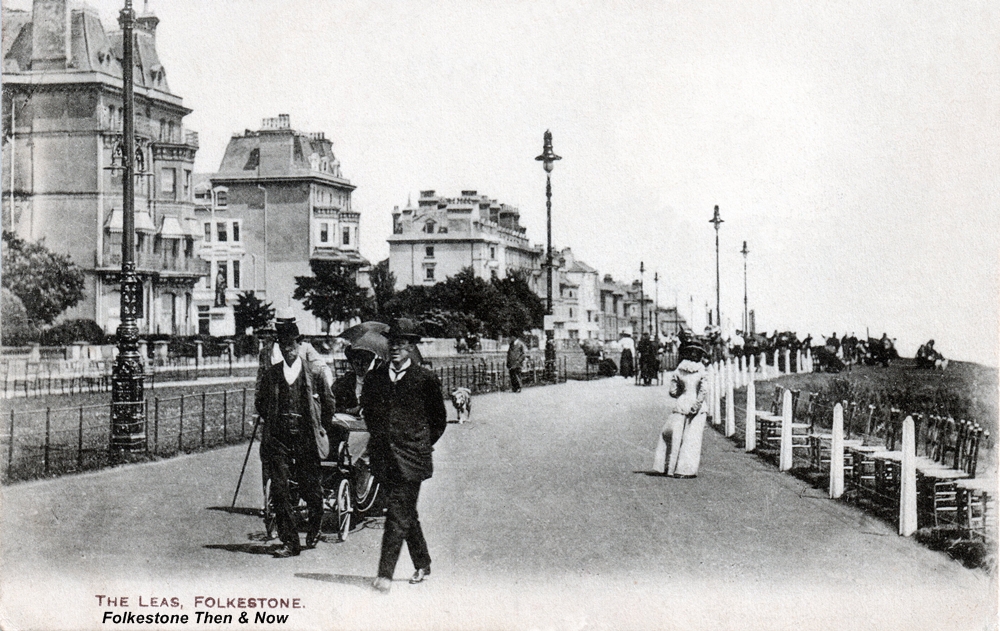
A kind gentleman is pulling someone along in a bathchair. Behind them you can see a dog that looks completely by itself. Tickles me that you had to belong to a certain class of people to walk along there, but they allowed any class of dog, who was free to poop anywhere it wanted. I wonder if it was in the job description of Lord Radnor's policemen to scoop the poop as they went? If someone didn't do it, I would think the ladies in those beautiful long dresses would have complained. Note the chairs on the right, not facing the beautiful view of the sea, but facing the Leas, they were there to see and be seen.
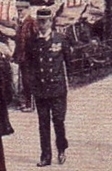
Does anyone have a photo of a member of Lord Radnor's Police Force? I am always keeping an eye open for one in my postcards, and came across these two. The image showing the bandstand isn't very clear, but that looks like a policeman wearing the type of helmet I remember when I lived in Folkestone. This card dates from 1907. The man inset has been taken from a card also dated 1907, so only one of them, or neither of them belong to the police force. The man inset was walking away from the bandstand, so possibly he was wearing a bandsman's uniform, but that looks like stripes on his jacket, as if he has gone up through the ranks. Anyone got any ideas?
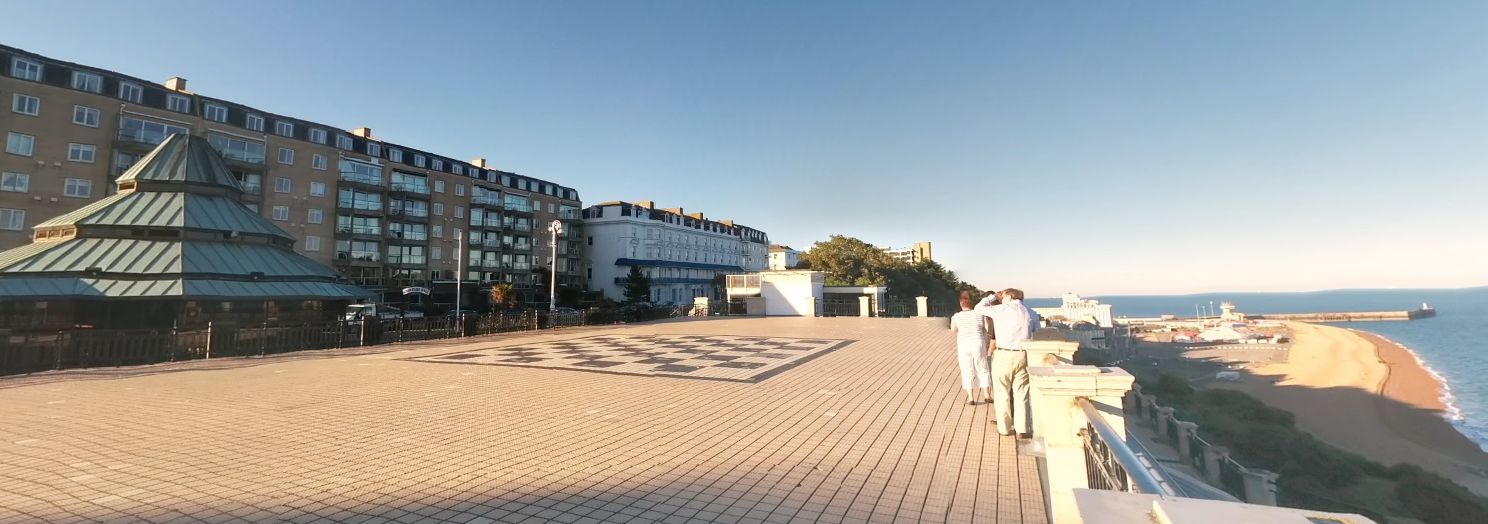
This a 2014 view from the top of the Leas Cliff Hall by Mike Catterall. As you can see, it is set up with a giant chess board, plus they hold many public events here throughout the summer months.

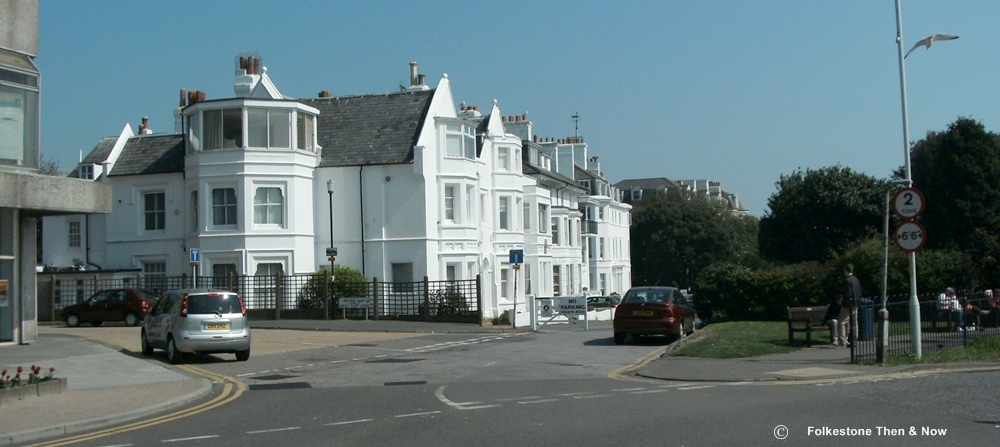
On the left is a 2006 photo of Albion Villas at the top of the Road of Remembrance. The 1860 image on the right is not a photograph, more an etching first published in a newspaper. However, if they drew Albion Villas correctly, they have certainly undergone a lot of changes over the years, but still look beautiful.
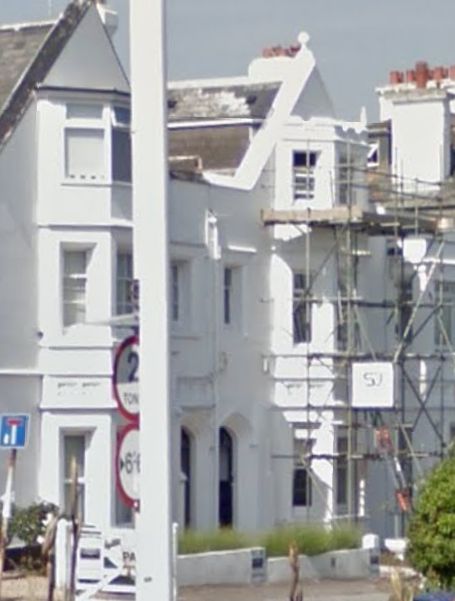
You can't see it clearly in the 2006 photo above, but on this image from Google dated 2017, you can see No. 2, which was under repairs, has the coronet type top to the bay window, but it has been lifted a storey higher. So would guess the etching is a pretty accurate depiction of what they looked like.
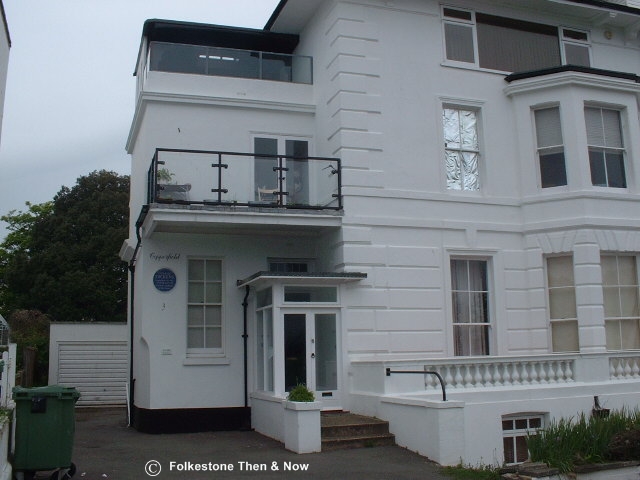
This is something you can't see with Google, as it doesn't go down in front of Albion Villas, but I went on foot in 2006, and here is the most famous house, it is No. 3 - the house once occupied by Charles Dickens.
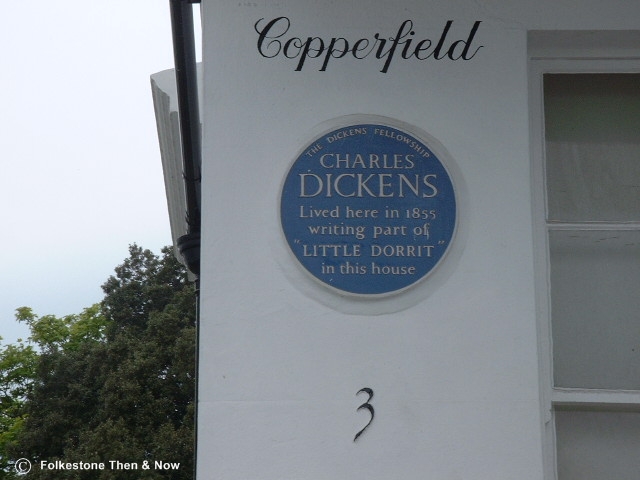
The house is called Copperfield in his honour, and this is the way the plaque on the wall reads. However, if he was here in 1855, the house must have looked more like the etching above - no bay windows or balcony for him!
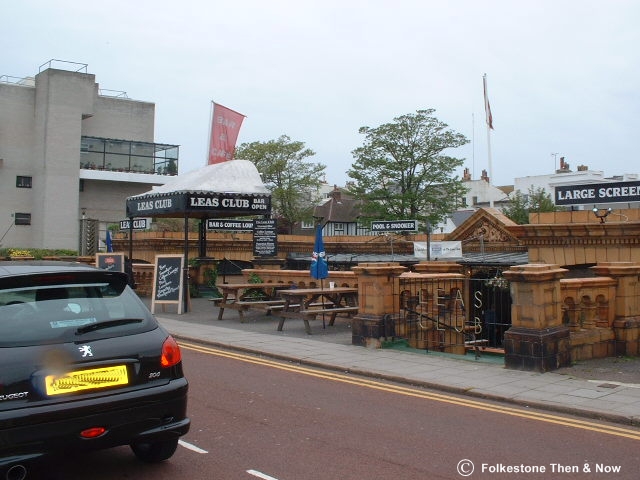
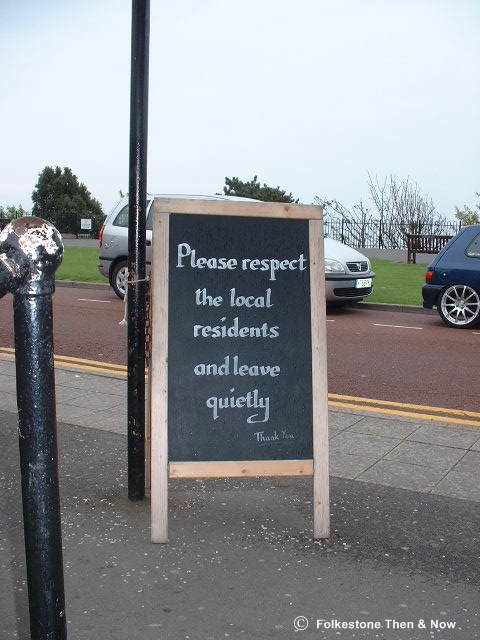
Here is one of the Leas Pavilion from 2006 when it was going under the name of the Leas Club, a very popular bar. I don't know why it closed, and I think it's a shame it did, because at least it was being looked after, unlike it was shortly before it was demolished for a high rise housing project that went bankrupt less than half way through the build. Now in 2026 it is still a building site with hoarding round it.
Shhhhh...be drunk and disorderly quietly please.
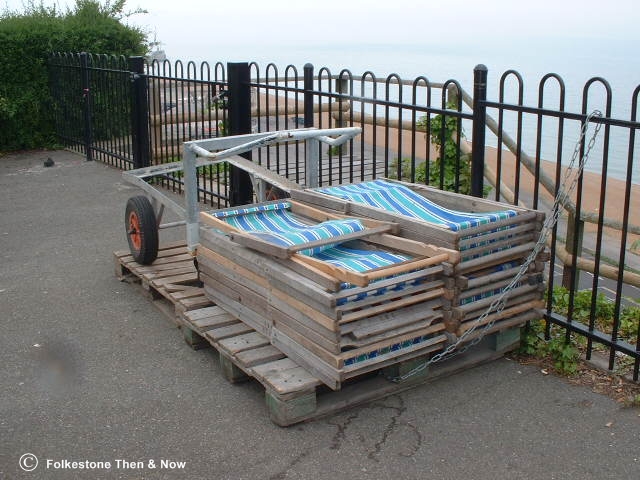
I see they had stripey deckchairs in 2006 too. They look as if you could use them for free - really? You always had to pay a rental fee to use them when I lived there. You mean something is cheaper these days? Unbelievable!
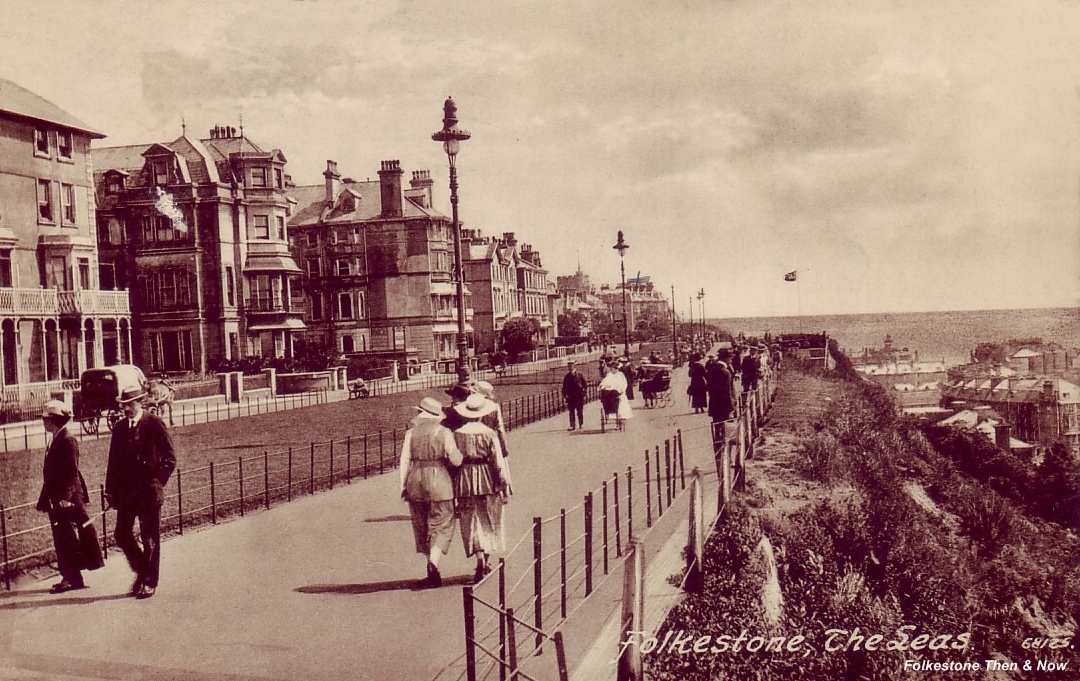
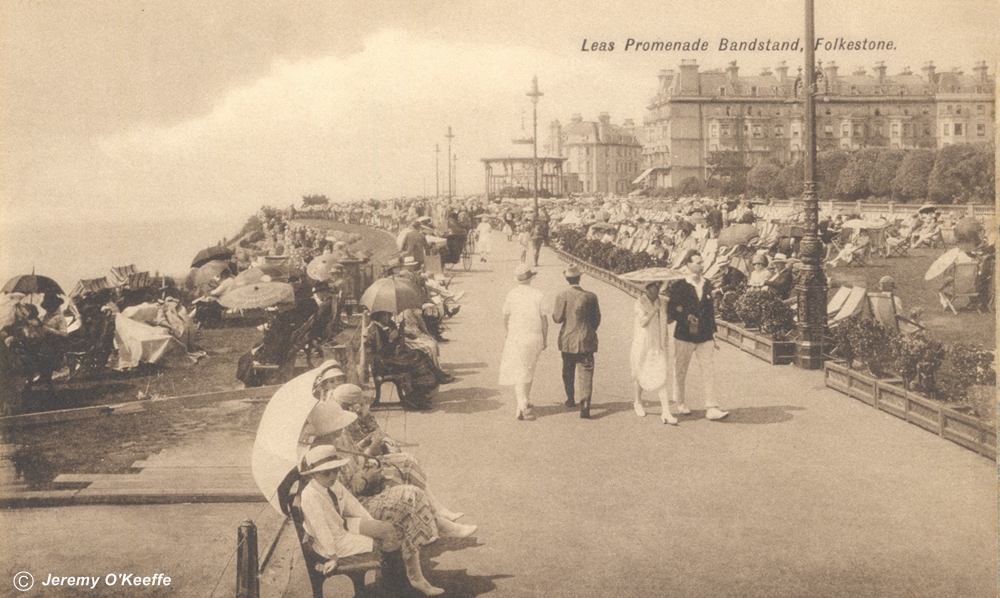
I don't have a date for this one, but the ankles are showing a little bit, so we must be into the 1915 - 1920's I would think. Note the lovely horse and wagon over on the road.
Another one sent by Jeremy O'Keeffe, this one is definitely later, I would guess mid 30's.
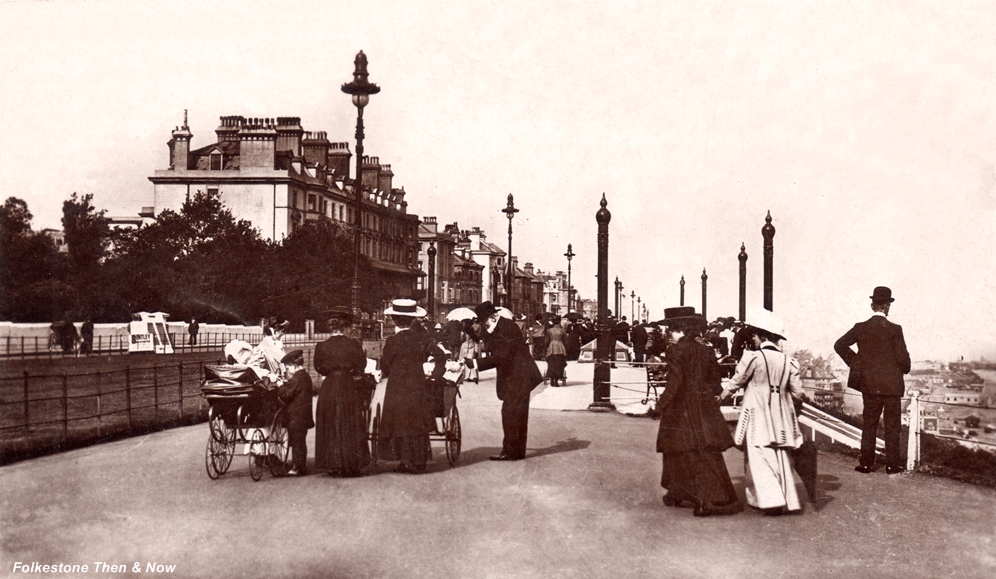
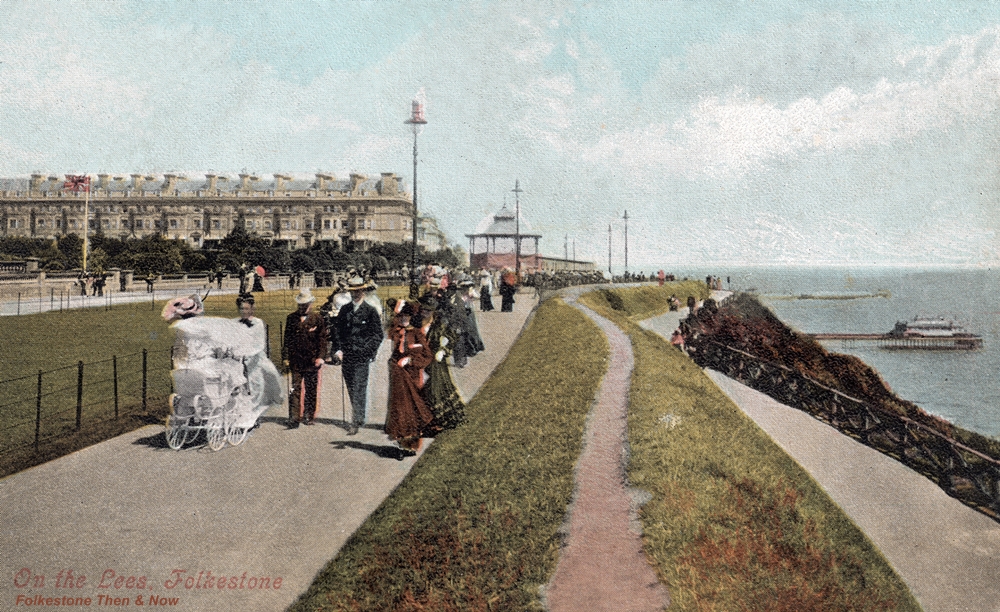
Now, is this a gathering of Mothers & babies, or Nannies and babies? I guess we will never know. But we can tell they are gathered near the leas Shelter, because we can see a skylight in the ground further along.
Back to an earlier era. This card has been hand coloured. Do you think they got the colours correct for the lady all in white? It's a beautiful pram, but I have never seen a white one at that time, even when they had them later, like the 50's or 60's, the wheels were not usually white as well. It would be rare to wear a white dress in those days too, they tended to go more towards the darker colours.
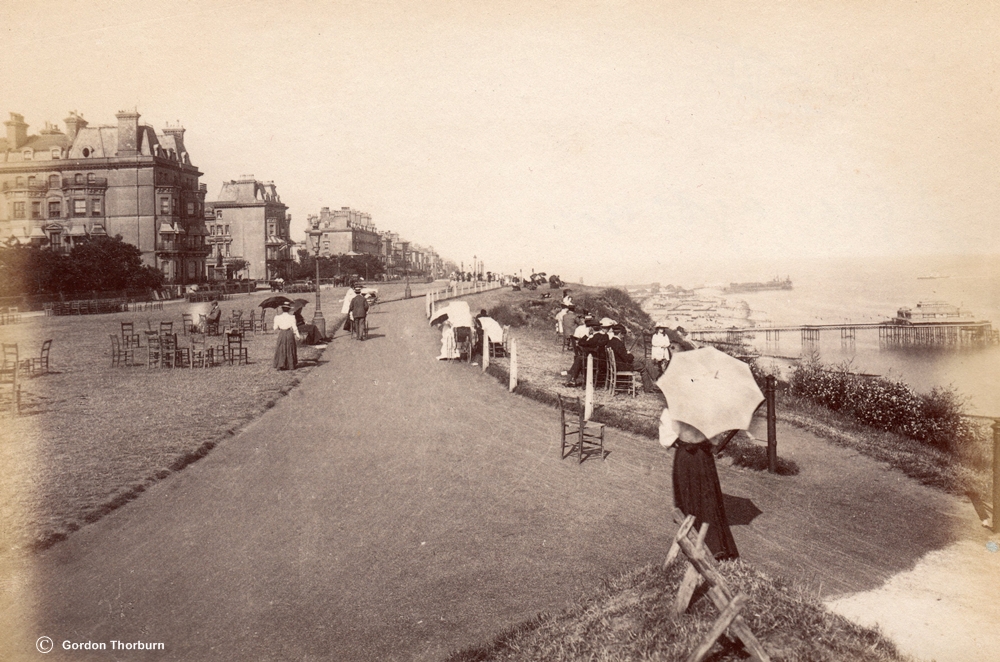
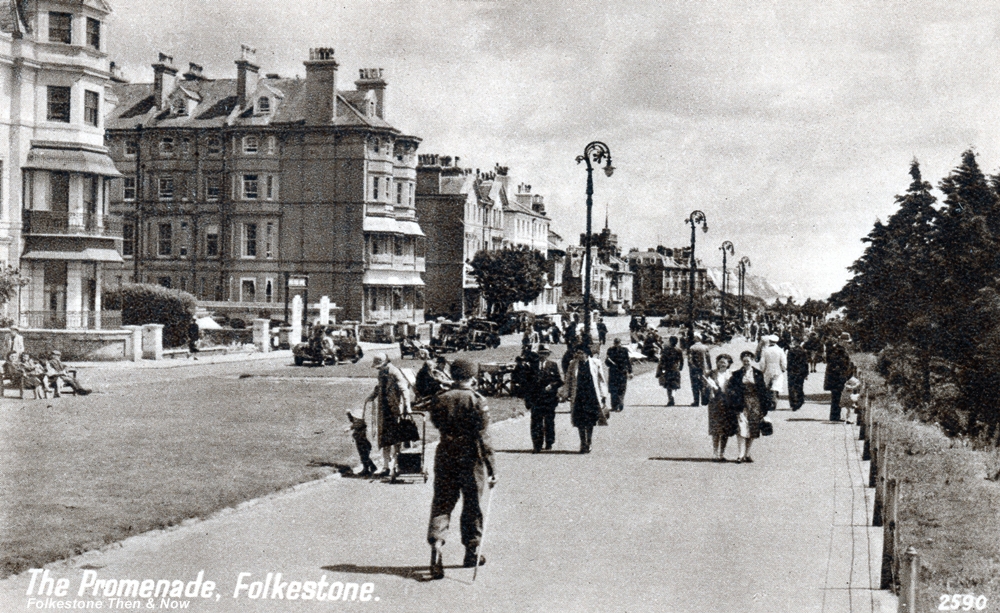
Sent by Gordon Thorburn, I haven't seen this particular view before, it must be where one of the lower walks come out onto the Leas.
I have dated this one to the late 40's, and you can see a soldier walking with a cane. Recovering from a wartime injury perhaps? To his left, a woman is preventing her toddler from falling flat on her face by yanking on the reins. I know some people today are horrified that mothers used to use these, referring to them as leashes, but I think they are perfect for toddlers wanting to feel their independence while learning to walk, yet could be prevented from nasty falls. No abductions or running away from you in busy shopping centres either.
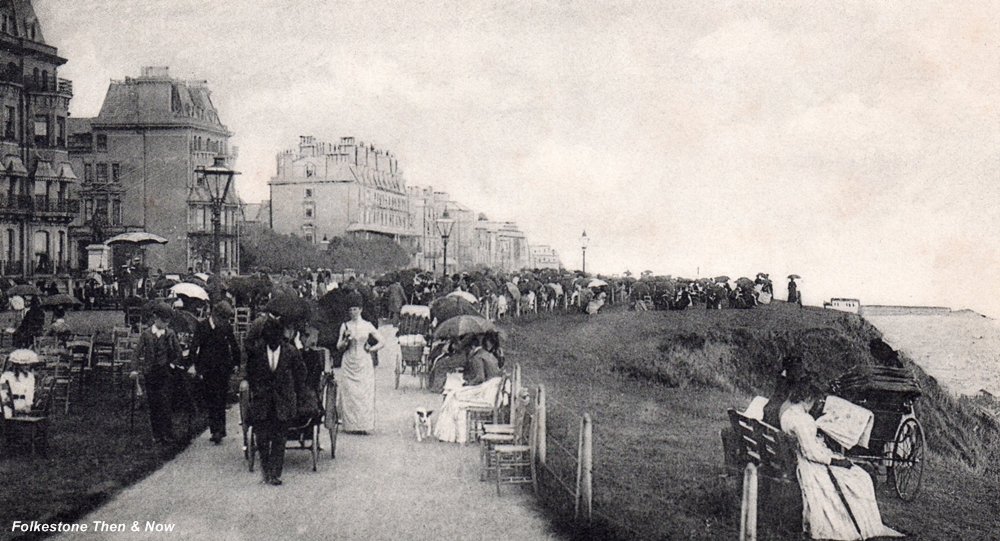
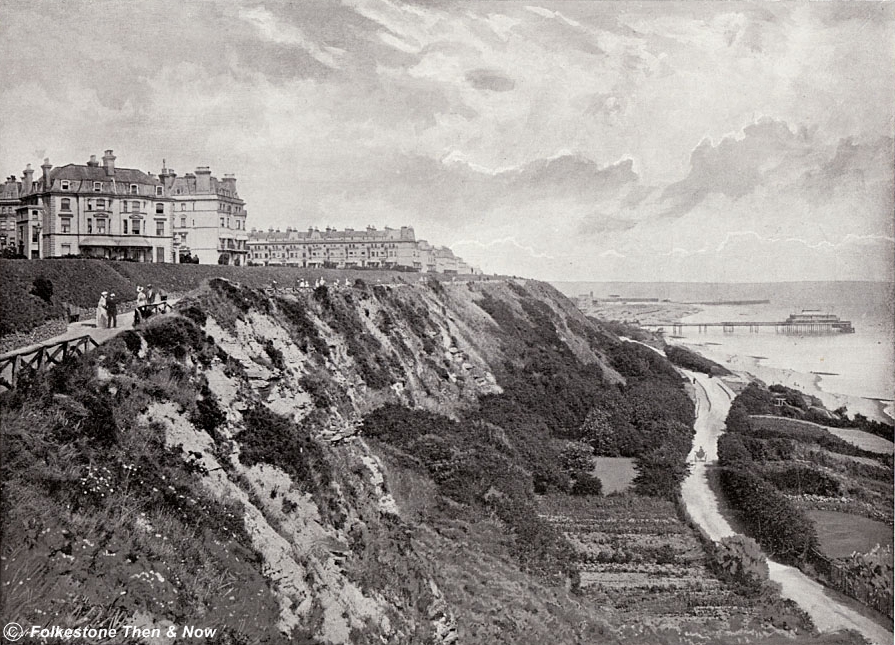
An extremely busy day on the Leas, or Lees as it says on the back. Note the little dog, I think it too is walking without a lead. I hope whoever is in the bathchair on the right is well liked, one little push from behind and.....
I was curious about this one, because it is dated 1895, and the Toll House doesn't seem to be there. I did some research, and discovered it should have been there, as it was built in the 1820's. It looks like allotments or something opposite where it should be, and there appears to be a wall, but no house. How odd! Maybe I am misjudging the part of the road, and it is out of sight of the camera.
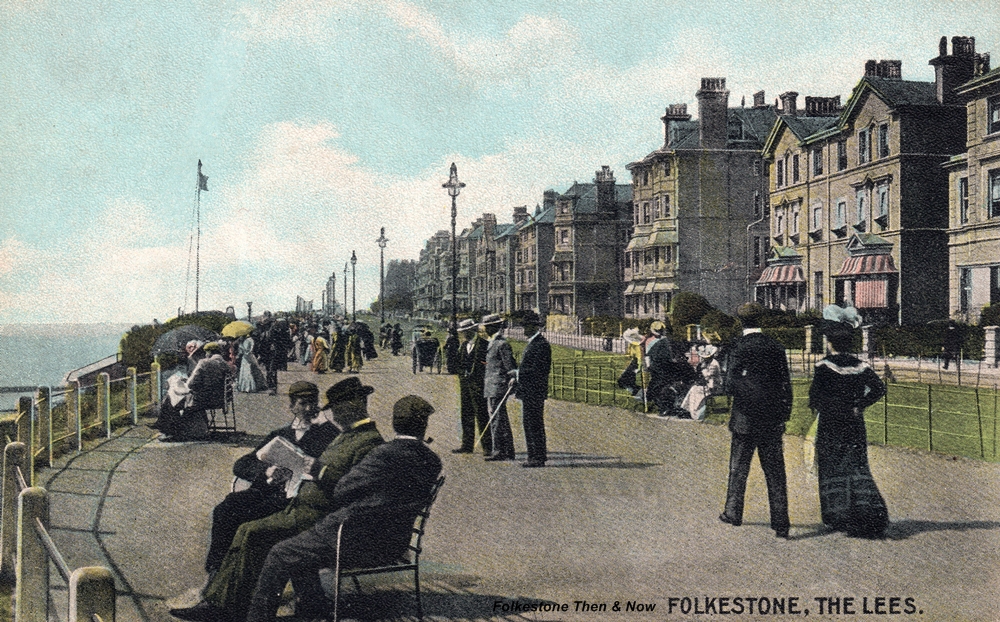
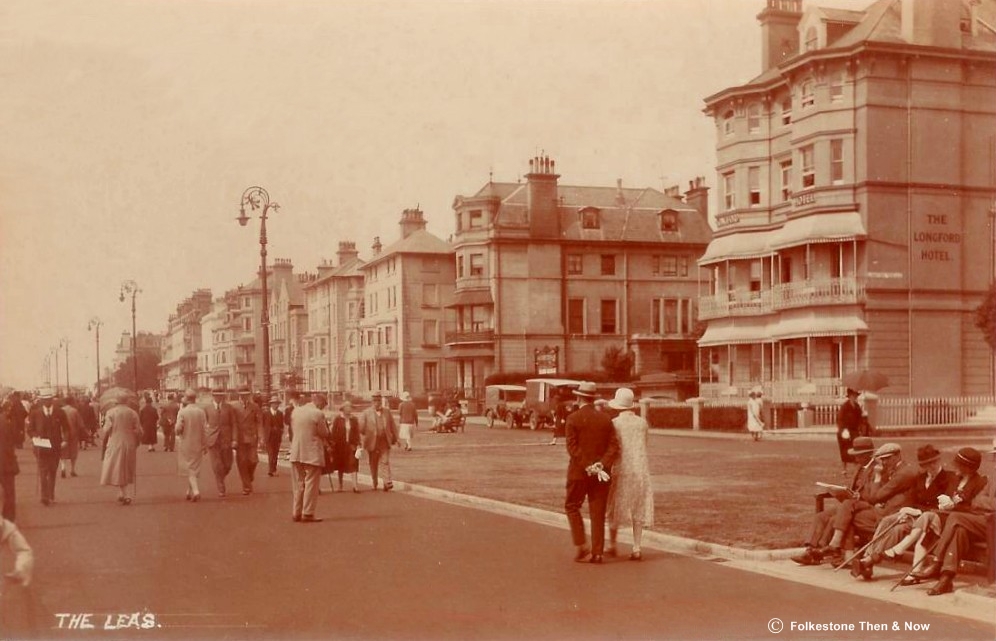
It was sunny enough that day for the lady ahead to be using a sunshade, but these men had to wear their heavy suits, probably waistcoats, high collared shirts and hats, vest, long underwear, socks & dress shoes, and the ladies didn't fair much better either, with sleeves down to their hands, probably gloves, dresses from chin to feet and large hat. All that, and don't get me started on the tight corset underneath pinching in her waist until she couldn't breath, plus petticoat and stockings. I am surprised these photos are not all full of prone bodies all over the Leas where they have all fainted!
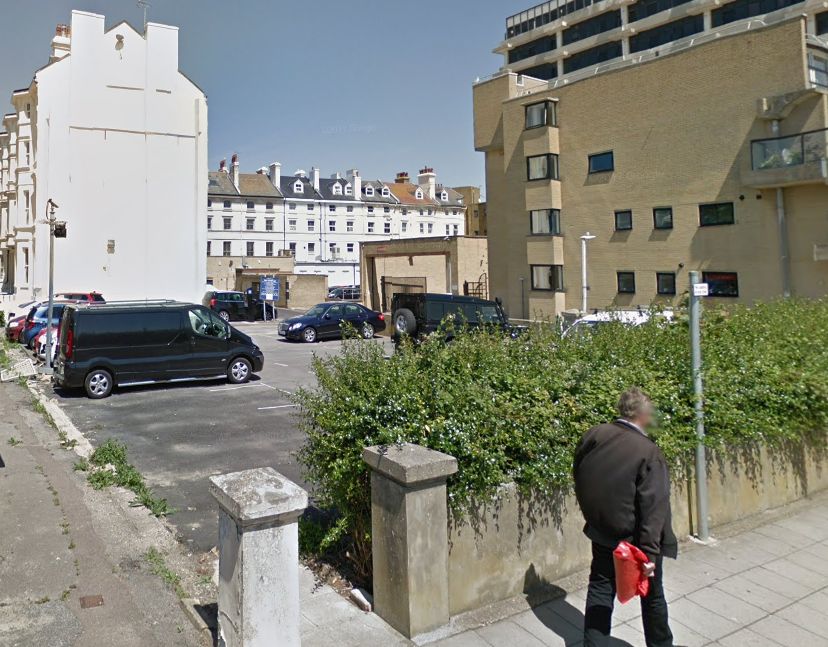
The photo above dates from quite a bit later. The men are still wearing suits and hats, the women are still wearing hats too, but at least they can now get a little breeze up their skirts! Note the Longford Hotel over on the right, located to the immediate right of the Leas Pavilion. See below for what is on that spot in 2017, but plans were out to build high rise apartments there. We all know what happens to some best laid plans don't we?

One of my latest purchases, I was very pleased to get my hands on this one. It shows the interior of the Leas Cliff Hall in 1935, which is about the only thing I can read, as it is all written in French, and what I remember of the French I learned at school, you could write on a postage stamp!
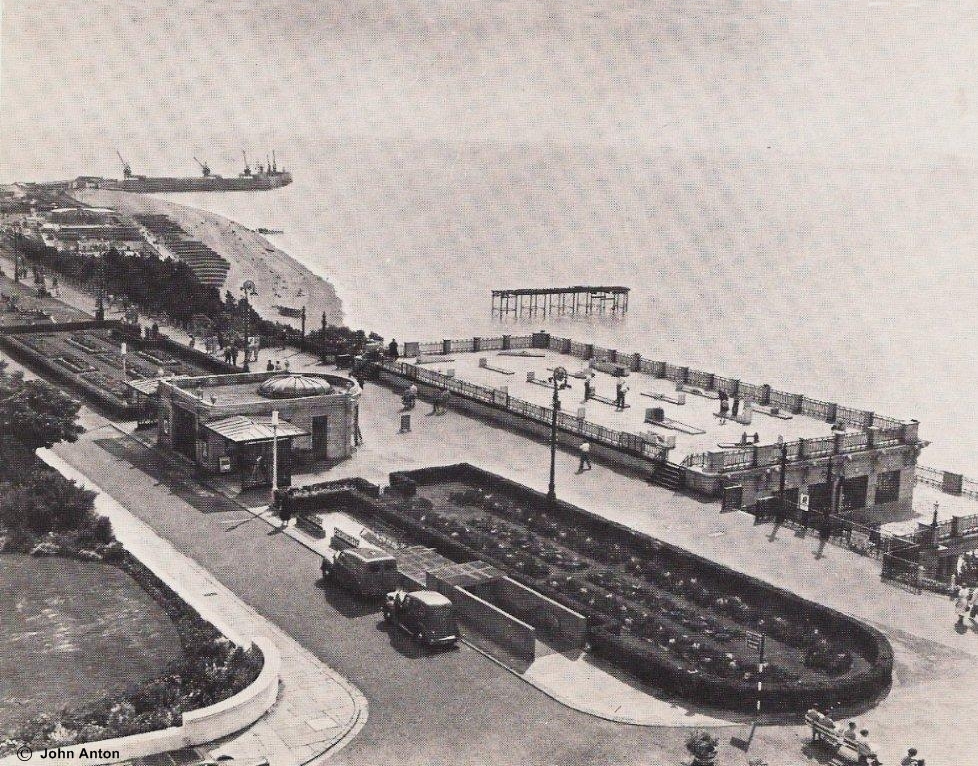
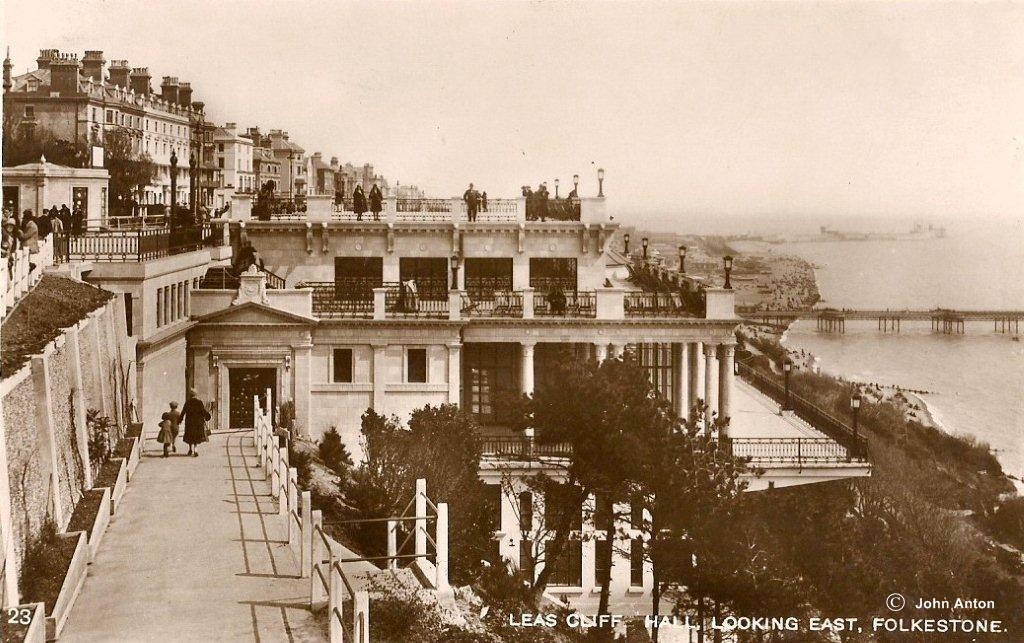
This one was sent to me by John Anton, and it must be from the late 40's or very early 50's judging by the amount left of the Victoria Pier. That looks like crazy golf on the roof of the Leas Cliff Hall doesn't it? Do they still have crazy golf anywhere in Folkestone? Somehow I doubt it. You can play chess at that location though, as you can see in the photo further up the page.
Another one sent by John of the Leas Cliff Hall, it must be earlier than the card on the left because you can see the pier still goes right to the shore.
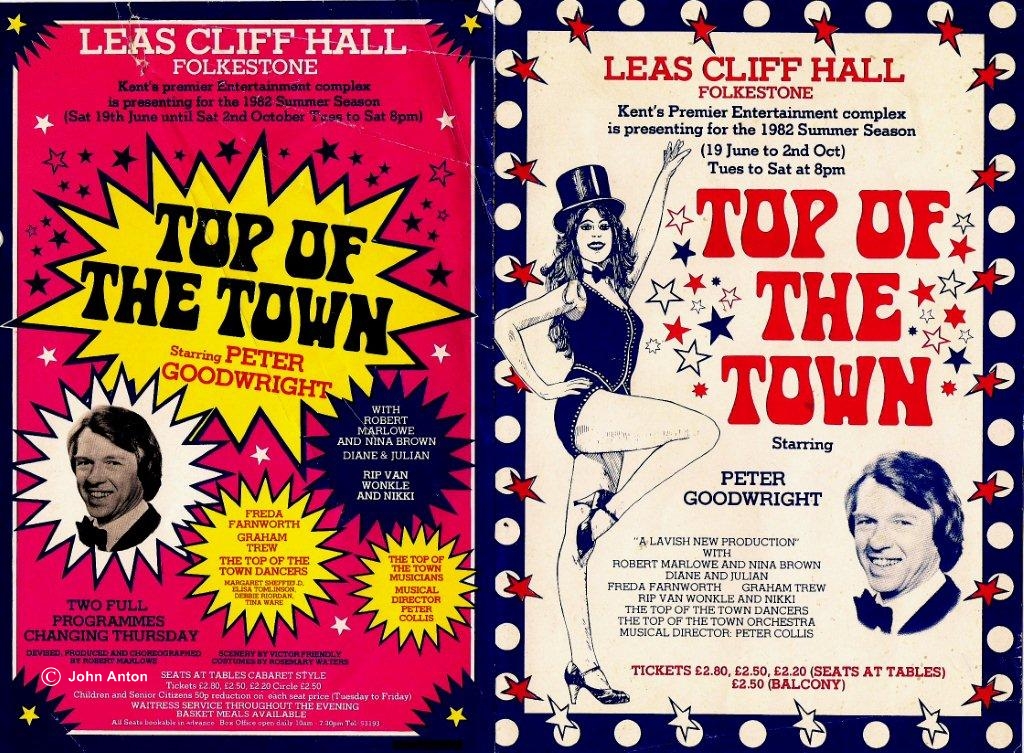
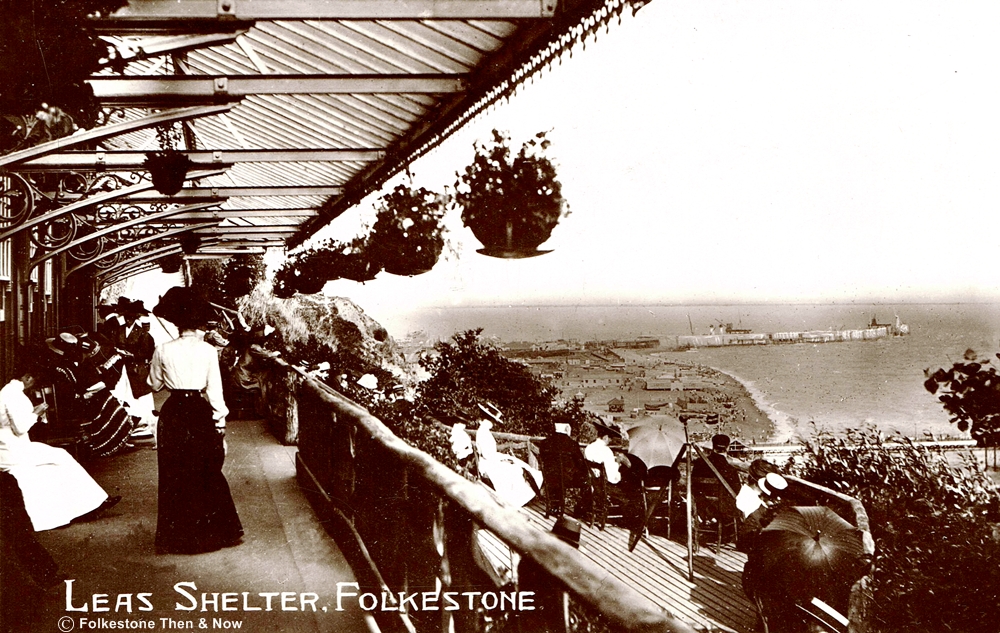
John Anton also sent this scan of a 1982 poster advertising Top of the Town, starring Peter Goodwright, with Robert Marlowe and Nina Brown, Diane & Julian, Freda Farnworth, Graham Trew, Rip van Wonkle & Nikki, The Top of the Town Dancers, The Top of the Town Orchestra, with Musical Director Peter Collis. A good night out if you were on holiday.
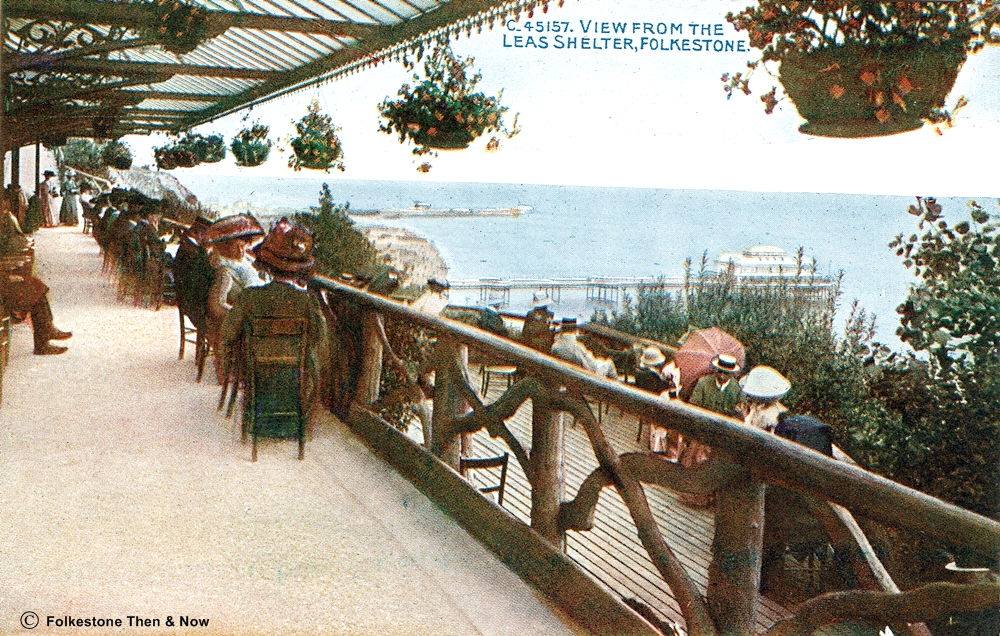
Back to the building that was there before the Leas Cliff Hall was built, another look at the Leas Shelter in 1910. I always thought they used beautiful parasols in those days, light in colour with tassels hanging from them, but most appear to have used ordinary umbrellas to keep the sun off their heads, it is a practical idea, why don't we use them today?
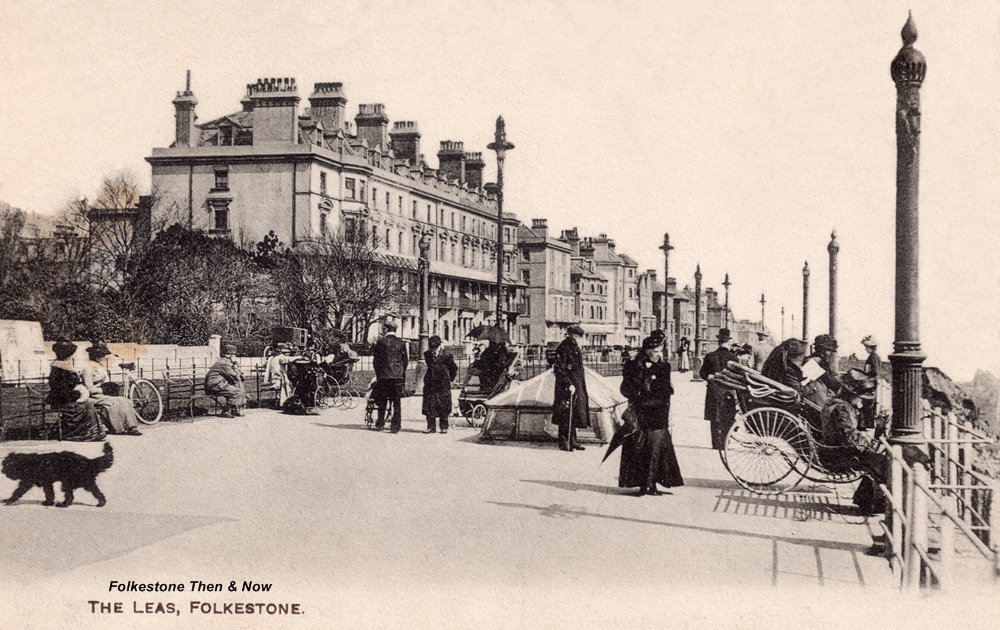
A lovely coloured photo giving you an idea of the view they had. I wonder what these people would say if they knew they would one day be planning to fill their view with the tops of big ugly apartment blocks. Or if the developers have their way, the tops could be higher than this, and you won't see the sea at all from the balcony of the Leas Cliff Hall if you look towards the East. Oh how I pray common sense will prevail, and they will build to enhance what is there already, not destroy it.
Absolutely nobody is paying attention to that dog, so I guess he was taking himself for a walk. Look at the size of the wheels on that bathchair, I wonder how heavy it was to push or pull? You can get a good view of one of the Leas Shelter skylights in this one.
There used to be public toilets down below those railings. I don't think they are there any more. Not sure how far you would have to walk to find one these days.
Entitled New Sun Walk, and postally used in 1938, so I guess that was around the time they also built the Sun Shelter that is there today, as you saw further up the page.
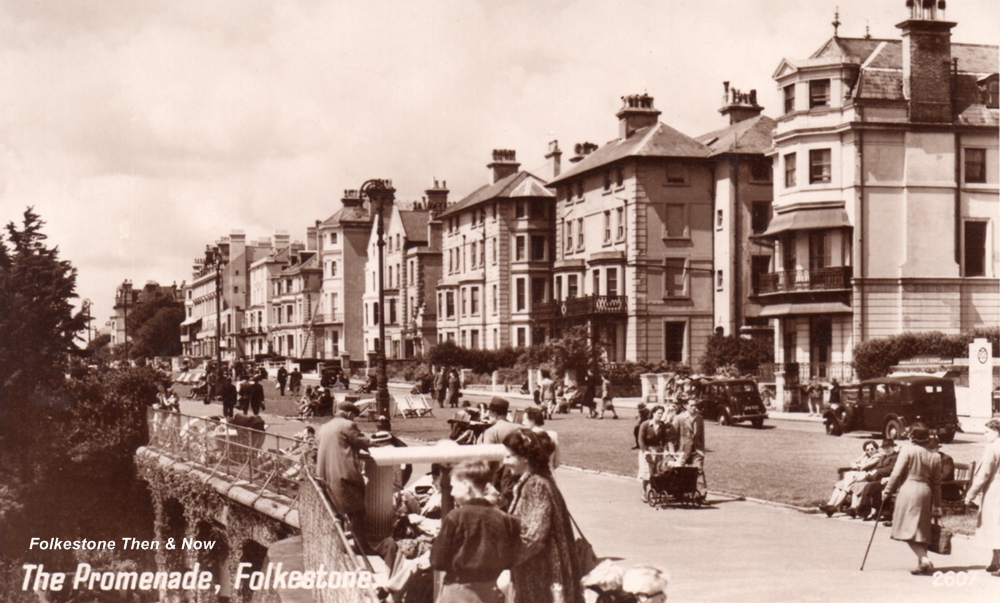
I don't have a date for this one, maybe thirties or forties? Is that more public toilets down below, or was there another shelter?
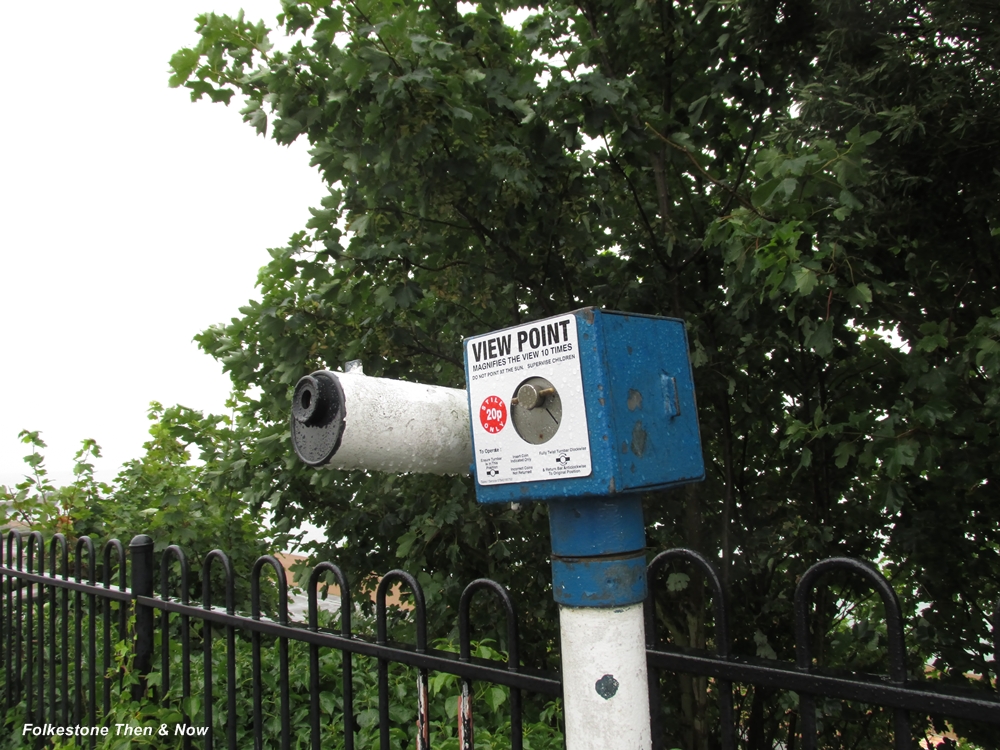
When I was there in 2014, I wanted to have a look through the telescope for old time's sake, but this was my view of the sea, ha ha! I think they have cut the foliage back since then.
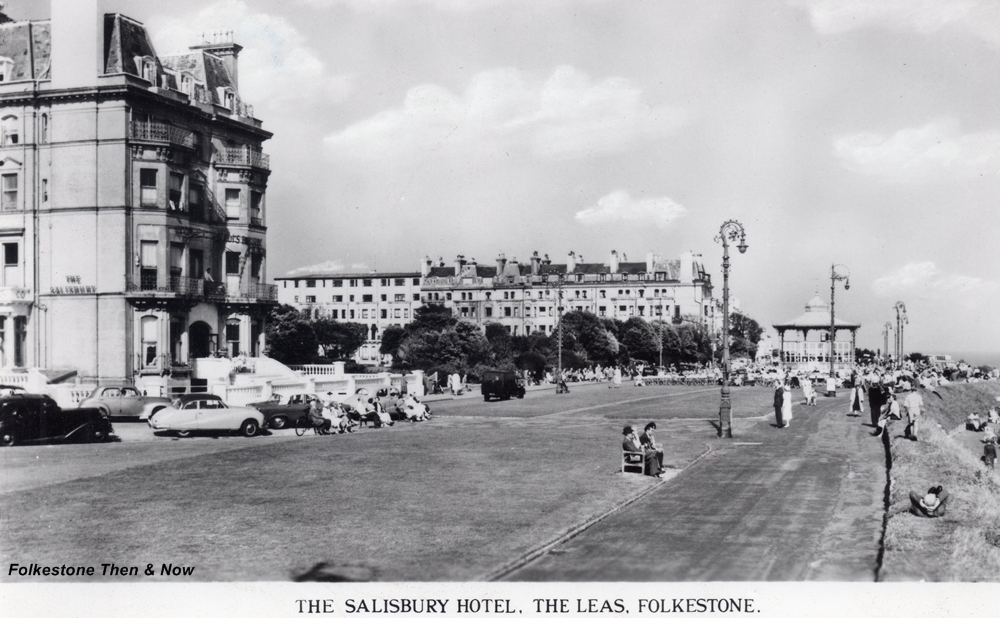
This one shows The Salisbury Hotel in 1959
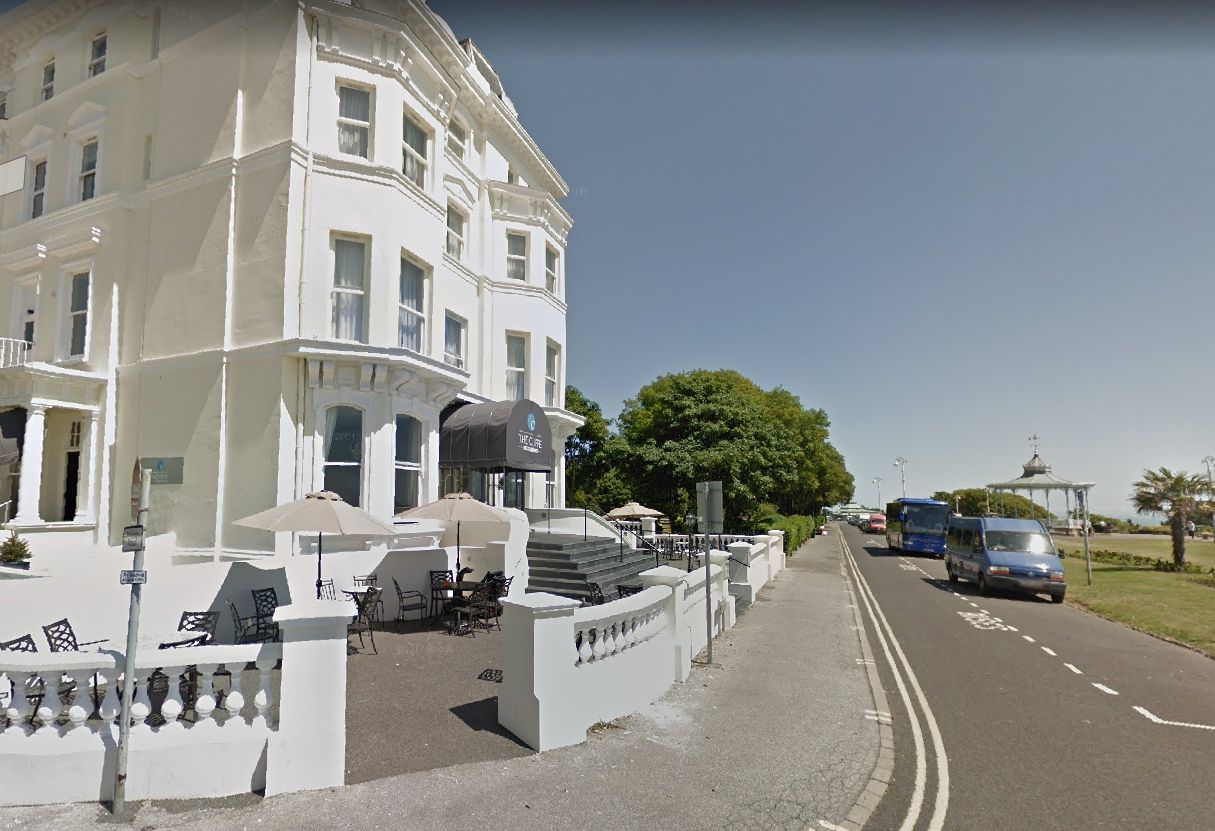
The hotel is still there in 2017, but it is now called The View, and I must say, it is looking very smart.
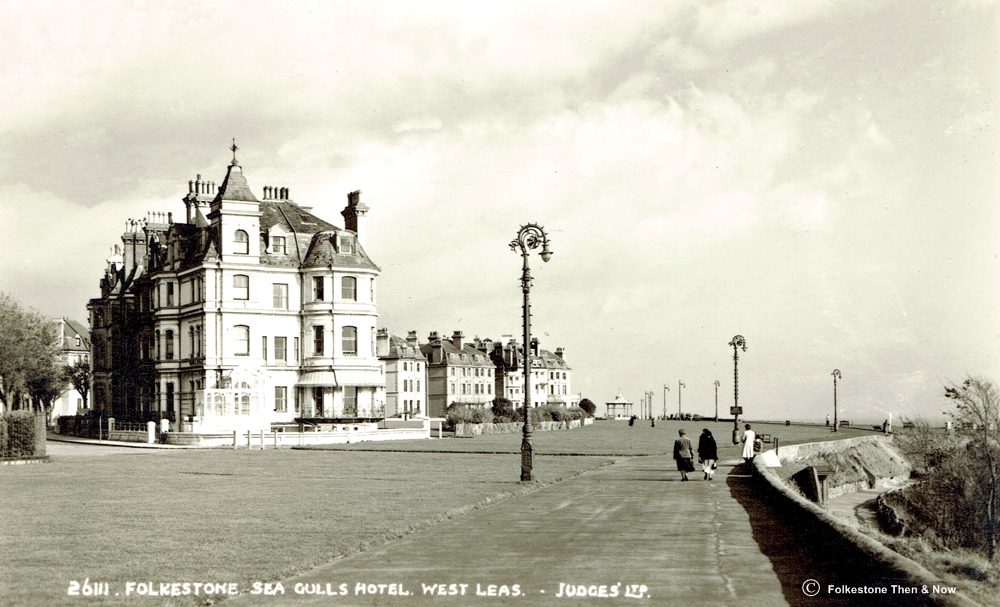
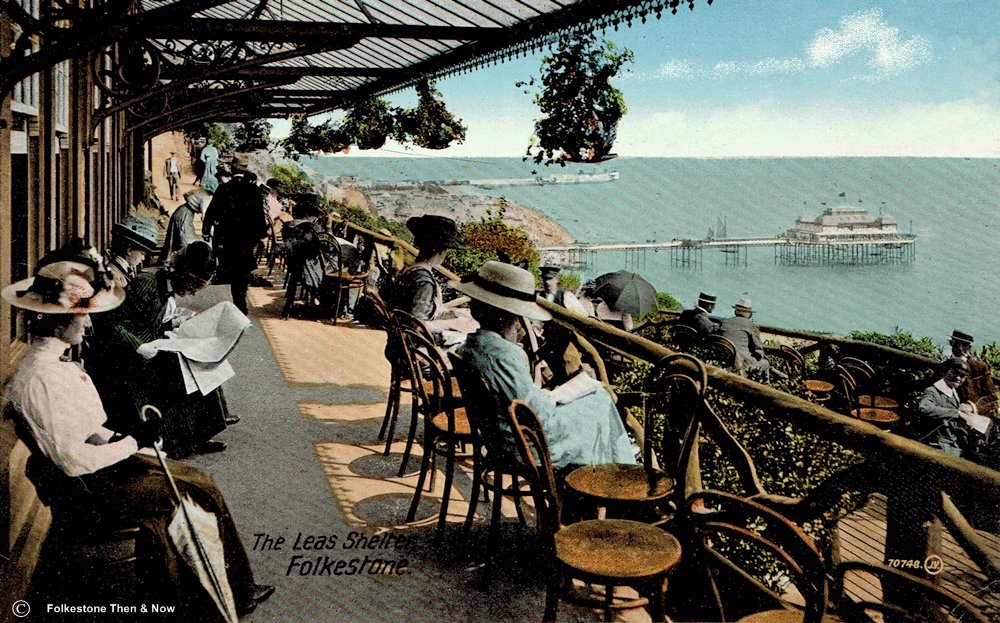
This is the hotel that used to be called Sothoron Lodge, but as you can see it was called Sea Gulls Hotel when this photo was taken, it tells us that the owner at the time was Sidney de Haan, father of Roger de Haan. Sidney, founder of Saga Holidays, also owned the Rhodesia Hotel, and would run between the two, cooking the meals. It was while he was coping with the off-season slump in business that he came up with the idea of an all-inclusive holiday in the slow season, aimed at the over 50's. Seeing the potential economic value in stretching the holiday season, he persuaded the local council and other traders to find ways of welcoming the retired visitors, with special offers and discounts. It turned out to be a licence to make money. The Sea Gulls Hotel has now been demolished, and the awful looking Madeira Court is in its place. But the Rhodesia Hotel is still standing, albeit derelict. Update, it had a fire in 2025, the owner is currently restoring it!
Ever wondered where the Wicked Witch of the West went for her hols? Well now you know, there she is bottom left. Looks harmless enough, but she has her bike parked outside the Leas Shelter, basket ready, looking to see if she can spot Toto walking along the Leas unaccompanied!
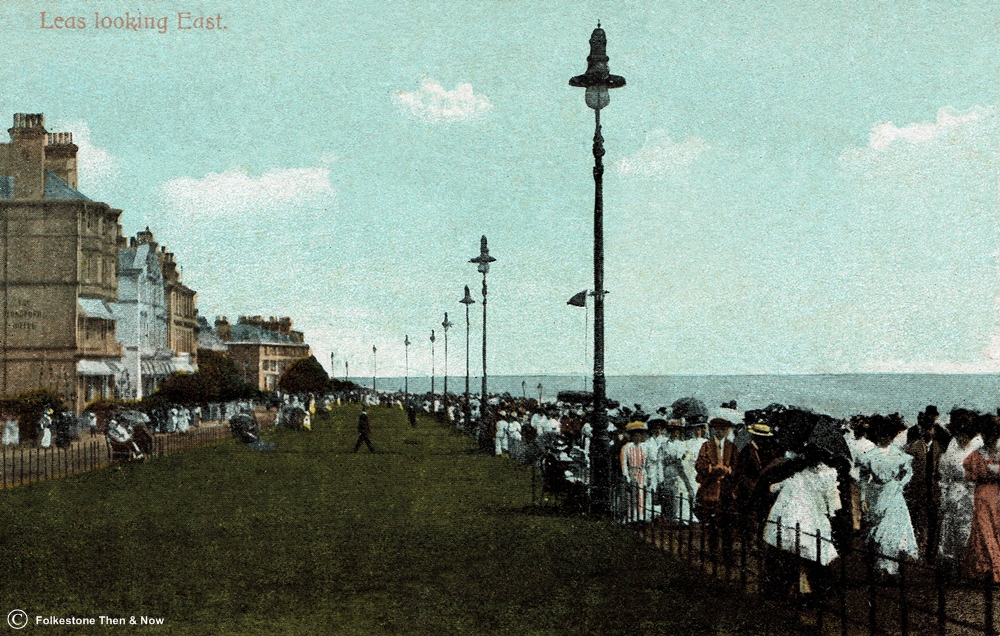
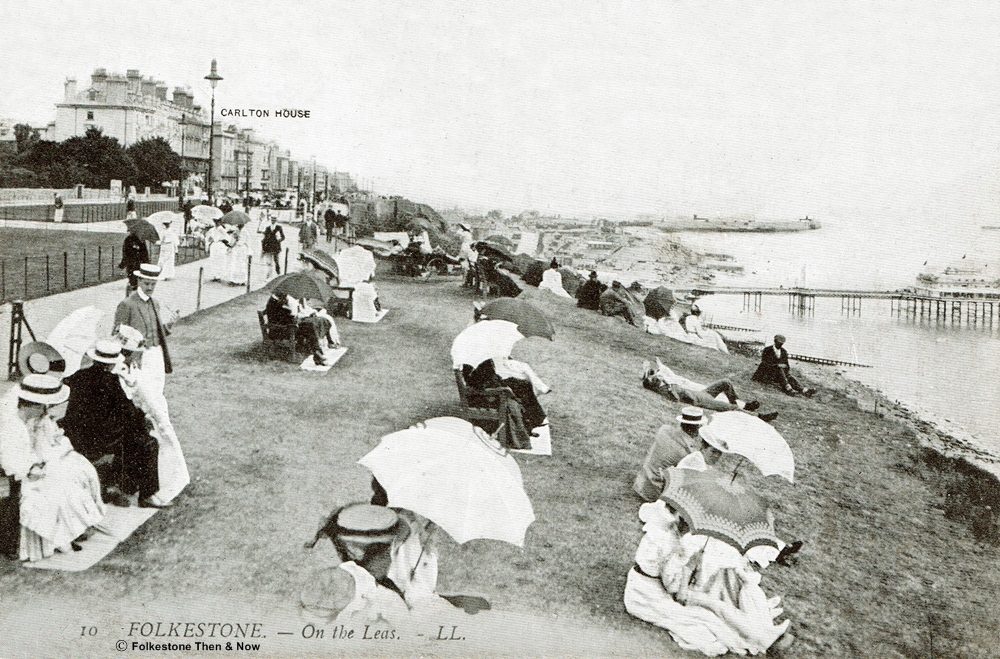
Looking East on the Leas, we can tell exactly where the photographer was standing, because you can see the Longford Hotel on the left, which we know was to the immediate right of the Leas Pavilion. I am very curious about that building sitting on an angle in the far distance, I don't think I have ever seen that one before, it must have been located right at the top of Slope Road, or the Road of Remembrance as it is now called.
This card, also looking East, was obviously produced to promote Carlton House, so potential guests would know they would have a beautiful sea view, unless of course their room turned out to be at the back!
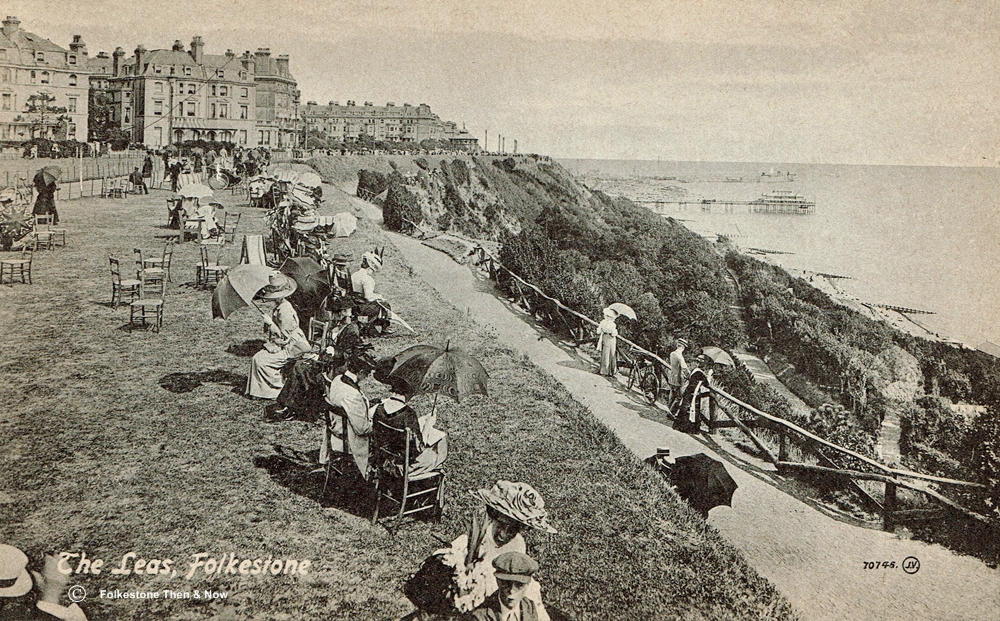
I am assuming the weather had been warm and dry for some time, as none of these people look as if they are fighting gravity and sinking down into the ground, which must be hard. Those people in the foreground have noticed the photographer, I wonder what he was standing on?
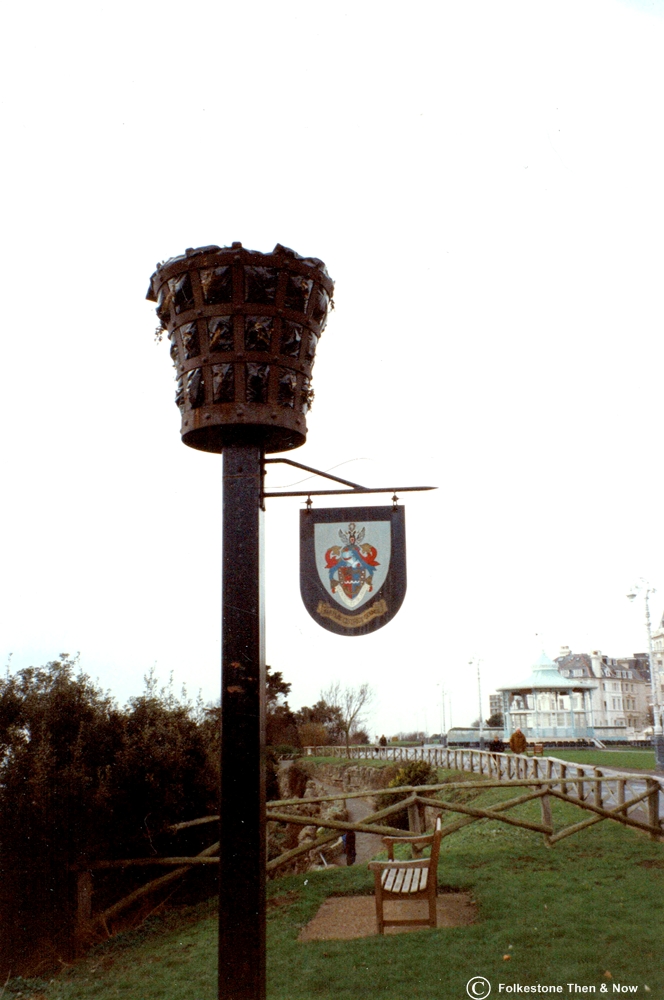
On the 4th June 2012, beacons were lit all over the country, celebrating the Diamond Jubilee of Queen Elizabeth 11. This was the one that was lit in Folkestone. As you can see, it was located on the Leas, near the bandstand.

Don't forget, if you have your own memories of Folkestone, be sure to share them with us by jotting them down in the book below.
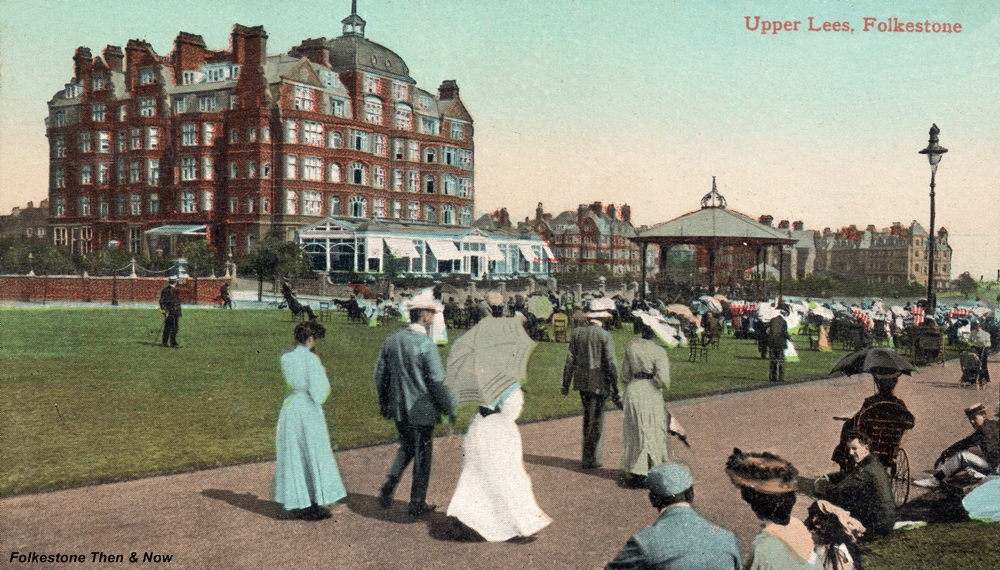
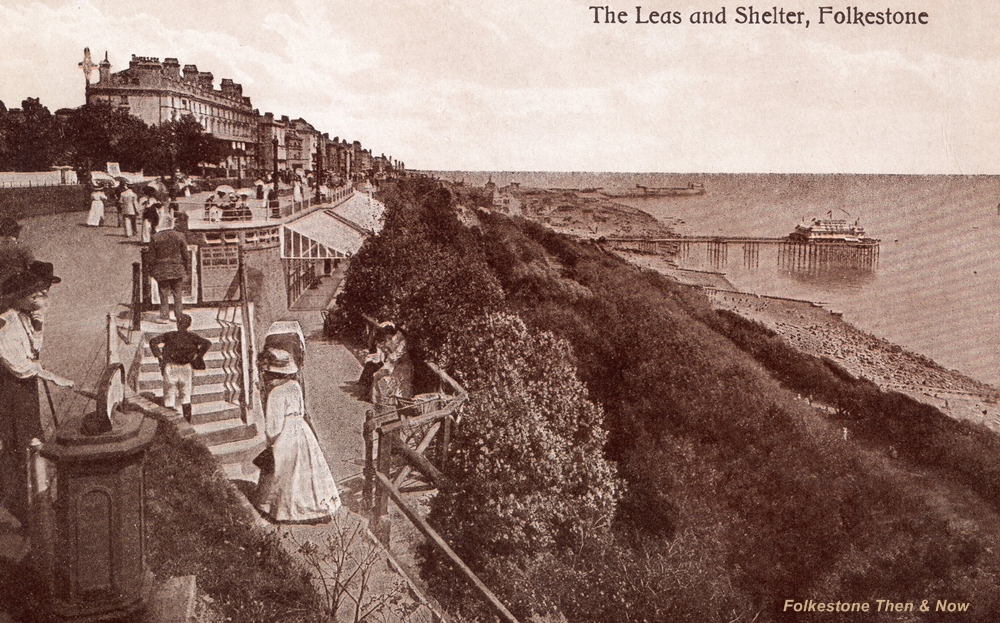
Now, do you remember this photo from the previous page? There has been years of speculation about what that metal looking box could be in the bottom left of the picture. After lots of incorrect guesses, we now have the absolute answer from Martin Whittaker, who has been researching them, and tracking them down all over the country. They were cast iron collection boxes for the ROYAL NATIONAL LIFEBOAT INSTITUTION or RNLI, dating from around the 1890's, and here are photos supplied by Martin to prove it.
cCMartinWhittaker.jpg)
CMartinWhittaker.jpg)
The photos on the right are of 'George' off the St George, and were outside Peel Lifeboat Station in the IOM.
(The box disappeared in the 1940's, but George is still at the station, although now kept inside!)
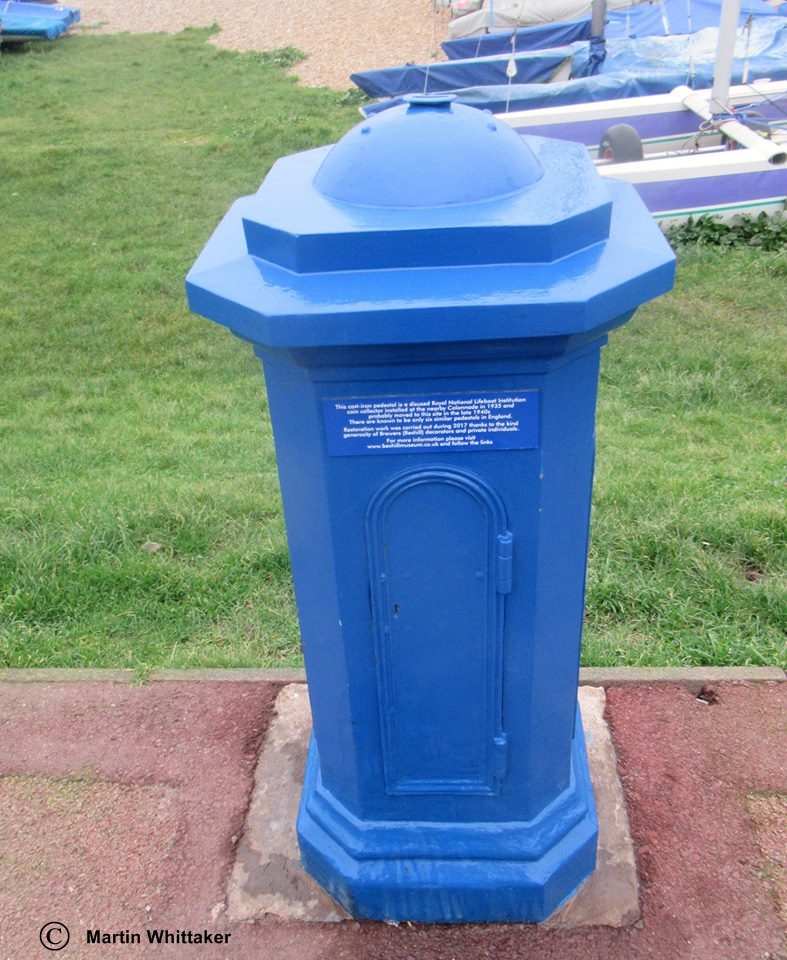
You can still find this one, that has lost its top at Bexhill, near the War Memorial.
Martin is currently researching / tracking down as many boxes as he can for the RNLI Heritage Team.
So far, there are 22 still in existence, and he knows of 34 others that are 'lost' (although some of these may now be the ones in museums.)
Do you know what happened to this one on The Leas? It probably wasn't the only one in Folkestone either, it would make sense if there had been at least one other one near the Lifeboat Station on the West Beach (now long gone). Were they melted down in the war effort? Or are they housed in the Folkestone Museum? Inquiring minds want to know!
