
Constructed by the renowned engineer Thomas Telford in 1809, the nineteen acres of Folkestone Harbour were, by the time the railway arrived, both neglected and badly silted.
The land on the south side was a shingle spit, a narrow pebble beach formed by the eastward march of material washed along the south coast of England by the prevailing south-westerly winds. In heavy weather the harbour entrance could easily be choked after which men would be sent to shovel away the stones by horse-drawn carts. The Pent stream also emptied out into the harbour and caused great problems with its continuous load of silt helping to infill the basin. Tidal movements did allow a certain degree of scour but the South Eastern railway’s arrival and the harbour’s purchase for £18,000 certainly proved to be its life-saver.
It was all very well owning its own port but the South Eastern Railway found that it was not legally possible to operate their own steamers. The original vessels therefore were sub-chartered from the New Commercial Steam Packet Company on 1 August 1843, shortly after noon and after a special banquet given by the railway directors and the corporation of Folkestone, crowds gathered on the South Pier to witness the arrival of the 190 ton steamer City of Boulogne. The Sir William Wallace then departed with 75 passengers while later that same day, the third vessel Emerald arrived with a further 142.
Chartering proved unsatisfactory and so the railway’s directors formed the South Eastern and Continental Steam Packet Company and ordered eight new vessels – four from the Thames and four from Birkenhead – to operate their Folkestone – Boulogne route and also from Dover to Ostend and Boulogne. This state of affairs existed until 1853 when the railway company received parliamentary sanction to operate its own steamers.
“The Times” in June 1847 noted that with the opening of the Boulogne and Amiens Railway to Abbeville, it was now possible to reach Paris from London in 14 hours, the Folkestone – Boulogne crossing taking 1 hour 45 minutes.
The above was taken from the site of the Folkestone Harbour Company, and it barely scratches the surface of the harbour's history, so to read more, go to Folkestone Harbour Seafront Development Company
Folkestone harbour used to be a very busy place, and was the source of income for many Folkestonians. Not just the fishing, but also the ferry service to and from the Continent, bringing passengers, goods and the Royal mail.
The collier boats would also bring coal from the North, and you used to be able to see them all moored in a row right in front of the old Pavilion Hotel.
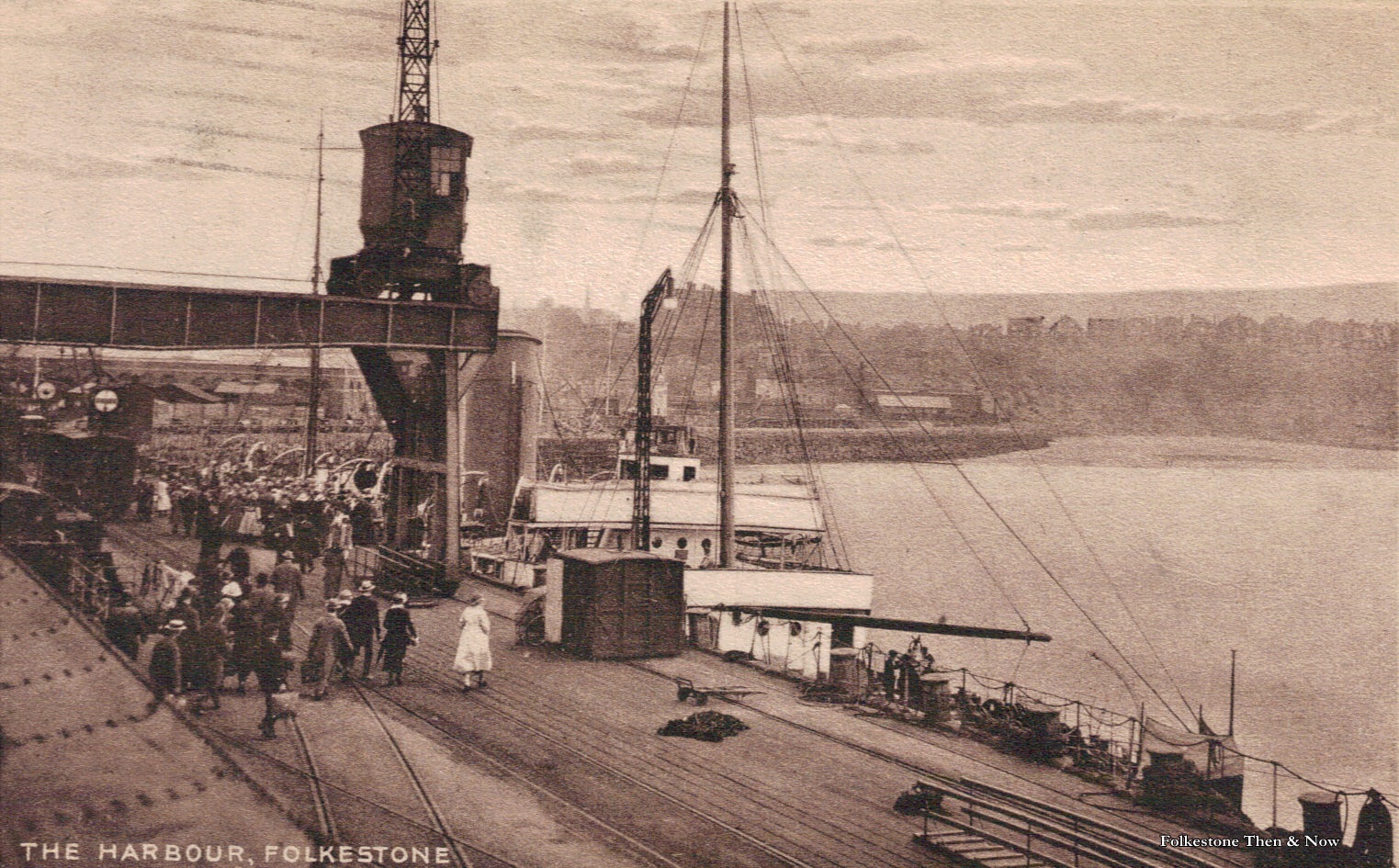
Passengers could step off the ferry, and get right onto a train that would take them to London. You can see the rail line in both of the photos at the top. However, in the photo on the right, the line is completely closed, and the tracks were in the process of being lifted. Most of the buildings have now been demolished with the exception of the Harbour Master's house, and what is left of the Customs House,which was damaged during the war. You will see a photo of the doorway, which remains, below. Part of the station has been retained and refurbished, but it will never be used for passengers again. They had promised us some refurbished carriages to sit in the station, I don't know what happened to them.
You can just make out the Pilot's Tower on the right of the 2014 photo at the top. Shortly after this was taken, it was demolished too.

The next four photos were taken by Ernest F. Newble, father of Alan Newble. Ernest was a life long friend of the railways and took many photographs of trains in and around Folkestone. You can find more of his photos here:
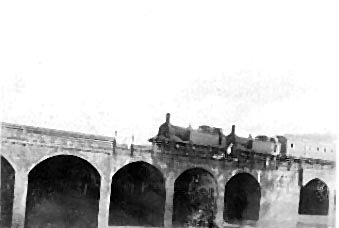
Another of Ernest's, showing the boat train at around the same place in 1929.
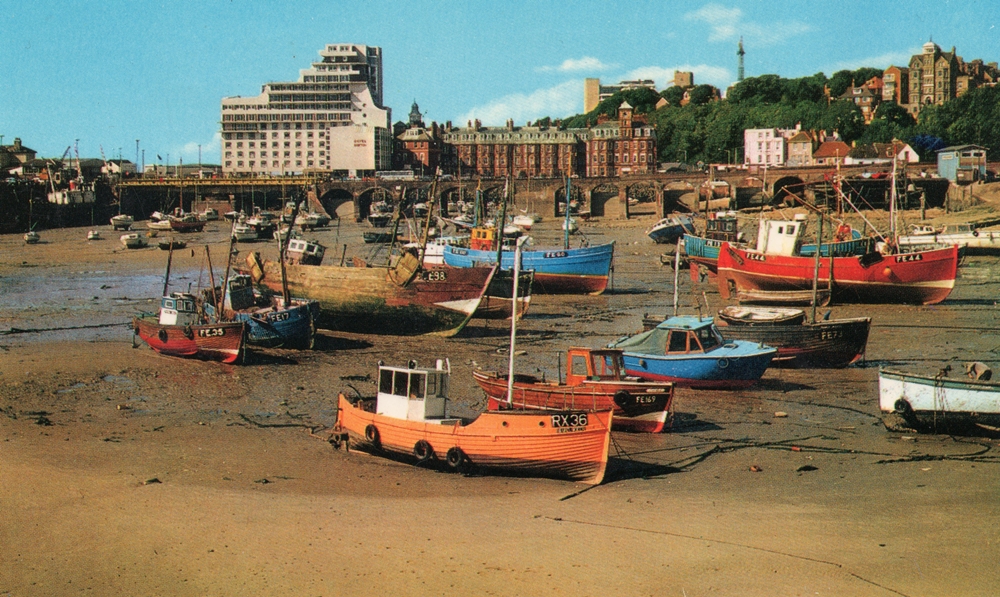
This card has no date, but I like it because it has a nice variety of boats, a paddle steamer, a sailing boat and several fishing boats. I think the steeple in the distance to the right of the Shangri-La belonged to St. Michael & All Angels Church in Dover Road, now demolished.
This is how the harbour looked in 1922, before the East Cliff Sands, or Sunny Sands as they are known today were developed. As you can see, it wasn't a very agreeable place to swim on this side of the East Head. For that, bathers would go either to the West Beach near the Victoria Pier, where a little sand would be exposed when the tide went out far enough, or to the Warren.
The fellow that sent this card to his relatives stated "The crossing was very rough, I was so sick I was wishing the boat would go down to get it over with" Oh my goodness, now that is what I call a bad case of seasickness!
I don't know the year this was taken, but would guess it to be around 1912 It shows both a steam ship and a lovely sailing ship.
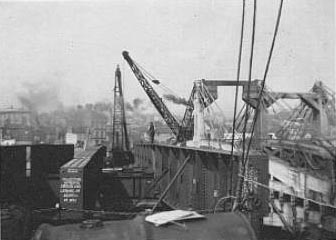
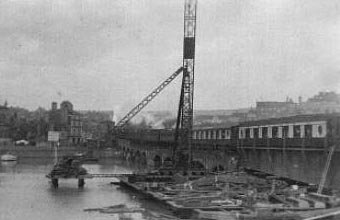
The branch line to the harbour was built in 1844 and used to take coal from the collier boats up to the coking ovens by the Junction Station. The first swing bridge, which swung to allow the ships in and out of the inner harbour, was built of timber in 1847 it opened the harbour for passenger traffic which started in 1849. The harbour station was completed in 1850. A new wooden swing bridge was built in 1893. This bridge was replaced by the present steel swing bridge installed in 1930. Today, the bridge does not swing.
Now does this sound like something I would have known? No, Alan Taylor told me!

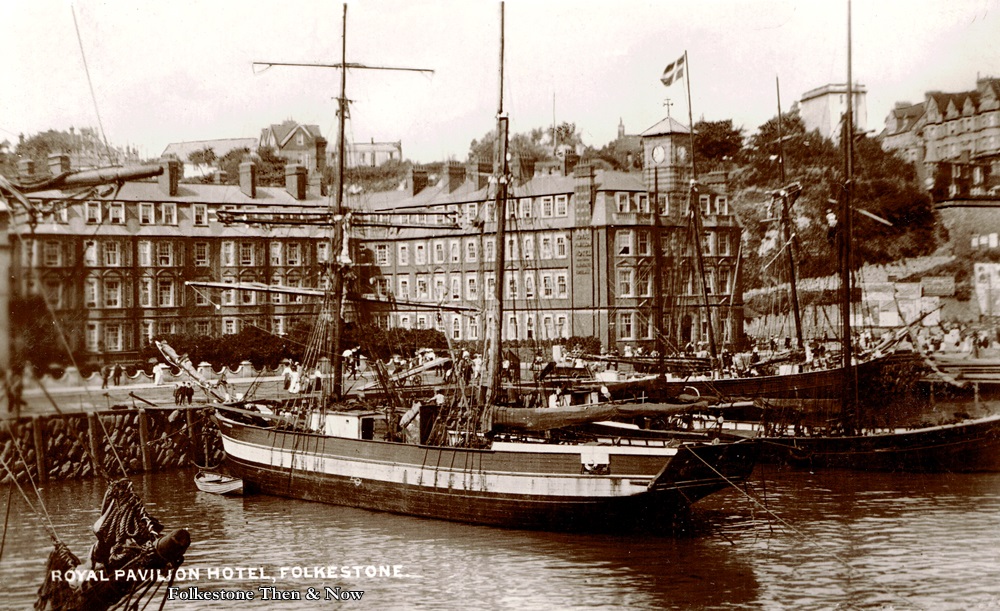
A view of the harbour from a different angle. This time the Pavilion Hotel is on the left, you can just make out the clock tower which was part of it.
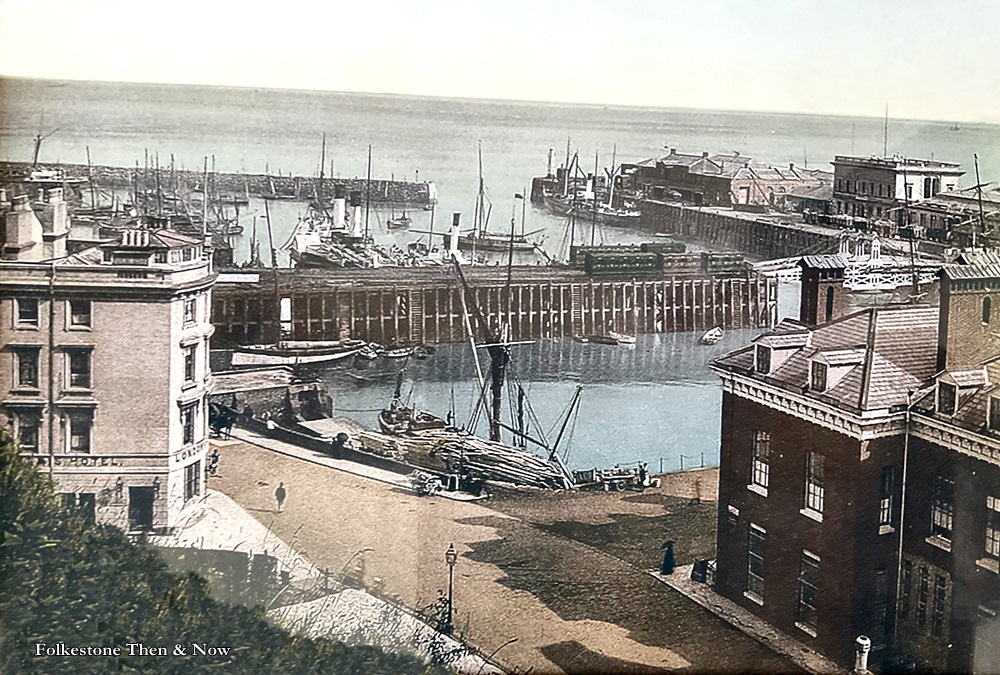
I used to have this one enlarged on the wall of my office before I retired. We have a good view of the London & Paris Hotel, as well as the side of the Royal Pavilion
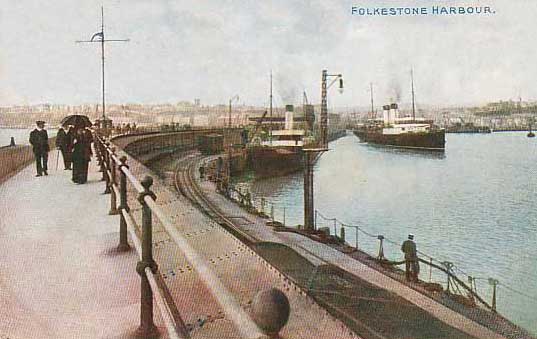
This dates from 1911. As you can see, the public were allowed to stroll along the pier to watch the comings and goings of the ferries. I believe I am right in saying that public access was stopped later unless you had a ticket to sail. I know I never got to walk along there until they opened it as the Harbour Arm. However, we were allowed to walk down the East Head, which is blocked off today, and I don't remember anyone falling off it, but no doubt some clumsy person spoiled it for everyone!
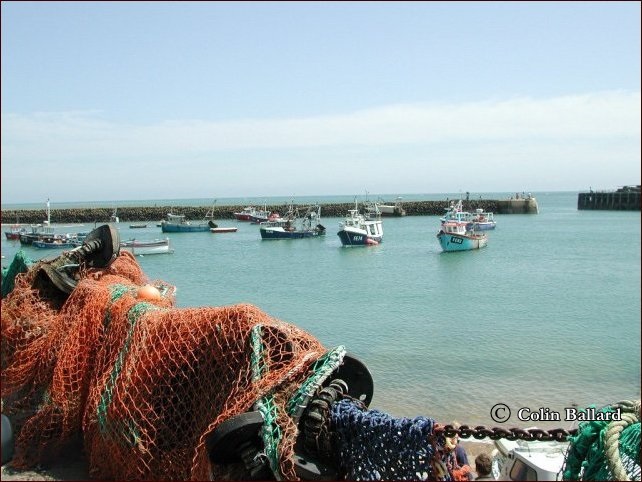
Here we have two modern photographs sent to me by Colin Ballard. You can see a couple of men in the process of launching their pleasure craft
Thanks Colin, they are beautiful photos!
My wish has been granted, here is one of those boats in full sail. However, it looks kind of strange doesn't it? As if that sail doesn't belong to anything in the photograph.
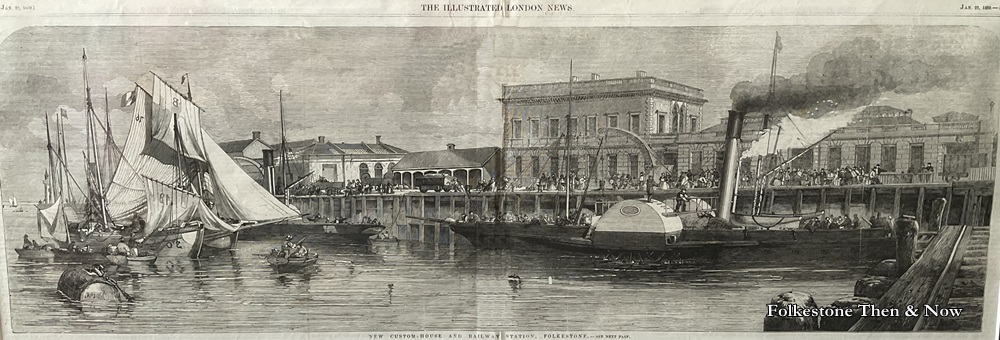
This picture was in the Illustrated London News in 1859, and was entitled New Custom House and Railway Station, Folkestone, so they obviously didn't hang about, and got it all built that same year.. Right in front of the Custom House is a nice Paddle Steamer.
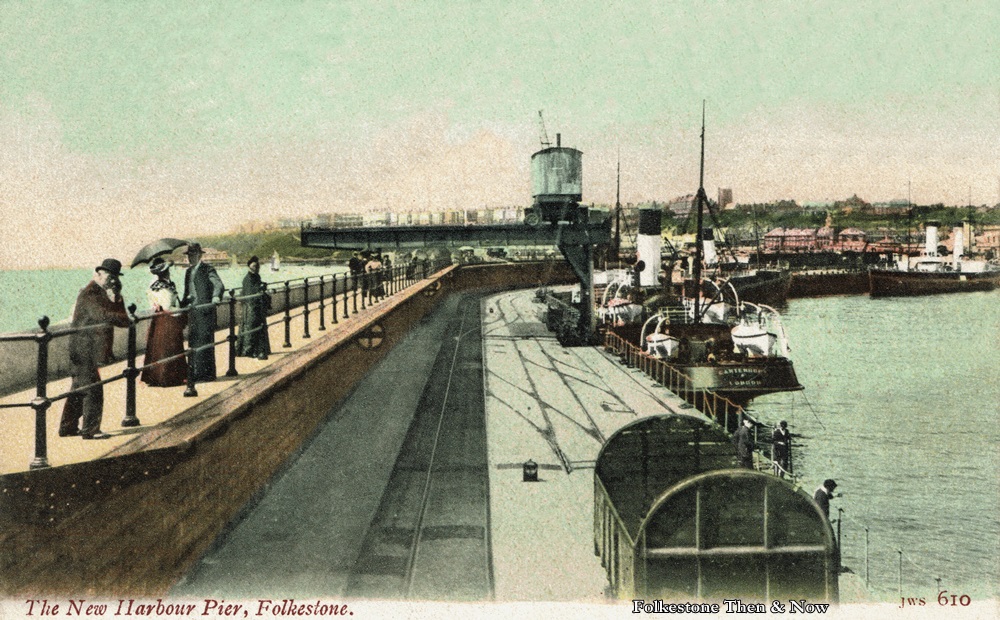
As you can see, this was called The New Harbour Pier. But as it was posted in 1906, it was only new then! On the stern of the nearest ferry it says Canterbury at the top, and London below.
I don't have a date for this one, but it was described as The Harbour and Old Town. This was Folkestone at one time, and Tontine Street was the main shopping area along with the Old High Street, or just High Street as it was called then. The shops were of your every day variety, Butchers, Bakers, Greengrocers, Haberdasheries, things people needed on a daily basis. Not that they didn't cater for the visitors too. There were a lot of shops that carried souvenirs and knick knacks and often called themselves a Bazaar, trying to sound more exotic and foreign. Upton's, one of the first, and also one of the longest to stay in business also called itself a Bazaar at one point. They went into souvenirs in a big way, and had things specially made like little china ornaments with the Folkestone crest on it, and Upton's printed on the bottom. You could also buy a little silver thimble with a peephole in the top, peer through and you could see a picture of Folkestone inside. They also went in for postcards in a big way, people loved to send them, and they were kept in collections - which is why we still find them for resale today. The Victorians loved to send cards of Churches and Graveyards. So far I haven't found one that has written on the back "Wish you were here"!

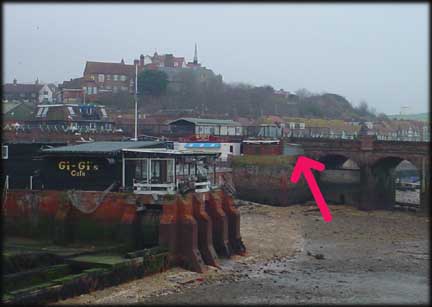
Dave Tooley sent me this photo, along with many others that he took a little earlier than my trip. Both he and his father were born and raised in Folkestone, but I believe they are both now living in Portsmouth.
Anyway, this is what he said about this one:
"My Father saw this photo the other day, and couldn't believe it.
By all accounts, HE built this shed in 1944 from old floorboards windows and doors he'd scrounged from bombed out buildings.
He couldn't believe it was still there since he'd never had permission to erect it, but he needed somewhere to keep his fishing tackle and nets for the boat he had moored by the harbour wall so he just did it anyway. He was 16 then".
If you look at Dave's photos, you will see a house at the bottom of the first page. This is where both he and his father grew up - and would you believe, living right next door to that house today is my sister - you can see a bit of her house in the photo! What a small world this is!
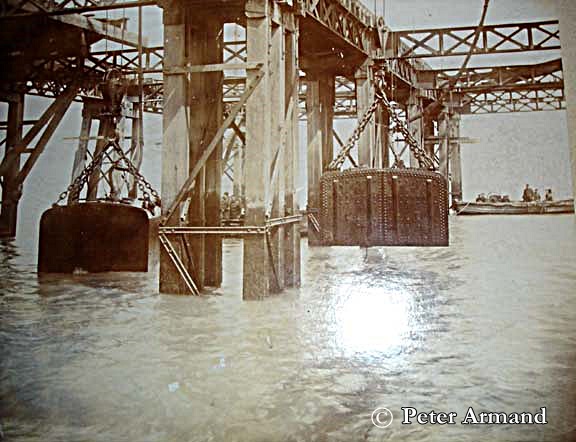
This interesting photo was sent to me by Peter Armand of Reading. He said it was found in his son's house when he moved in, and has 'Folkestone Pier' written on the back. I wondered if it was the building of the Victoria Pier, and sent it to Alan Taylor for his opinion, and here is what he said:
The photograph is of the staging which was erected to build the harbour pier, travelling cranes then ran along the stages on railway lines to lower the diving bells and concrete blocks into position. It dates between 1897 - 1900. I have fifty photographs of the pier being built which are copies from an album of originals owned by Captain Bullard whom I worked with on the ferries. His father was premier master when the harbour was being built & he inherited. I expect the photographs were taken by the contractors Messrs. William Rigby & Co. and presented to the South Eastern & Chatham Railway on completion.
Thank you Alan. I have some Folkestone Bullards in my family, now I am wondering if there is a connection.
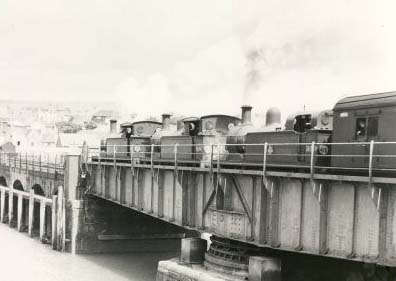
Here we have a double header on the swing bridge.
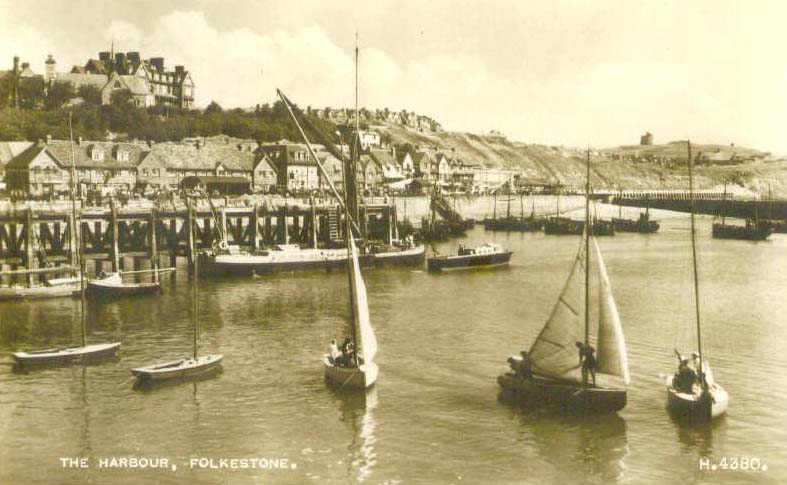

A closeup view of The Stade in 1906 All those houses are now gone I believe. It looks as if they had stalls set up along there in those days too. I wonder if they sold whelks and jellied eels like they do today?
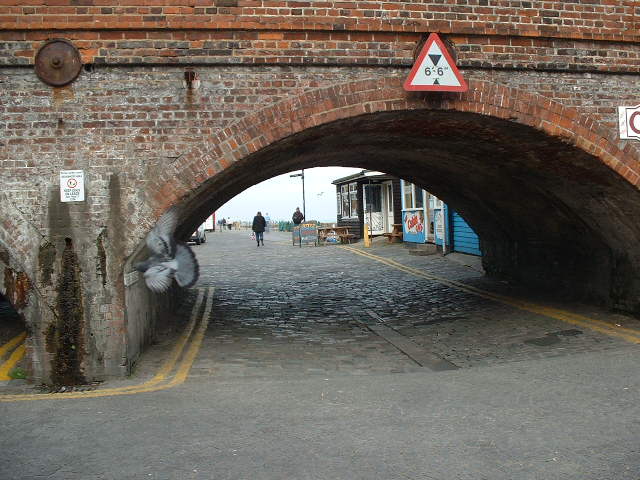
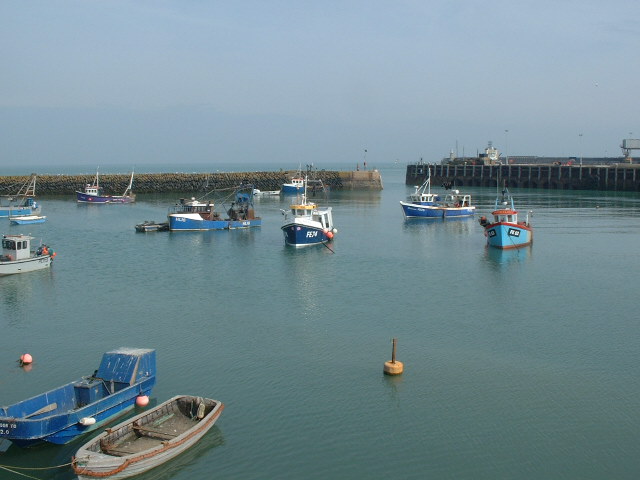
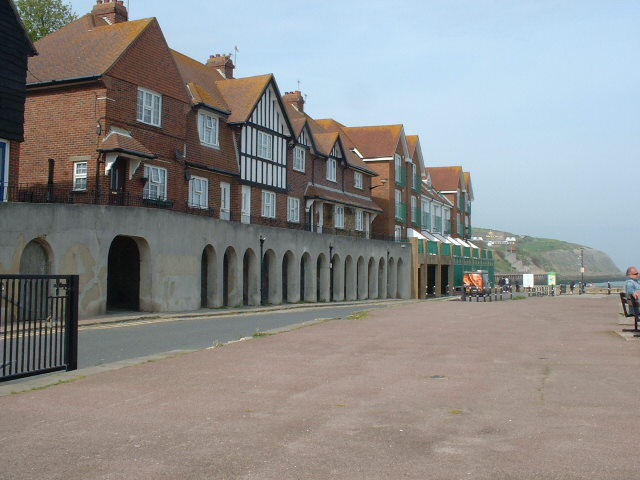
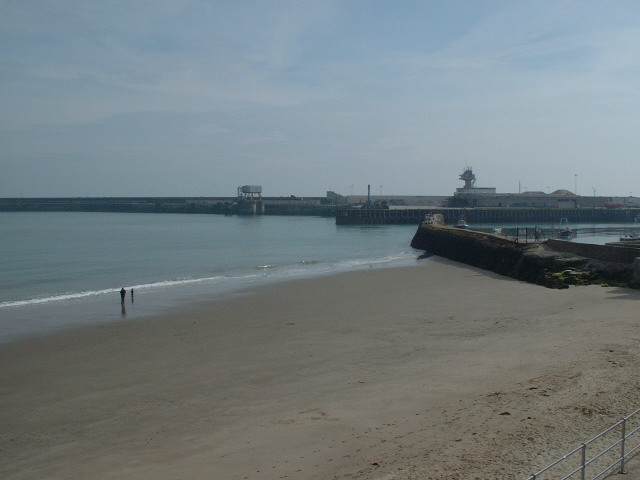
Now, perhaps you would like to join me on a little trip I took around the harbour area in May, 2006
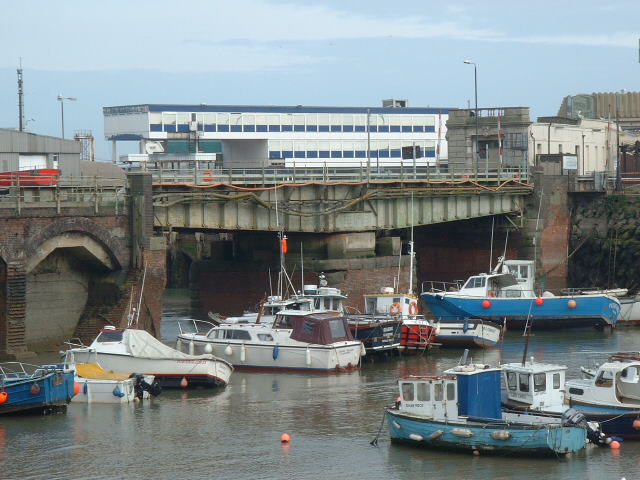
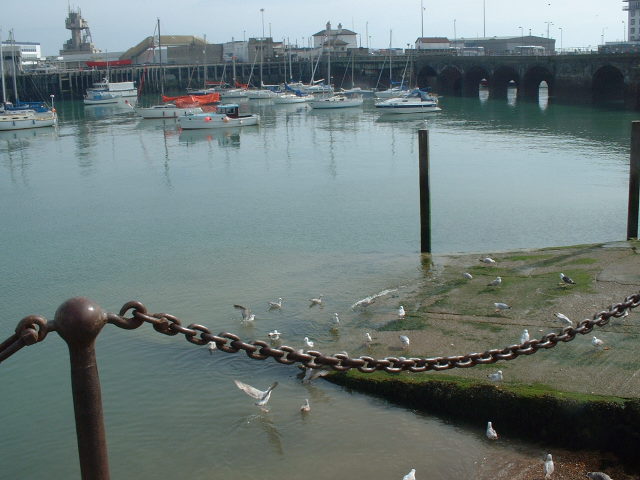
The Swing Bridge that no longer swings
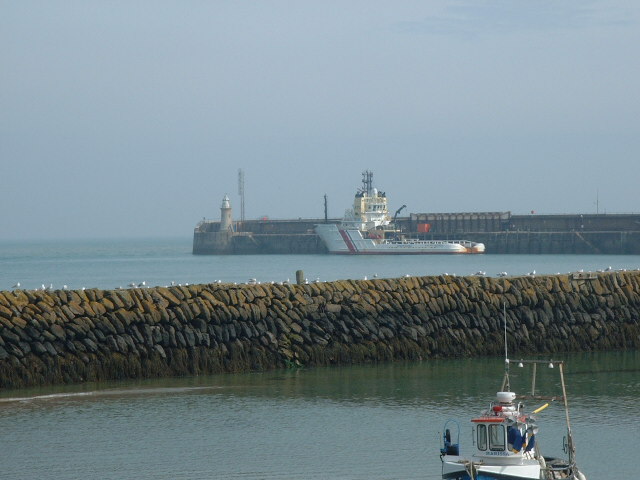
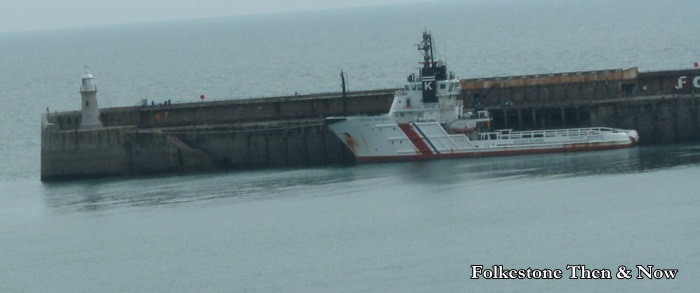
I took this photo around 2011, it shows the Coastguard ship Anglian Monarch. It was part of the United Kingdom's emergency towing vessel fleet, a maintained fleet of emergency tow vessels (ETV) from 1993 through 2011. The vessels were privately owned and operated for Her Majesty's Coastguard. They had bollard pull capability, and the fleet consisted of Anglian Monarch: 152 tonnes pull, Anglian Prince: 170 tonnes pull, Anglian Princess: over 180 tonnes pull and Anglian Sovereign: over 180 tonnes pull. Four vessels were stationed around the UK coastline, while a fifth was held in reserve.
The first vessels of the UK's ETV fleet were introduced in 1994 following the recommendations of Lord Donaldson's report 'Safer Ships, Cleaner Seas' published in May 1994 following the MV Braer oil spill off the coast of Shetland, Scotland. Klyne Tugs Ltd of Lowestoft took over the ETV contract in 1999, and in February 2001 signed an eight-year contract to own and operate a four ETV vessel fleet, which in 2006 was extended by two years, to run until September 2011, entering service in 2003, and her near identical Princess, entering service in 2002, were both built for Kline's in China, being sailed to Britain to join Monarch and Prince. Monarch was built in 1999 in Japan. Klyne Tugs was taken over in 2007 by the JP Knight Group, Britain’s oldest tug and barge company, becoming JP Knight (Lowestoft) Ltd. The tugs wear the red and white livery of the MCA, with the black and white funnel colours of JP Knight
That is amazing Dave, thank you so much for sharing it with us.
If you would like to see more of Dave's photos of Folkestone now, check out his website at:
I had this next story in mind when I made my jaunt down to the harbour, and the next two photos are especially for Dave's Dad!
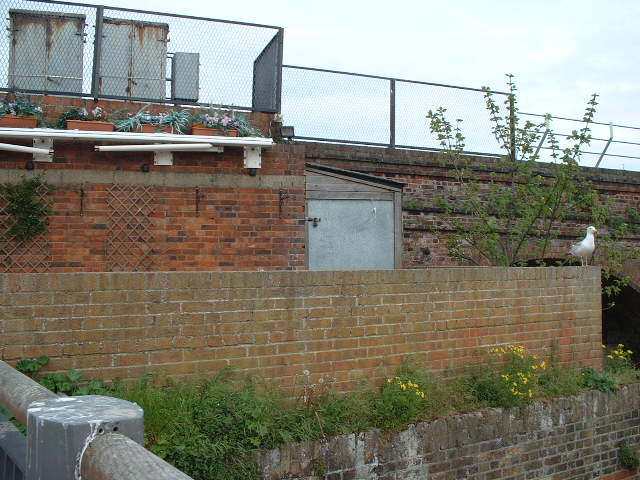
It was padlocked up tight, so I couldn't see what it was being used for when I checked it out, but I have since heard from a lady who runs the kiosk alongside, and she told me they keep their supplies in there.
If you have your own memories of Folkestone, be sure to share them with us by jotting them down in the book below.
This page updated 18 March 2026
"The Harbour" Written & sung by Stuart Pendrill
Added to this page with permission
copyright and intellectual property of Stuart Pendrill
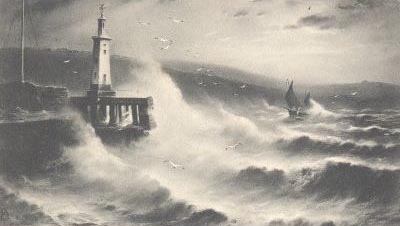
Here we have the entrance to the harbour on a day I would certainly not have enjoyed being in that boat!
Remember the hymn that included the line "Oh hear us when we cry to thee, for those in peril on the sea"? It sprang to mind when I looked at this picture.


Circa 1920
2014
The above photo shows the new swing bridge beside the old
The first train going over the new swing bridge in 1930
This is an R1 loco which had just crossed over the swing bridge in 1932
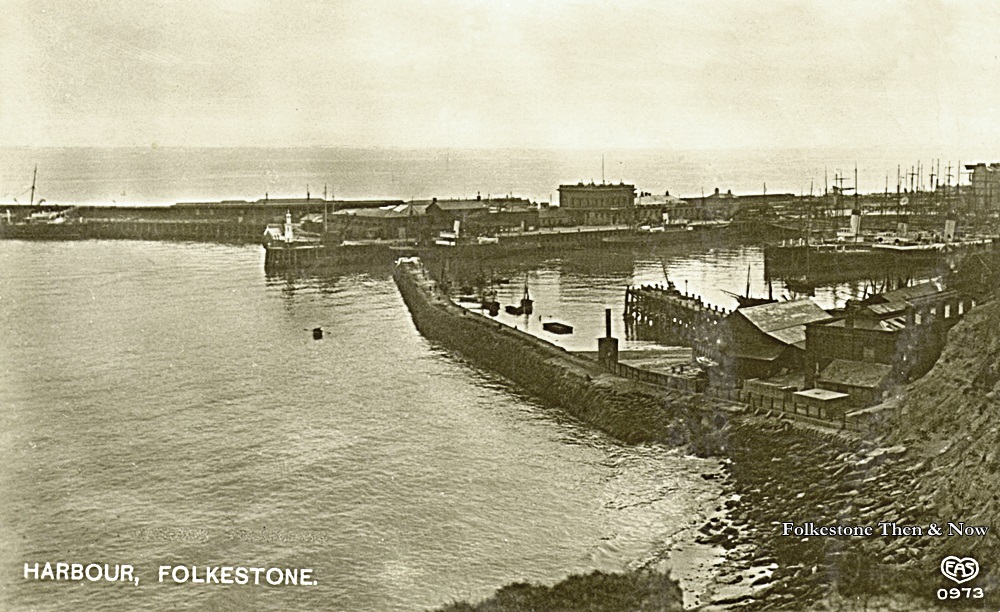
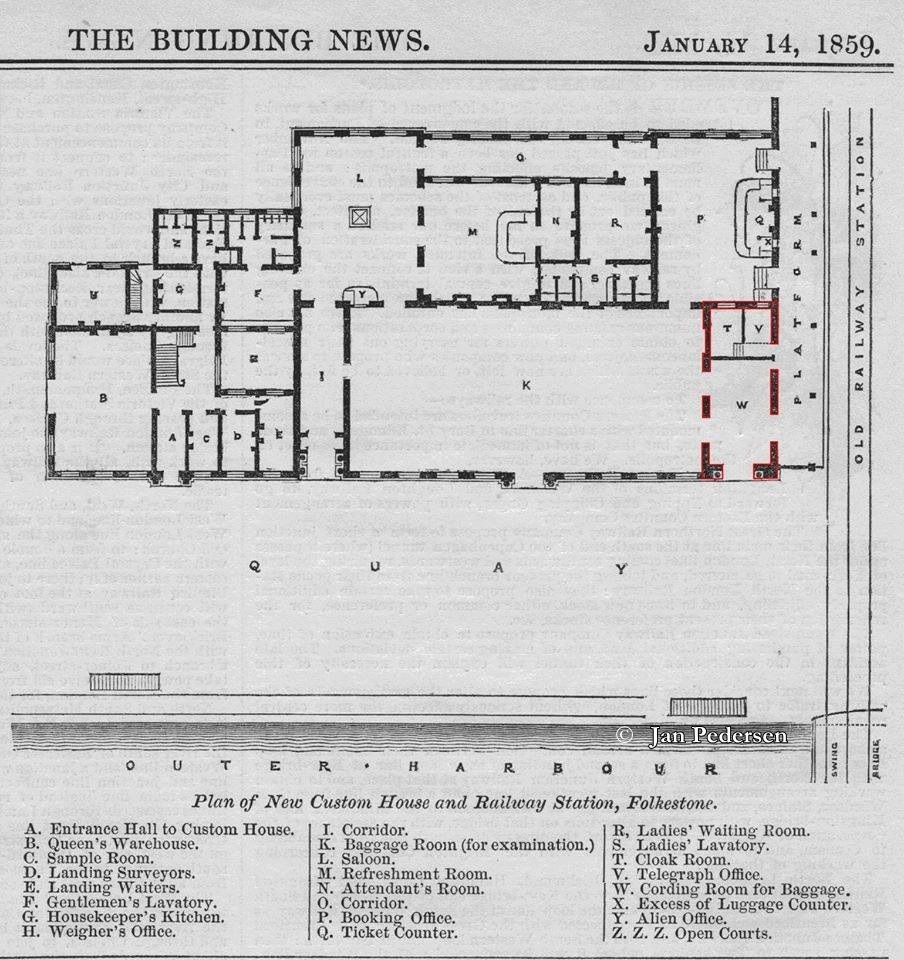
Here is the development of the harbour in the planning stage, January 14, 1859. This is when it really got going, with the railway running down into it, and a spanking new Custom House and all the other buildings necessary for a busy port Thanks to Jan Pedersen for this!
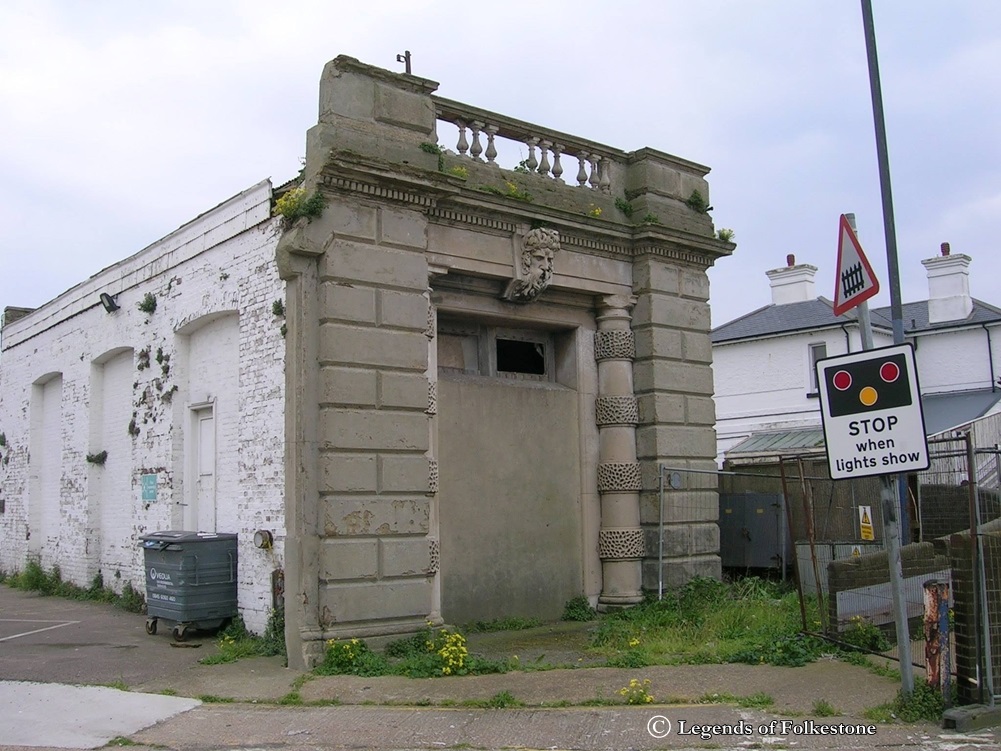
As you saw in the photo at the top right of the page, almost all of those buildings have now been demolished, but they decided to keep what is left of the Custom House above, I am not sure what, if anything, it will be used for.
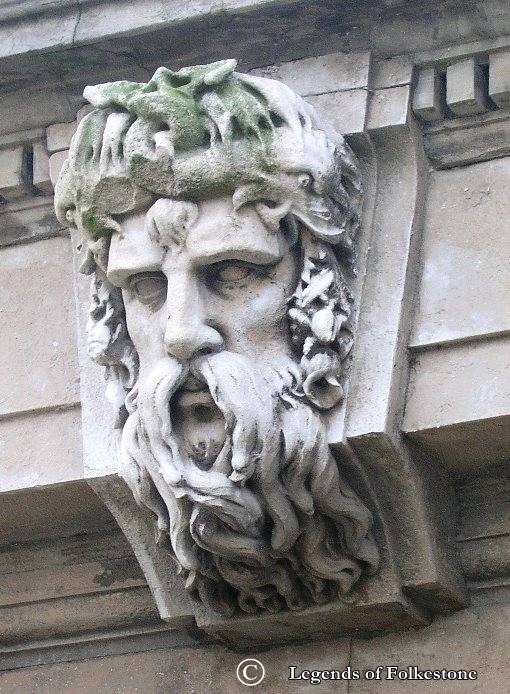
A closeup of the gargoyle over the door. King Neptune maybe? Both of these photos kindly supplied by Facebook page Legends of Folkestone
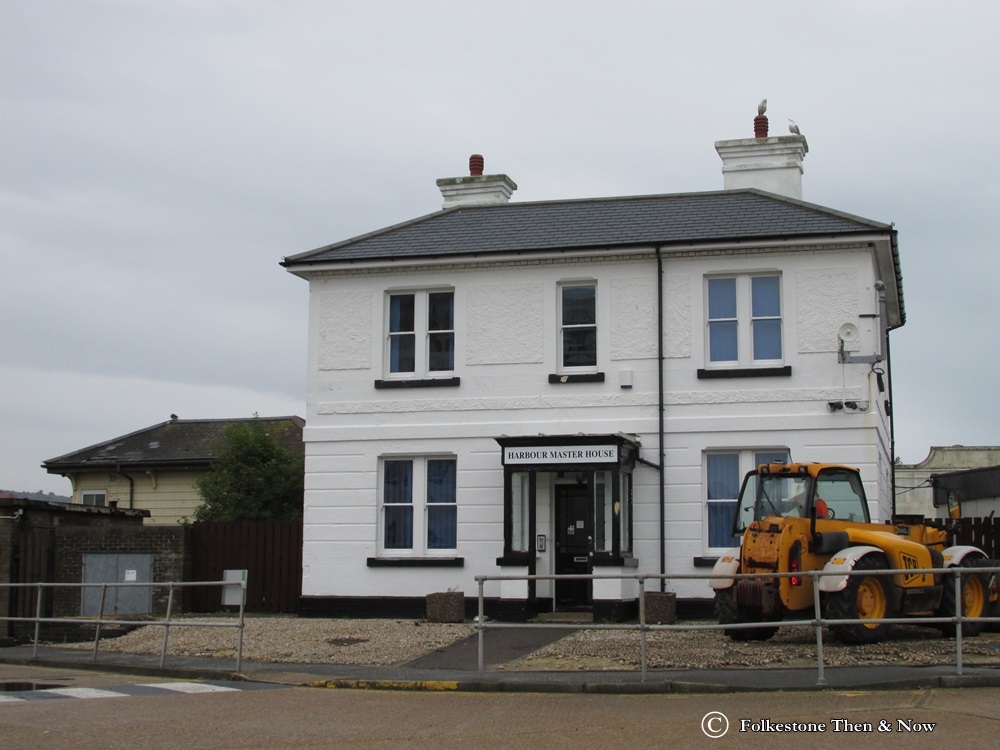
Another of the retained buildings, I took this picture of the Harbour Master House in 2014, then watched fascinated as that fellow backed that piece of equipment out without touching the railings on either side!
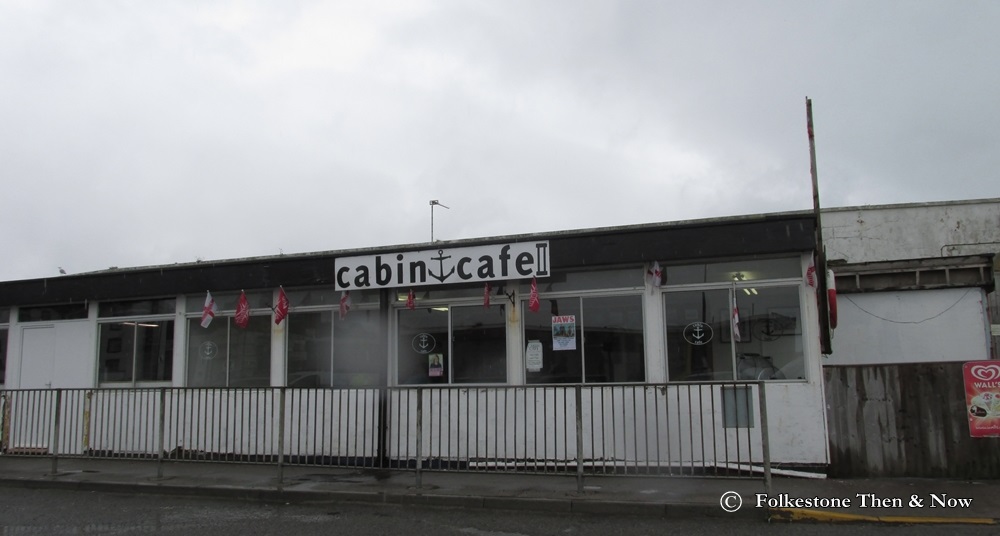
This was the way the Cabin Cafe looked in 2014, but shortly afterwards Folkestone had a visit from Prince Harry to unveil the new WW1 Memorial Arch on the Leas, and he then took part in a ceremony at the harbour, so prior to his visit, it was spruced up and renamed the Station Cafe. Then a short time after his visit, they demolished it!
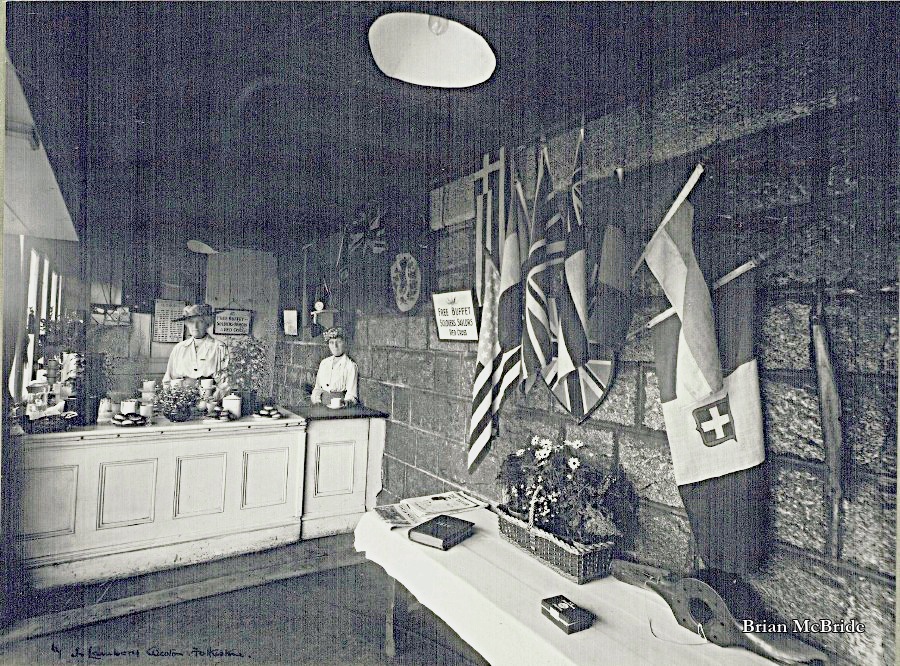
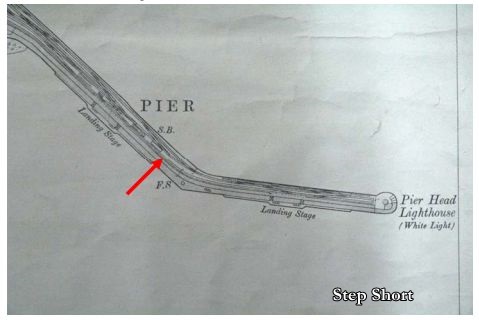
This was the Mole Café run by sisters Margaret Ann and Florence Augusta Jeffery, who were both awarded the Order of the British Empire, the Queen Elisabeth Medal (Belgium) and the Medal of Gratitude (France) for offering free tea, cakes and buns to soldiers, sailors and members of the Red Cross as they left for the front during WW1. The location of this café can be seen on this map, which I found on the Step Short website On the table in the left photograph can be seen a book. This was one of eight that contain the signatures of thousands of the men and women who passed through there. They contain record of people like King George V to the humblest private soldier, and usually included the date of visit, rank, name and corps or unit. Volunteers have been working on getting all this information digitised and it has now been made available to the public, an invaluable resource for those researching their family tree. The Mole Café has been restored, and you can still buy a nice cup of tea there, but I think the ladies will expect you to pay for it!
At long last, after years of neglect, following the end of the Ferry trade, where the harbour was allowed to descend into rust and ruin, work was finally started. 2014 saw a lot of demolition, and as you can see, most of the buildings on the left have now gone. I am not going to attempt to keep up with the changes, so will add pictures and give you information whenever I work on the page, which unfortunately is not as often as I would like. The original Master Plan, as they called it, looked totally different to what is being gradually built now. Originally they planned for the harbour itself to become a Marina for yachts. For some reason this fell through, I suspect it was because the Folkestone Harbour is tidal, so would be unusable each time the tide went out.

This photo, taken by Lee Pogson in February 2007 shows how sorely it needed some TLC

1911
1911

This is a beautiful view of the harbour and East Cliff sent to me by Rex Simmons. I don't have a date, but would guess early 60's.

Also sent by Rex, this one is a little trickier to date. The Rotunda is there, but the swimming pool and boating pools are gone, and is that a Seacat moored in the outer harbour? Maybe early 90's?

The S.E. Railway Company's new boat 'Albert Victor' is steaming into Folkestone Harbour in July 1880, and is surrounded by fishing boats - plenty of catch in those days!

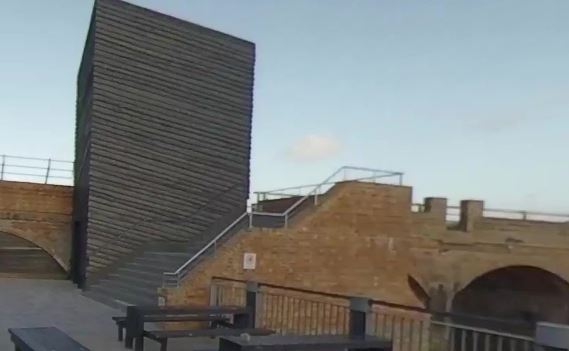
This is what you were able to see at the harbour in 2014. It was a lookout made of bamboo which straddled the railway line leading into the defunct harbour station. They told us it was art, I guess it took quite a while to assemble. It has now been dismantled.

This is a great shot, taken by Ian Lacey It shows part of the Lower Leas Coastal Park, the sad site where the Rotunda once stood, and what used to be the Marine Gardens Pavilion, and last I heard was the Onyx Club (Since demolished). As you can see, behind that was being used as a lorry park. Still visible is the Pilot's Tower, which has also been demolished, pics of that to come.

This photo is from a pretty old book of Folkestone scenes. It looks as if some kind of sail or screen is being erected on the end of the East Head. Behind that, you can see a ship berthed at the Railway Company's repair jetty, and you can see why they referred to the area in the background as Folkestone Old Town, just look at the amount of houses - a town indeed! I don't usually use photos from books, but this one was so old, I feel it is long out of print and hopefully copyright.
Lots of people watching the activity going on in the harbour that day. But there was lots to see with three ferries unloading or is the nearest one on fire? If that is smoke, it doesn't look very dark, so maybe it is steam. There is also a fellow in a row boat doing something with the sailing boat. Most of the buildings you see here have now been demolished with the exception of the Harbour Master House. Plus the station has been refurbished, and what is left of the Custom House is still there as mentioned at the top of the page. The signal box is now a café.

Thank you to Chris Long for this colourful 70's photo of the harbour. Top left of the picture you can see the Burstin Hotel is under construction, and the restaurant Rocksalt has not yet been built.
In the background you can see the first stage of the replacement of the Royal Pavilion Hotel. The seaward end was demolished, and what was then called the Motel Burstin was built onto the Pavilion, giving a rather odd shaped edifice.

I think the fishing boat in this one is 20 FE, but wouldn't swear to it. Entitled 'Harbour by Moonlight', this card is what they called a 'Hold to Light', and you did exactly that, to give the impression that all the lights were on in the houses, and the moonlight was even shining through a little hole in the rigging.

Dated 1907, this one gives us a good look at some of the Collier boats, which brought in the coal.

This card was posted two years earlier, in 1905, and was sent as a Christmas card. Back then, it was rare to have a white Christmas, so it makes sense to have a card with no snow, robins or holly on it. Where I live now, a white Christmas is guaranteed.

This photograph shows the state of neglect the harbour station was allowed to sink to before any work was done. Actually, it was worse than this, as I will show you a little later.

Back to the East Head, and it looks as if that fisherman in 1906 left it a little late to return home, as the tide looks to be almost out, and he must surely be touching bottom.

What was that I was saying about it being rare to get snow at Christmas? Well, I don't know if this was Christmas, but they certainly had snow in 1913. Despite the snow though, you can see the Sunny Sands hadn't yet been cleared of rocks, and no prom. The area back then was obviously a working ferry and fishing harbour, and tourists were directed to the West Beach or the Leas.

This card looks fairly modern. I would guess the yachts are there for a race, as they all have their names similarly located on side banners.

Don't have a date for this one, but it shows a couple of ferries, one of which is on its way to Boulogne.

I took this one in July 2014 from the 13th floor of the Hotel Burstin on a bit of a foggy day. As you can see, the tide is completely out, and you will notice that Folkestone has more pleasure craft in the harbour than fishing boats these days. Bottom left, straddling the railway line, you can also see the - ahem - artwork, but I couldn't go inside it as it was barricaded off.
Left this one large so you can get a feel of what it was like to board a ferry at Folkestone harbour in - what would you say? The thirties? If you would like to see more of the ferries, they have a page of their own, just go to the Index below.


Lots more on
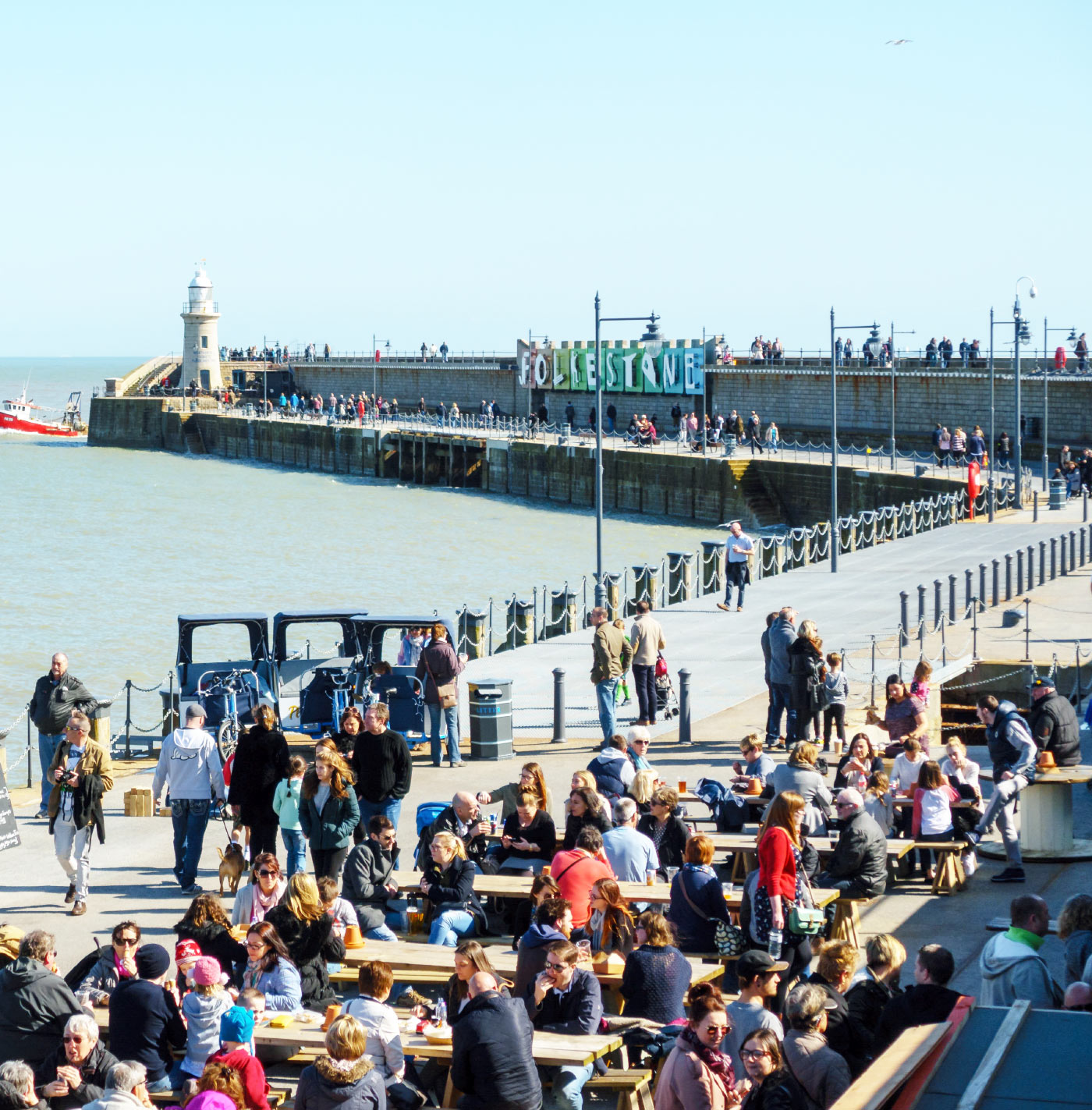
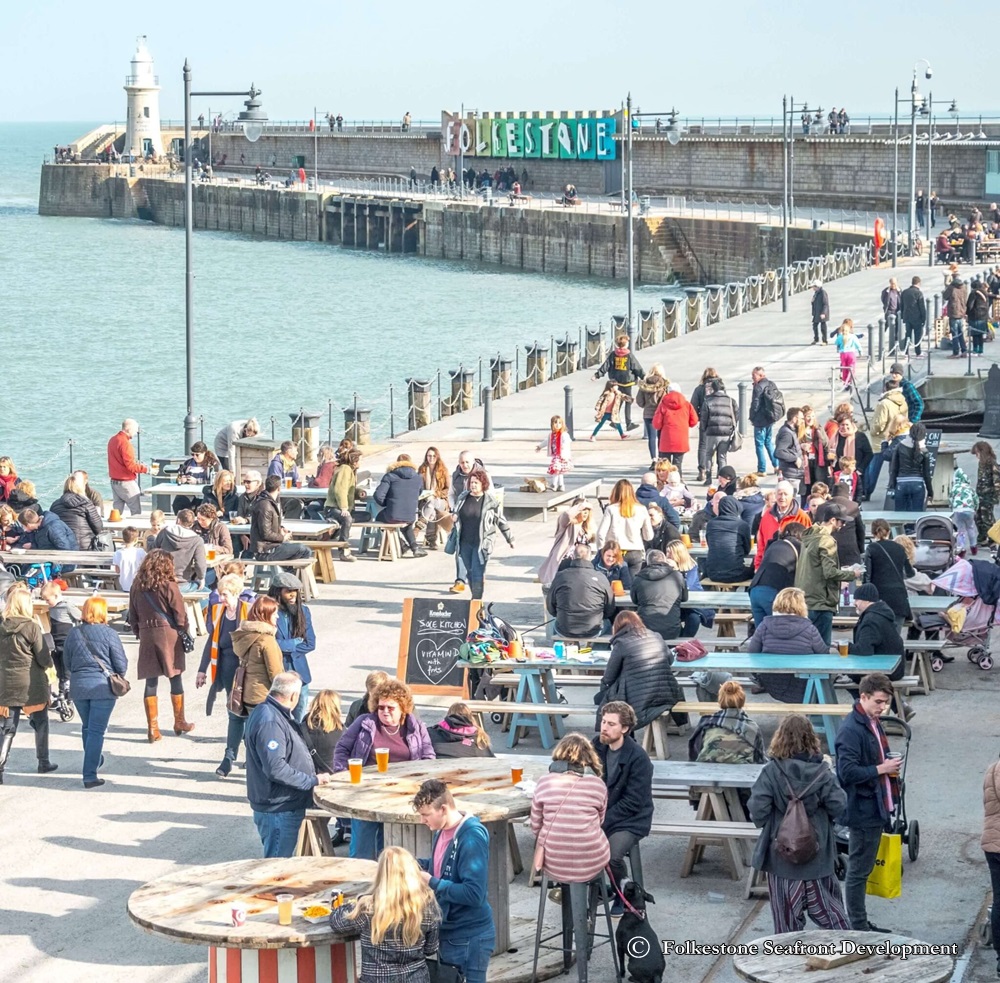
The first thing they did was refurbish the Pier, clearing it of everything except the lighthouse on the end, the Harbour Master's house and what's left of the Customs House. It was opened to the public under the new name of The Harbour Arm, and invited vendors to open up their businesses. You can now buy almost every type of food down there, and the lighthouse has become a Champagne Bar. They have live entertainment from time to time, and also show events on a large outdoor screen. The last I heard, the plan for the location of the cleared buildings is to build more buildings, this time high residential luxury flats. I hear they are not selling well in the first block opposite the lifts, but they think they will there? It wouldn't be my dream place to live, I have seen Folkestone in the winter, and I have also seen that sea very angry. Anyway, you can check this site for their progress Folkestone Harbour
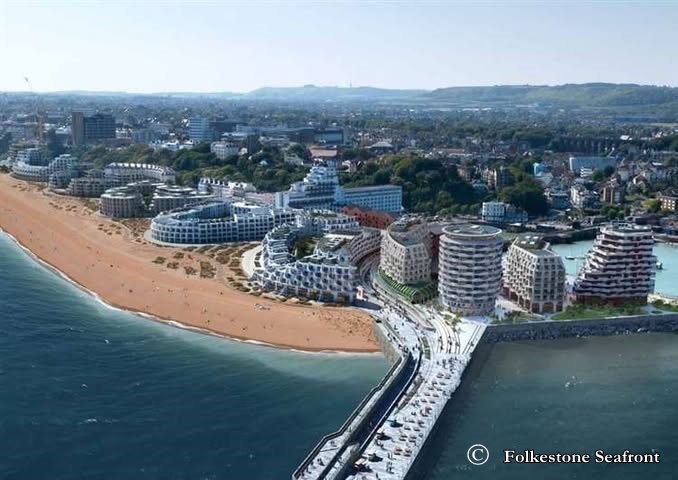
Proposed Future Development
This map shows the location of the Mole Cafe. As mentioned on the left, you can see a book on the table where everyone could sign their name before leaving for the Front. 8 of these books were filled up, and many volunteers have spent endless hours transcribing them into a digital format, and they now allow access to these 42,000 names free of charge to researchers. This was quite a job, as you know, signatures are often impossible to read, so if you find one that you are certain has been transcribed incorrectly, there is a link provided on that page for you to contact Step Short to ask for a correction to be made. HERE IS THE LINK
ARE YOU RESEARCHING A RELATIVE WHO LEFT FOR THE FRONT VIA FOLKESTONE HARBOUR? LOOK FOR THE MOLE CAFÉ FURTHER DOWN THIS PAGE, HE MAY HAVE SIGNED THE BOOK THERE BEFORE HE SAILED. YOU CAN SEARCH FOR HIS NAME FOR FREE!
ETV fleet was intended to be operational 24 hours a day 365 days a year and maintained at 30 minutes readiness to sail, with one tug allocated to each of the four operating areas on a rotational basis, worked around maintenance schedules. The Dover station is funded jointly with French maritime authorities. It was often berthed at Folkestone too. However, ETV vessels could be temporarily relieved of station duties as required, such as when Prince was despatched on a four-day voyage to come to the aid of the Canadian submarine HMCS Chicoutimi, stranded in the Atlantic after a fire broke out during a delivery voyage from Scotland to Canada. In that instance, Prince was contracted commercially by the Royal Navy, with another ETV capable vessel quickly arranged to take her place in Stornoway.
The Government announced as part of the Department for Transport's share of cuts in the Comprehensive Spending Review, that the ETV fleet would be no longer be funded by the MCA from September 2011, saving £32.5m over the Spending Review period. The Department stated that "state provision of ETVs does not represent a correct use of taxpayers money and that ship salvage should be a commercial matter between a ship's operator and the salvor".
Two days after the announcement that the fleet was to be disbanded, Anglian Prince was sent to the aid of the UK's newest nuclear submarine HMS Astute, which ran aground off the Isle of Skye in Scotland during sea trials.
I gleaned the above from Wikipedia, however, I was unable to find out where the fleet is now, but the Monarch doesn't appear to be in Folkestone.
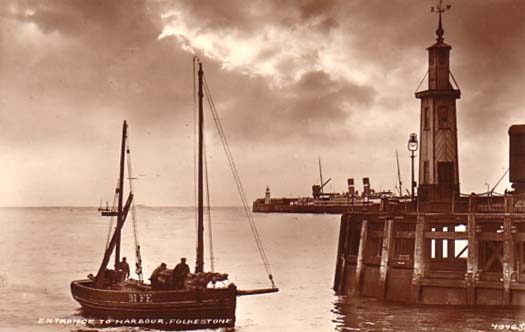
Same pier and lighthouse on a calmer day. As you can see in the background, the new pier and lighthouse had already been built. For those who want to know, the fishing boat was the 31 FE
This card was called 'The Arrival of the Boulogne Boat' and in those days that meant a Paddlesteamer, and the arrival point was beside the pier that came to be known as the South Pier once the longer pier that is still there today was built around the turn of the last century. The lighthouse in this photo was built in 1847, and it served well for close to a hundred years. I have read both that it was bombed in 1941 and that it was demolished in 1941 to install a gun placement. Maybe each is true, but that is around the time it disappeared.

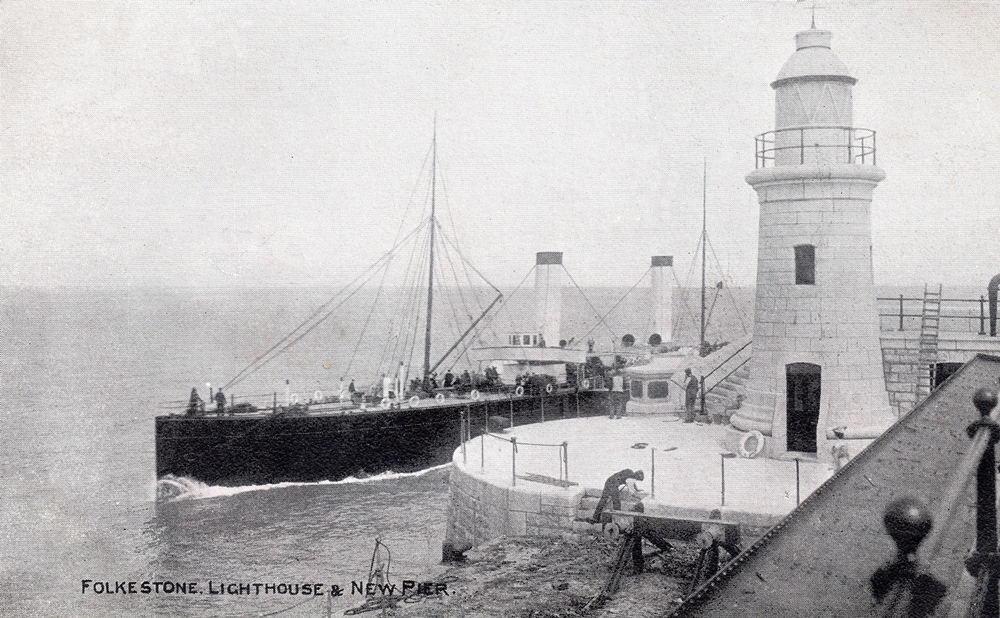
Postmarked 1907 showing the end of the new pier and lighthouse. For quite a few years, both lighthouses were in operation.
The Anglian Monarch

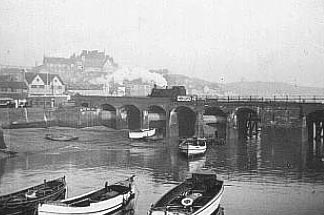
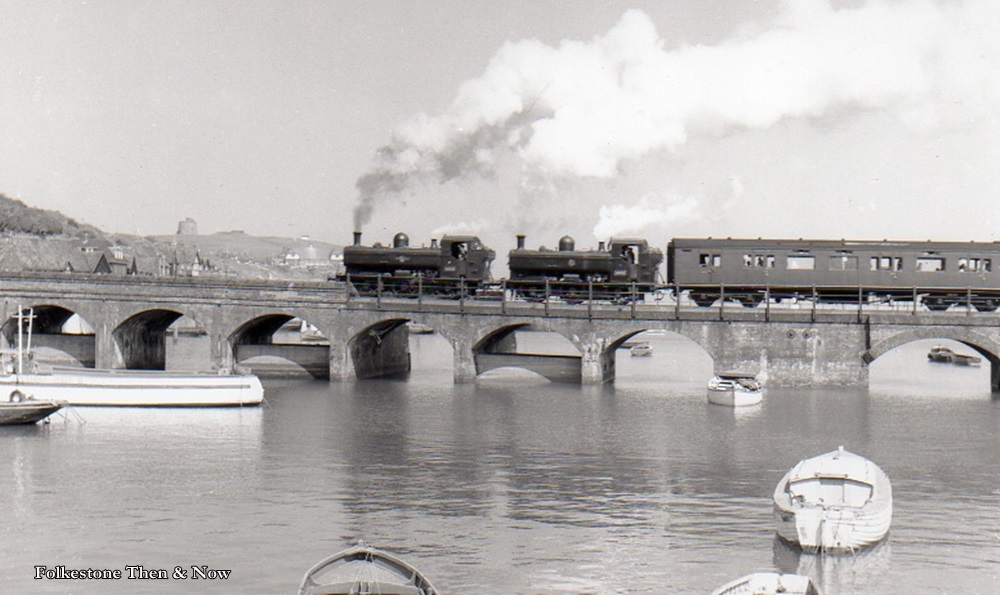
A nice clear shot of a double header chugging across the viaduct. They often needed two engines , and sometimes a third on the back to get up the steep incline to the Junction Station (later called Folkestone East).
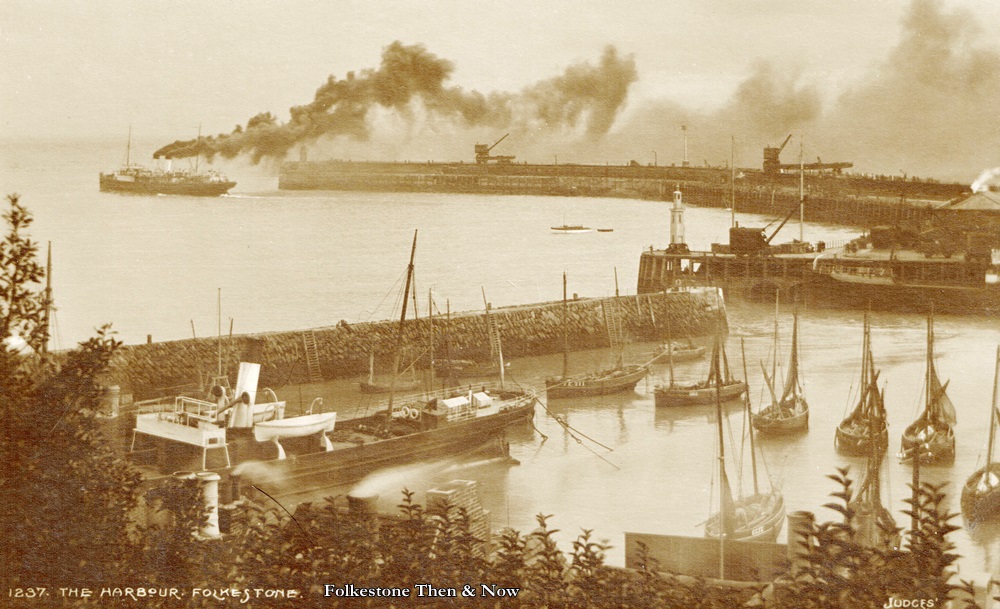
This card was mailed in 1921 from a young lady in Folkestone to study Shorthand and Composition, and she was was writing to assure her parents she was improving. Obviously having a good time and didn't want them calling her back home just yet!
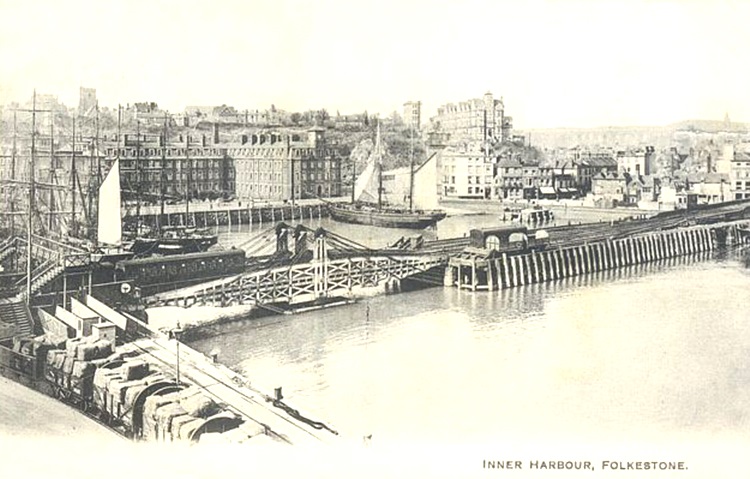
Back to 1911 and a good view of the swing bridge and the Royal Pavilion Hotel.
Dating from around 1910, you can see the London & Paris hotel on the left and the Royal Pavilion on the right. There is a paddlesteamer just on the other side of the viaduct and another ship that doesn't appear to have paddles docked near the end of the pier. I can remember watching the ferries coming into the harbour, they would turn around out at sea and back in, you had to know what you were doing so not to hit the pier, as you had to dock as close to it as possible.
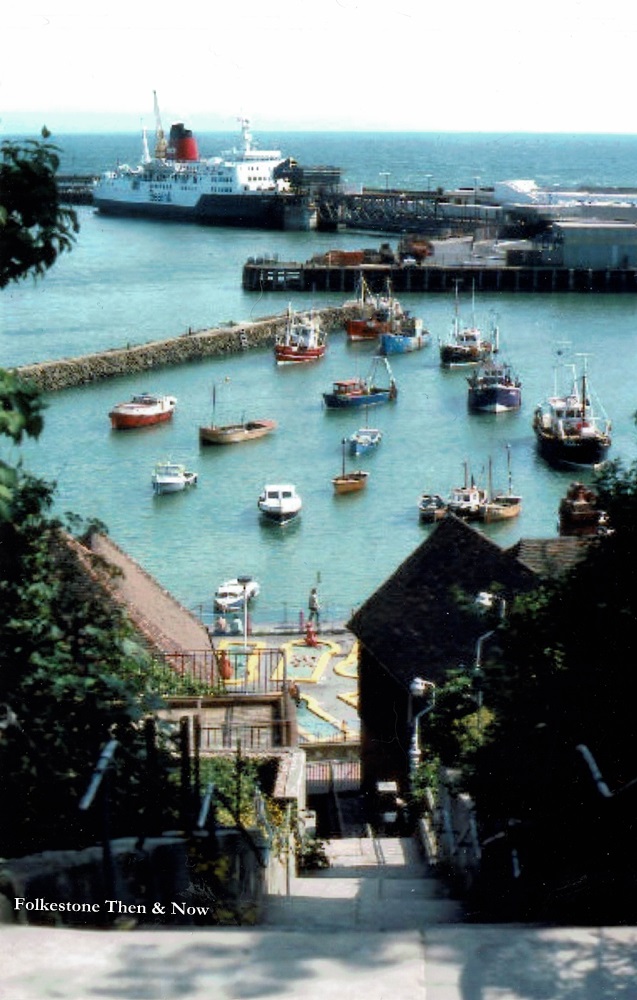
A more modern view of the harbour from the Durlocks, it was undated and I can't remember when they had crazy golf on the Stade, can you? I couldn't read a name on the ferry even with a magnifying glass, and looking online, the only one I could find that looked anything like that was the HHV Chartres, Portsmouth. Was it perhaps visiting, or on loan as a replacement? I am sure one of you ferry experts will let me know.

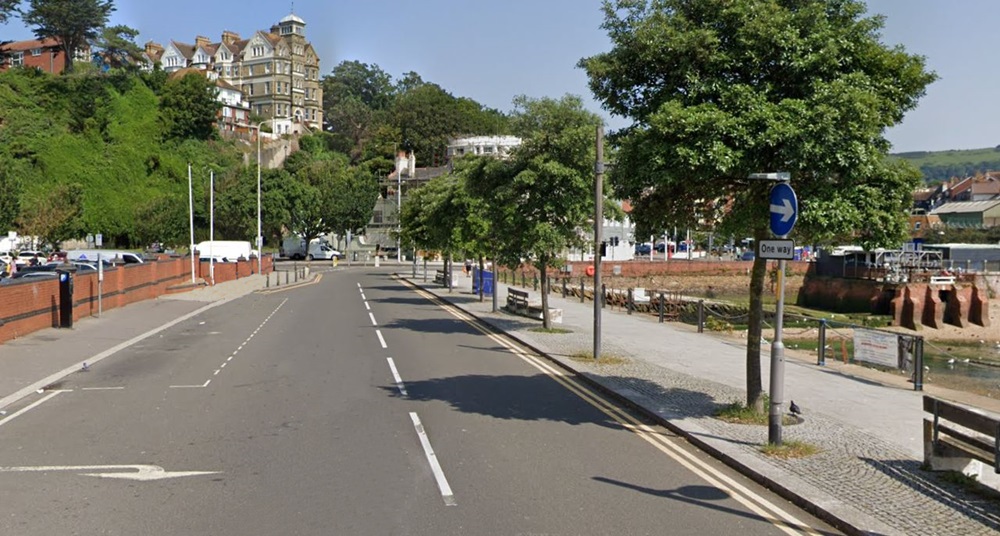
Looked a bit different by 2021 didn't it? Sadly nowhere near as busy either.
1930's
Update: In 2022 the shed has gone! That is very sad. Looks as if they have built some steps there to lead up to Rocksalt and the viaduct
All that sea available, and this is where they prefer to bathe!
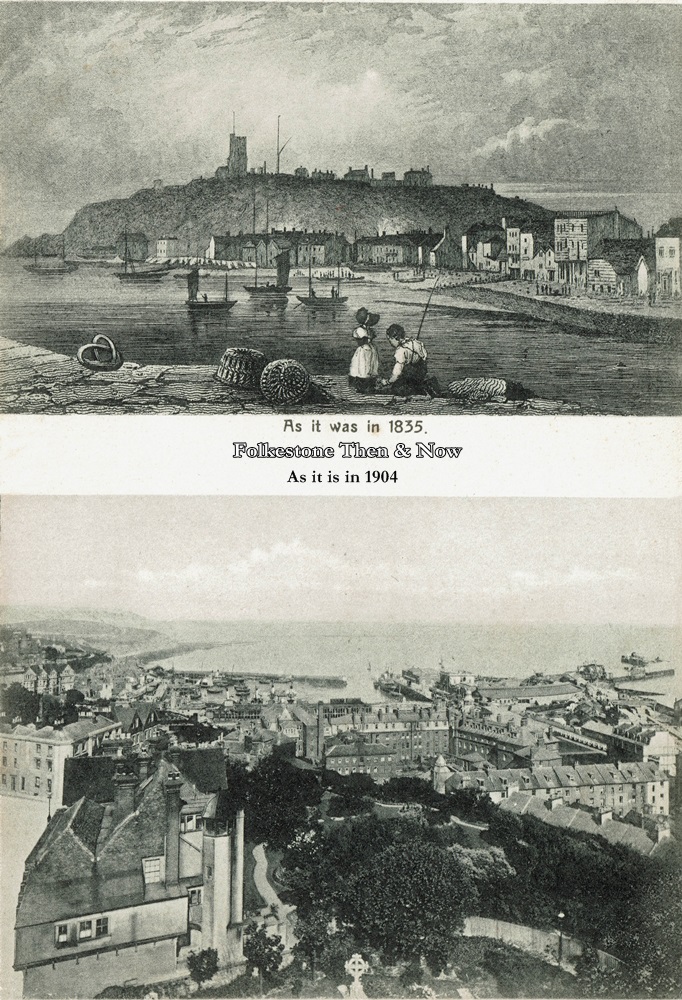
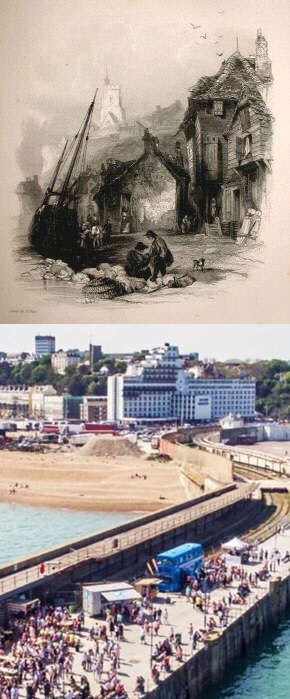
As you can see, a then & now shot came long before any of mine. This postcard beats me to the old by 7 years, but there is no comparison between their 1904 and 2026 as a modern one! However, as a working harbour, their's really has me beaten!
1842
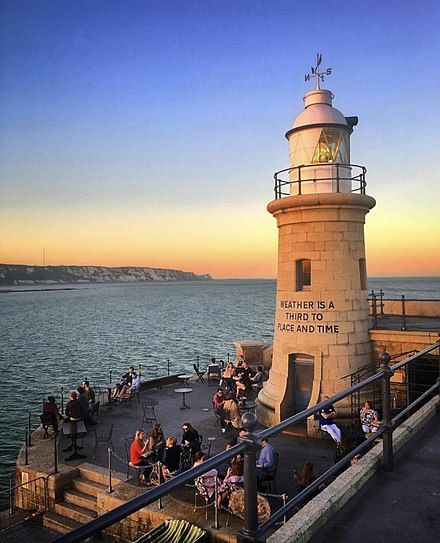
and it certainly got some. It is all spruced up and is now a Champagne Bar!
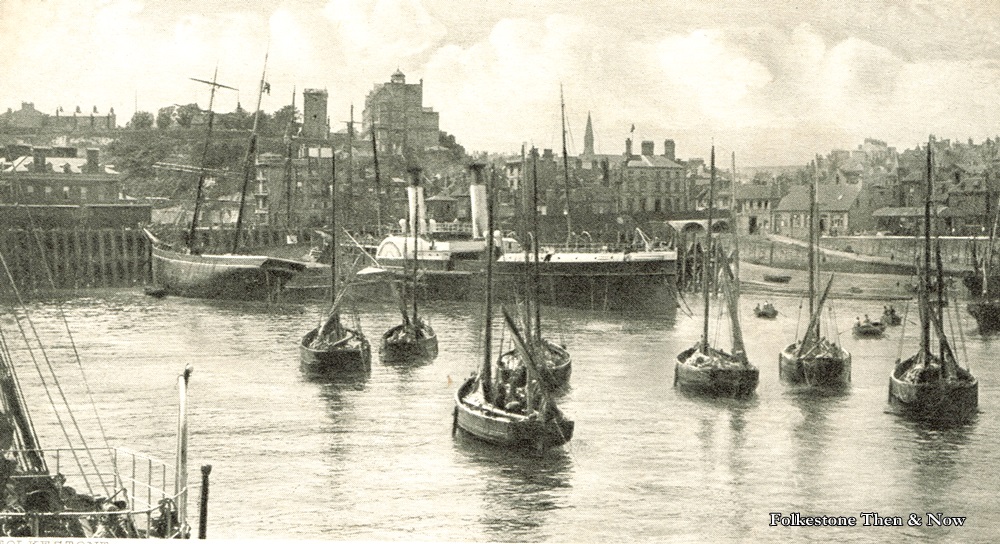
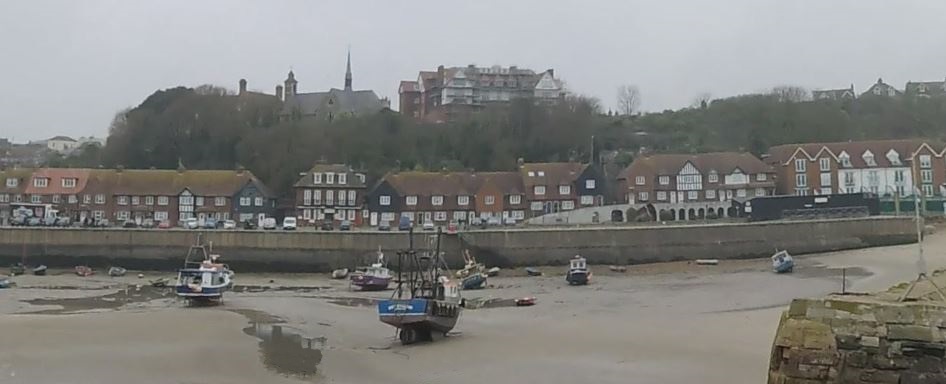
The Stade in 2025, taken from further away, from the pier in fact, as the sand tends to be a bit soft and soggy down there when the tide is out. Like everywhere in Folkestone now, it is more residential than commercial along the Stade. Up on the Durlocks you can see St. Peter's Church and what used to be the St. Andrew's Nursing Home, now also residential flats.
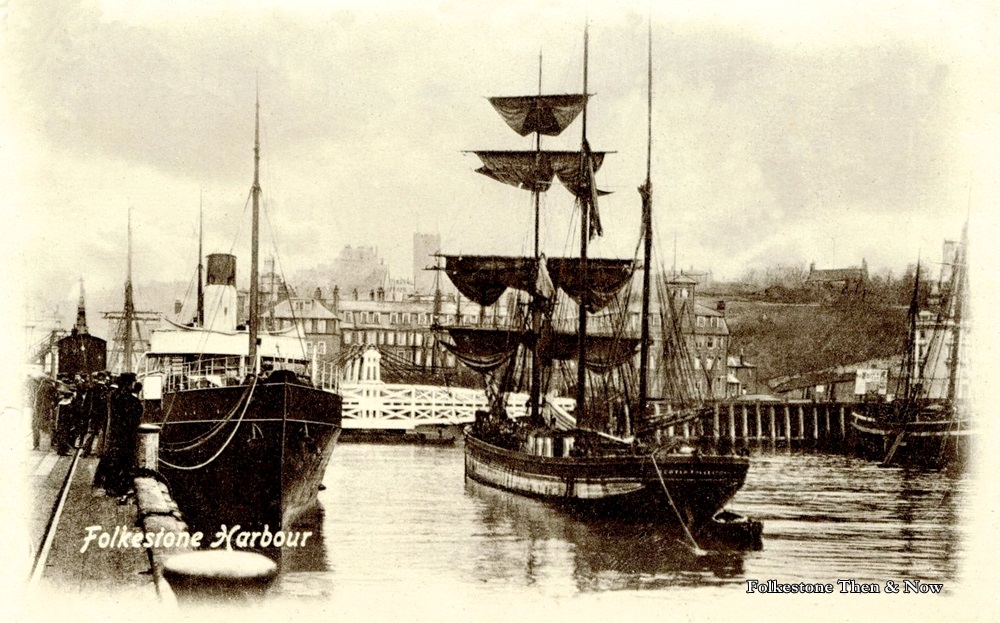
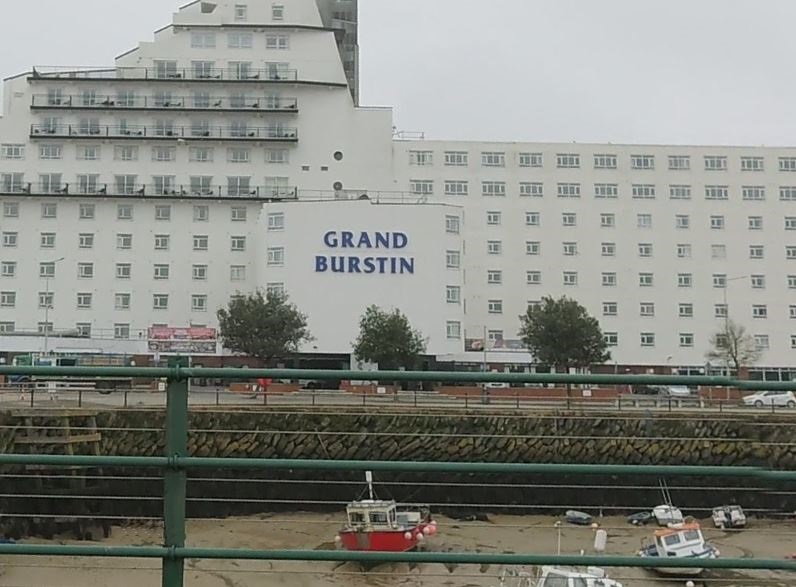
Not taken from quite the same place, as the two boats on the left were on the other side of the swing bridge, and there is a chain link fence in the way now, so took it from right on the swing bridge instead, where the view is the Grand Burstin Hotel instead of the Royal Pavilion.
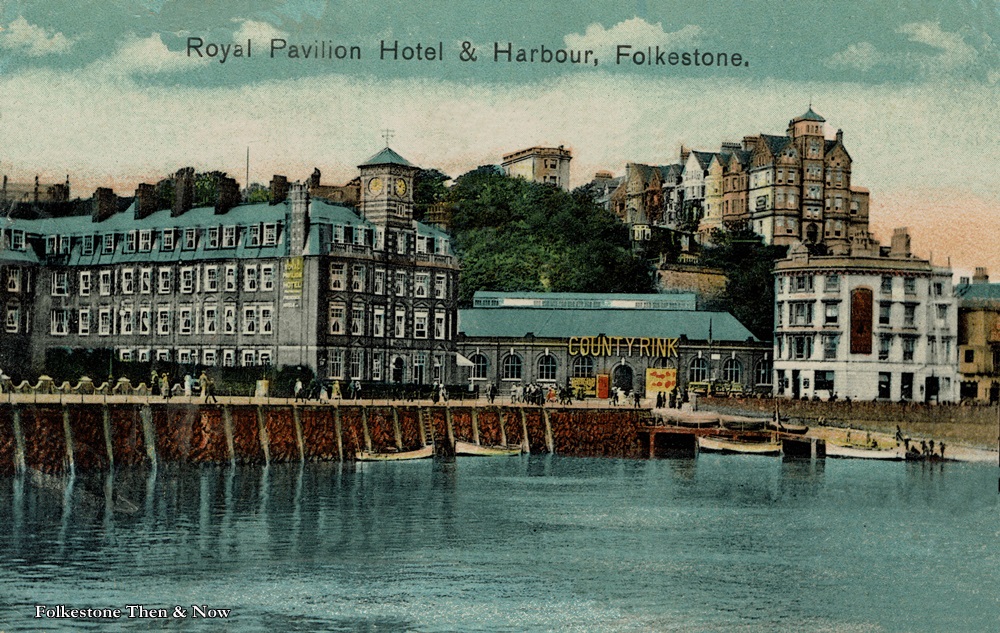
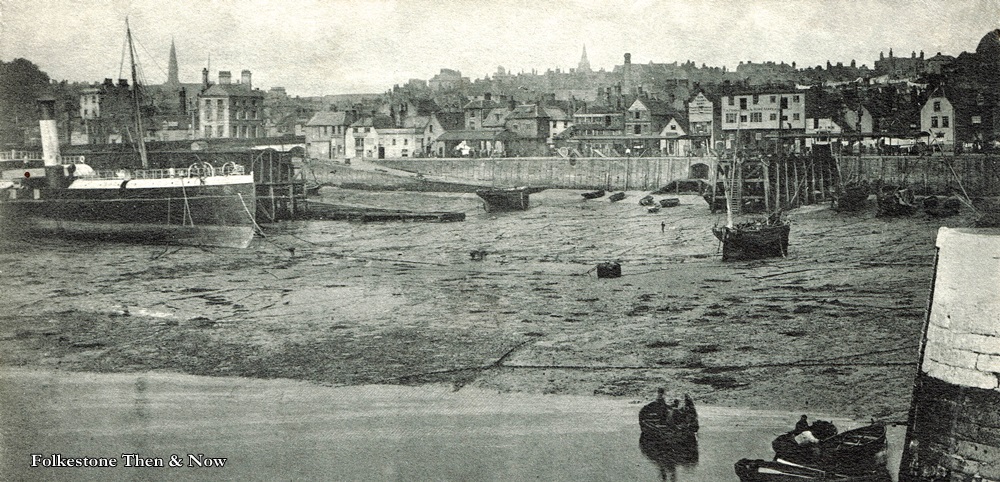
Before Auto Pilots, there was a skating rink next to the London & Paris Hotel. This card dates from 1912 and was in operation at the same time as the Olympia Roller Rink attached to the Victoria Pier, and appeared to be very closely aligned to the Pier itself when it came to events. I believe it opened in 1911, and was around until about the mid 20's. They had regular skating, and sporting events like hockey and gymkhanas, plus big dances without skates. It was a very popular place to go.
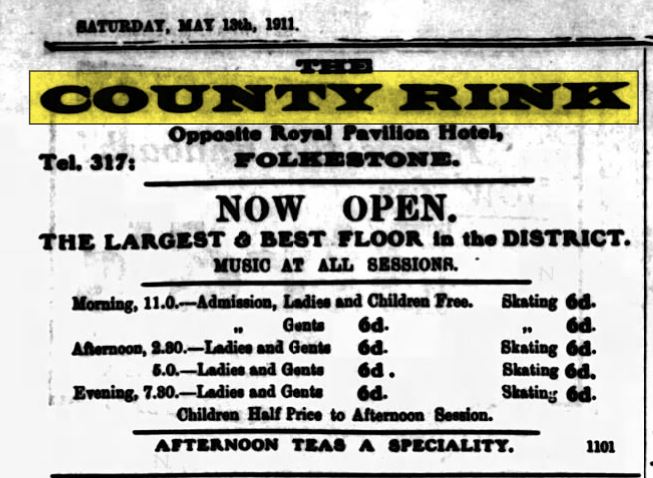
Another article in the same newspaper on the same day reads as follows:
ROLLER SKATING - Hockey Matches
There is no diminution in the popularity of roller skating, and during the week both the County Rink and the Olympia Open-air Rink have been well patronised. This healthy pastime appeals to young and old, for among the learners are generally several middle aged people. Hockey is a favourite sport and appears to have entirely superseded football on roller skates. The staff of the County Rink have a strong
team, and are prepared to meet any local club. On Wednesday evening there was another large crowd of skaters at the County Rink, and a very enjoyable time was spent. During the evening a hockey match was played between Folkestone United and the North Staffordshire Regiment. A fast and well-contested game ended in a win for the soldiers by five goals to three. Chiswell (3) and Glover (2) scored for the winners and Buchanan (2) and Taylor for the losers. The teams were:
Folkestone United: Wyborn; Adams; Baker; Buchanan and Taylor. North Staffords: Daft; Grocott; Chiswell; Glover and Gallimore. Referee, Mr. Chambers. Two matches will be played next Wednesday. At 5 o'clock Folkestone United meet a team raised by a local doctor, and at nine o'clock the United engage the County Rink staff. At Olympia, on Saturday afternoon, the Pier staff played a hockey match against a team drawn from the staff of the local hotels. The Pier staff had the better of the exchanges and won easily by five goals to none. Waddell (3) Richards and Standem scored for the winners.
Who knew that before Ice Hockey, there was Roller Hockey?
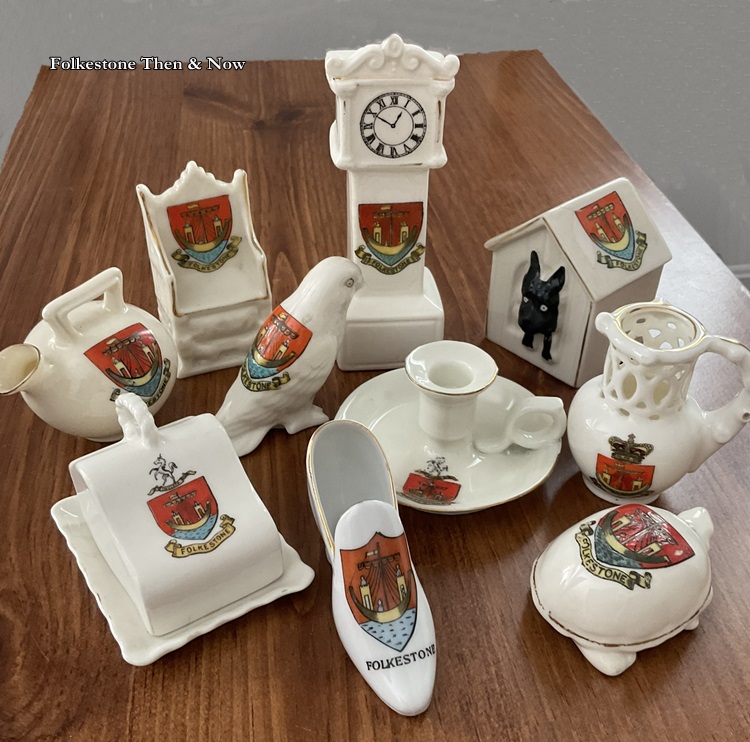
I used to collect these, but when it got to about thirty, I decided I had better quit as I had nowhere left to put them!
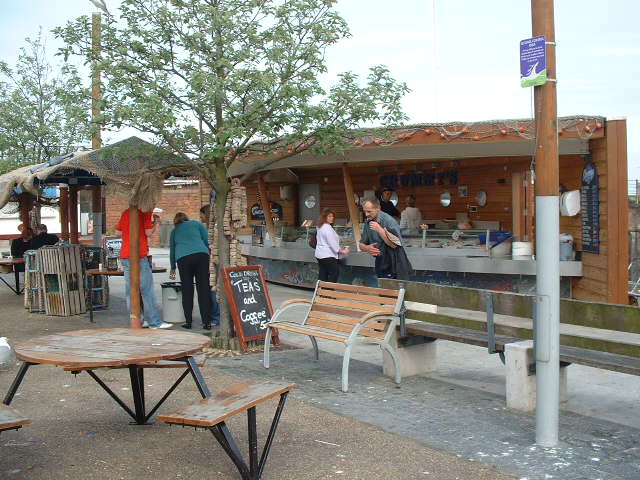
Chummy's - still there I believe!
Where the tanlade used to be
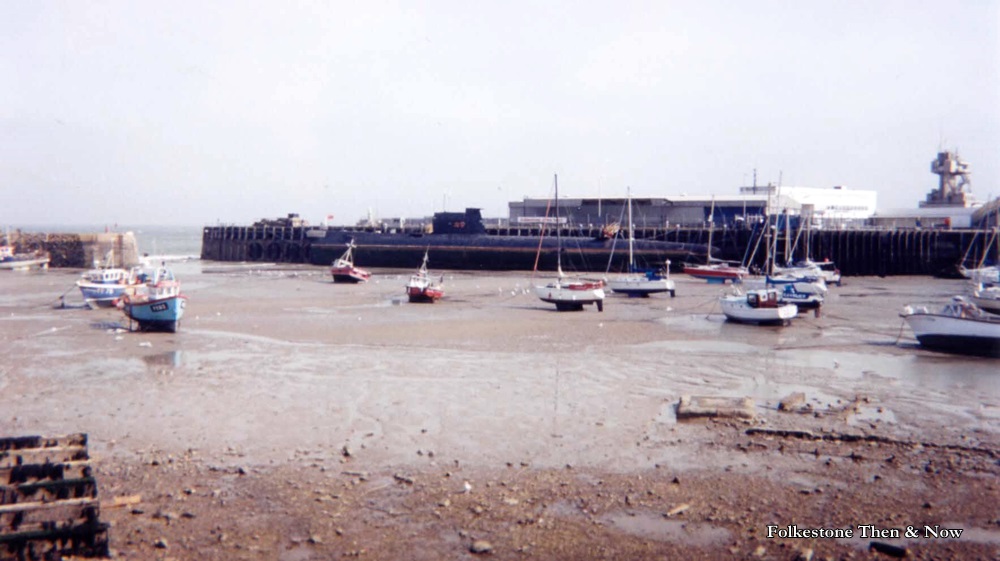
A bit hard to see, as it blends into the pier, but in 1998 Folkestone had a visit from a Russian - a Russian submarine in fact. This was Submarine U-475 Black Widow, a Soviet Navy submarine of the Cold War period, which is now in private hands. It is currently moored at Strood, on the River Medway, in South-East England.
After passing into private hands, and under the name U-475 Black Widow it was moored at Long's Wharf near the Thames Barrier in England where it was open to the public as a museum ship. In 1998 it was moved to Folkestone, where it was again opened to the public. In 2004 it was moved to her present location, in a state of disrepair, and last I heard, it was awaiting restoration.
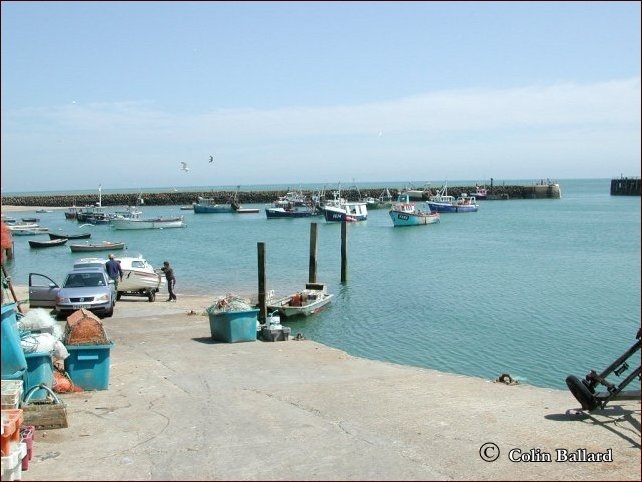
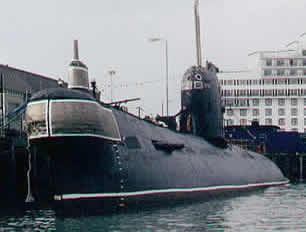
A closer image of it